


Energy transition is entering a new phase, defined less by how energy is generated and more by how it is stored, managed, and delivered. As energy systems become increasingly decentralized, the ability to provide reliable, high-density, long-duration storage is emerging as a foundational requirement — not an optional capability. Across utilities, industrial operations, ports, transit agencies, and data centers, the pressure is mounting to ba....
While solar tracker software is known for its role in maximizing production, it also plays a key role in mitigating risks. It can increase energy production in challenging situations, minimize damage from weather events, and reduce O&M costs. In the face of escalating climate change threats and heightened solar industry pressures, tracker software is rising to the challenges to keep solar sites productive and protected. Q:&n....
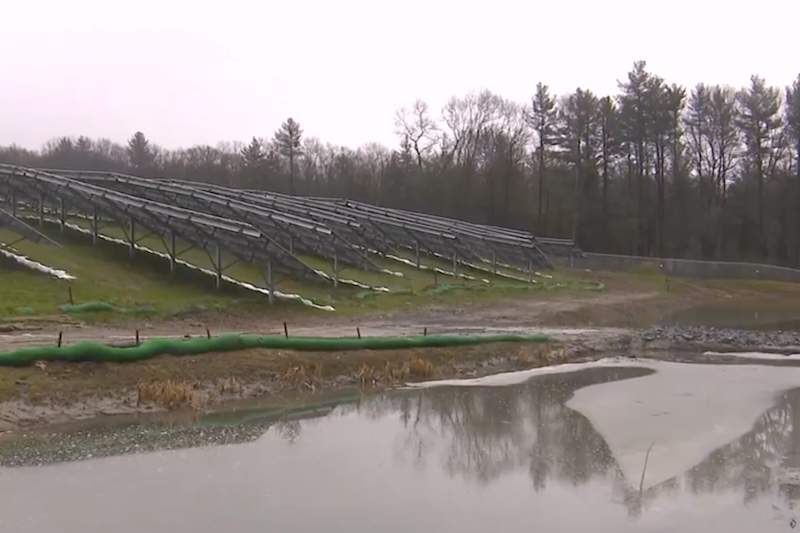
The solar industry has spent the last decade relentlessly driving down cost. Module prices fell. Installation efficiencies improved. Supply chains have globalized. In many ways, the playbook worked. But as development pushes into more challenging terrain: rocky soils, variable geotechnical conditions, and remote locations, that same cost-first mindset is beginning to show its limits. Developers now routinely confront conditions earl....
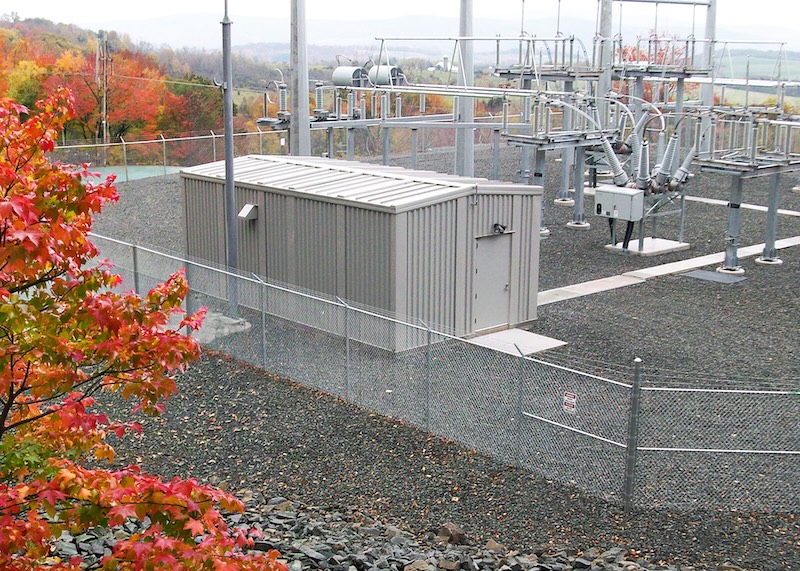
As the clean energy industry continues its rapid expansion, utility-scale solar and battery energy storage systems (BESS) are being deployed in increasingly challenging environments. From extreme desert heat in the Southwest to hurricane-prone regions along the Gulf Coast, today’s projects are operating in conditions that test both infrastructure and human performance. Extreme weather is no longer an exception — it is the operating environmen....
Energy Storage
Schaltbau North America
Wind
Jeremy Sheldon
Wind
Bora Tokyay
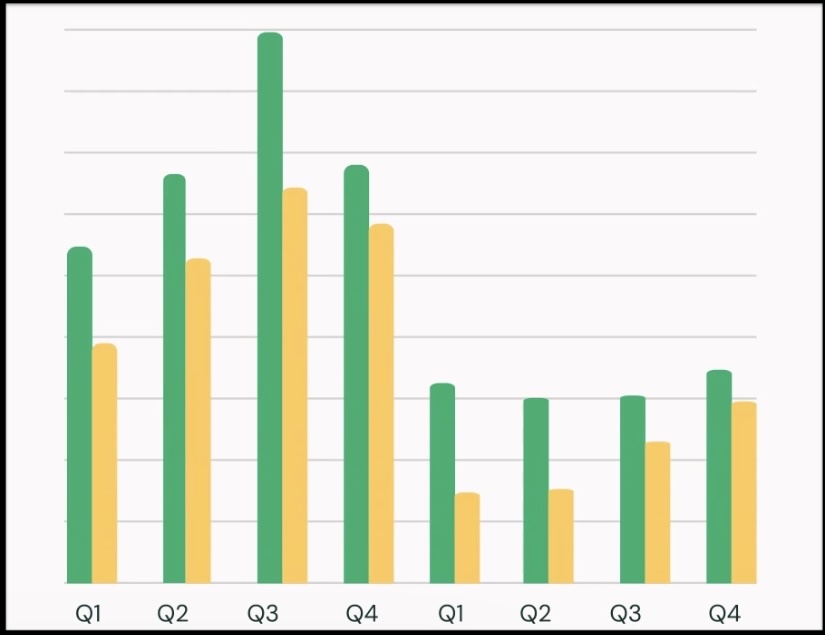
enSights, a provider of operational intelligence and Energy Business Management software for distributed clean energy infrastructure, has announced the launch of the enSights Battery Economics Calculator for the PJM market. The Battery Economics Calculator helps developers and owners evaluate the economic viability of storage projects by combining battery sizing, revenue modelling, ROI analysis, and operational assumptions into a single auditable framework. Unlike traditional battery modelling tools, the calculator is connected to the broader enSights EMS and Energy Business Management Platform, enabling organizations to carry investment assumptions through deployment, operations, and optimization.
Across PJM, storage deployment is rapidly increasing, driven by rising electricity demand, renewable integration and the need for greater grid flexibility. However, many organisations are struggling to confidently evaluate storage opportunities and forecast returns due to the increasing complexity of battery economics. Project returns are no longer driven by a single revenue source, but by a combination of utility savings, demand charge reduction, energy arbitrage, capacity opportunities, market participation, and incentives. While a growing number of tools help model storage economics, most stop at project evaluation. Organizations are often left to manage operations, market participation, performance tracking, and revenue realization through separate systems and boxes, creating a disconnect between projected and actual results.
At the same time, they are being asked to justify large storage investments to internal and external finance teams, investors, lenders, and stakeholders, creating an urgent need for reliable data and insights on the economic viability of projects.
The enSights Battery Economics Calculator is designed to address this challenge by using site-specific inputs, such as utility bills, tariff structures, annual energy consumption, peak demand, and operational objectives, to:
Together, these insights help organisations create a clear, auditable investment case, reduce uncertainty around storage economics, and boost investor and lender confidence in the long-term viability of a project.
“Battery economics have become increasingly complex as storage projects rely on multiple value streams, market participation programs, and evolving regulatory requirements,” said Alon Mashkovich, CEO and Co-Founder of enSights. “Most organizations can model a storage project, but very few can connect those projections to ongoing operational execution. Our goal is to help customers understand whether a project should be built, how it should be configured, and ultimately how to maximize performance once it is operational.”
“By combining our battery modelling capability with leading strategic partners supporting storage development in PJM, we have created a solution that will allow clients to assess storage opportunities with confidence, create a clear investment case and optimise those assets once live.”
In contrast to standalone battery modelling tools, the Battery Economics Calculator is part of the broader enSights Energy Business Management Platform. Organizations can use the calculator to evaluate investment opportunities, then transition directly into asset management, market participation, operational optimization, performance monitoring, and EMS control within the same platform. This creates a continuous workflow from investment decision through revenue realization, helping organizations measure actual performance against the assumptions used to justify the project.

ChargeLab, a leading hardware-agnostic Charge Station Management System (CSMS) operating across the United States and Canada, announced it has been added to the Electric Vehicle Charging Accessibility Network's (EVCAN) Qualified Products List (QPL). The designation recognizes ChargeLab's platform as a verified, commercially available solution meeting EVCAN's core technical requirements for EV charging software.
The EVCAN QPL serves as an impartial, publicly accessible reference for utilities, state and local agencies, fleet operators, and program administrators evaluating CSMS platforms for managed charging programs. Inclusion on the QPL signals that a platform has undergone formal evaluation against EVCAN's technical specification — covering interoperability, reliability, connectivity, energy management, data reporting, and cybersecurity standards.

ChargeLab's platform was evaluated against EVCAN's core requirements, which include OCPP compliance, smart energy management capabilities, monitoring and control functions, and data analytics and reporting — capabilities that are foundational to utility EV programs, fleet electrification deployments, and commercial managed charging programs across North America.
“EVCAN is a great initiative that brings standardization and simplifies decision-making for our utility partners. We're excited to be included on the EVCAN qualified product list and to participate in their initiatives going forward."
— Kim Phelan, VP of Product, ChargeLab
"Chargelab's qualification on the EVCAN Qualified Products List reflects the transparency, reliability, and leadership our industry needs as we scale managed charging. Their achievement demonstrates what's possible, and we look forward to advancing a persistent, open and trustworthy EV charging ecosystem together,"
— Tina Halfpenny, Executive Director, EVCAN.
As utilities and procurement agencies increasingly reference the EVCAN QPL in program requirements, the listing positions ChargeLab as a pre-validated platform for operators seeking to qualify for managed charging incentives and utility rebate programs. The QPL is actively used as a preferred reference for fleet and medium/heavy-duty EV charging programs, commercial managed charging initiatives, and state and local agency procurement. ChargeLab's hardware-agnostic architecture — supporting multiple charger models across Level 2 and DC fast charging — allows operators to deploy, manage, and optimize charging infrastructure without vendor lock-in, a core principle aligned with EVCAN's mission of broad market interoperability. The platform is currently deployed across thousands of charging sites in the US and Canada, serving property managers, fleet operators, utilities, and EV charging service providers. ChargeLab's full QPL listing is available at evcan.org/access-the-qpl.
Electric Vehicle Charging Accessibility Network | evcan.org
ChargeLab | chargelab.co
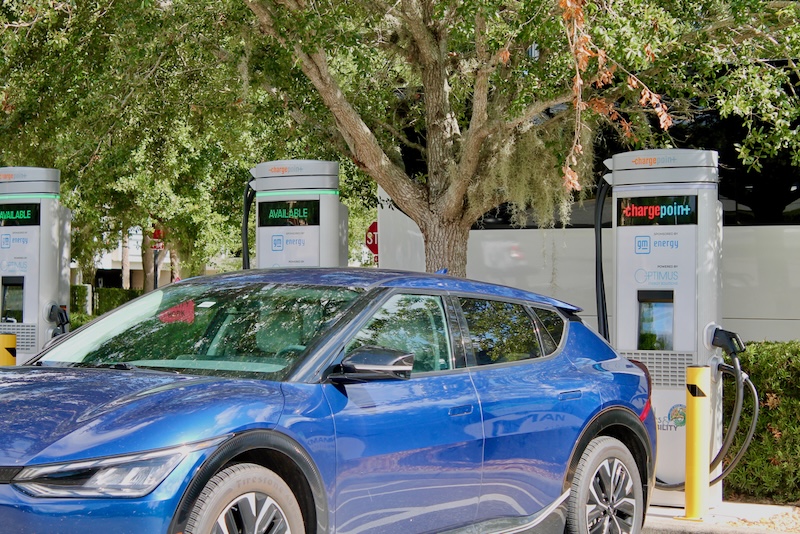
ChargePoint (NYSE: CHPT), a global leader in electric vehicle (EV) charging solutions, announced an expansion of its partnership with Optimus Energy Solutions, a U.S.-based charge point operator (CPO), to grow its network of public charging ports in the southeastern United States by more than 200 new ports. ChargePoint will serve as the exclusive solutions provider, delivering hardware, software, and services to support Optimus’ growing charging network, while Optimus will act as owner-operator of the sites.
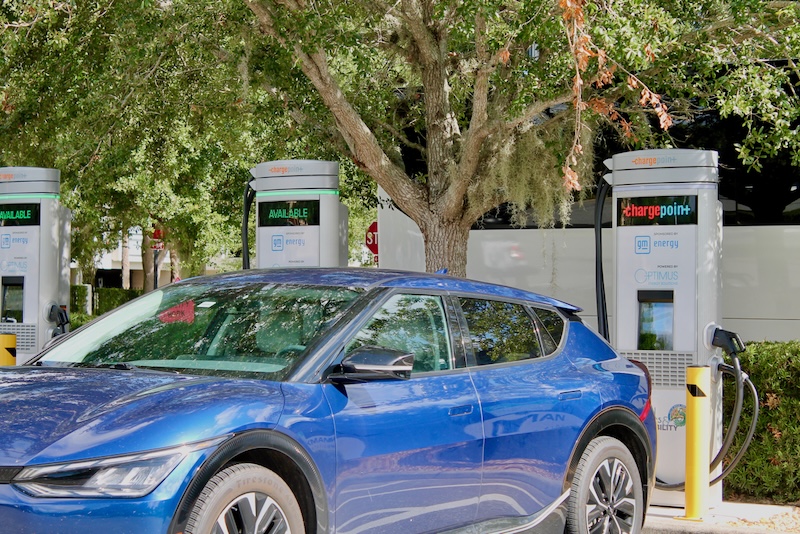
“Expanding access to reliable EV charging infrastructure is critical to accelerating the transition to electric mobility,” said Rick Wilmer, CEO at ChargePoint. “Our partnership with Optimus Energy Solutions demonstrates the strength of combining ChargePoint’s industry-leading charging solutions with experienced operators who are committed to building and scaling charging networks. Together, we are enabling a more seamless charging experience for drivers across the eastern U.S.”
“Our partnership with ChargePoint has been instrumental in establishing Optimus as a leader in EV charging infrastructure,” said Ben Pauluhn, President, Optimus Energy Solutions. “Leveraging ChargePoint’s technology and support allows us to meet the increasing demand for fast, reliable charging solutions. We are proud to expand our network and further support EV drivers across the Southeastern United States.”
The new charging deployments are focused primarily in high-demand markets, with many sites planned for popular quick service restaurants and retail centers, locations that see high charger utilization by pairing wanted amenities with convenient locations.
Combining ChargePoint’s end-to-end charging platform with Optimus’ operational expertise helps to close critical charging gaps and support continued EV adoption across key U.S. markets.
ChargePoint | https://www.chargepoint.com/

Porterville Unified School District (PUSD) is set to develop a comprehensive solar, battery energy storage, microgrid, and electric vehicle (EV) fleet charging project to meet the District’s intersecting energy, transportation, and resilience needs with clean, renewable, lower-cost electricity.
To develop the project, PUSD has partnered with ForeFront Power, a leading developer and asset manager of commercial and industrial-scale renewable energy solutions, as well as The Mobility House (TMH), an independent charge management provider. The project is being funded in part via a U.S. EPA Clean School Bus (CSB) Program grant, which the District secured with support from CALSTART, a nonprofit organization that connects businesses, government agencies, and industry partners to accelerate the adoption of clean transportation technologies.
The PUSD Zero-Emission Transportation Infrastructure Project and Microgrid will include a 763 kW solar array mounted on existing shade structures at the District’s north and south parking lots, along with a 408 kW / 1632 kWh battery storage system to store solar energy, provide resiliency, and discharge power to shave peak demand. A microgrid controller will enable the facility to disconnect from Southern California Edison’s electrical grid when needed, drawing power directly from the District’s on-site solar energy and battery storage assets.
The solar-plus-storage system will support 35 DC fast charger ports to serve the District’s planned fleet of electric school buses. These fast chargers will be connected to The Mobility House’s charge management system, ChargePilot®, which will enable the fleet to draw power directly from PUSD’s on-site energy systems in tandem with grid electricity. The EV charging infrastructure will also include eight charging ports in the north parking lot that will serve the District’s “white fleet.” Two of the eight chargers will feature bi-directional charging capability, which enables an EV to function as a “battery on wheels,” storing and discharging power back to the grid with vehicle-to-grid services (V2G). V2G technology will help the District support grid resilience, offset energy expenses, and extend an additional clean energy resource to students, staff, and the broader community.
Both V2G and microgrid technologies are integral to Porterville’s resiliency strategy, which includes protecting the broader community in the event of emergencies and power outages, such as Public Safety Power Shutoff (PSPS) events.
“We are excited to advance this important infrastructure project, which supports the District’s long-term goals for sustainability, energy resiliency, and responsible stewardship of public resources,” said Brad Rohrbach, Assistant Superintendent of Business Services, Porterville Unified School District. “This project represents a significant investment in our students, schools, and community, while helping position the District for a more efficient and sustainable future. We are grateful to CALSTART for their critical support in helping the District secure this grant through the U.S. Environmental Protection Agency. We also appreciate the partnership and expertise provided by ForeFront Power and The Mobility House.”
Upgrading the District Fleet, A Community Lifeline
Located in Tulare County in California’s Central Valley, the Porterville region experiences some of the nation’s worst air quality, which disproportionately affects student respiratory health. PUSD serves more than 13,000 TK–12 students across 22 campuses, 88.9% of whom are from socioeconomically disadvantaged households, making the District’s transportation fleet a critical lifeline for many students who rely on school buses for access to education and extracurricular activities. In response to these conditions and rising energy costs, the District launched its PUSD Energy & Sustainability Program in 2019, aiming to reduce energy costs and GHG emissions by 80% by 2030, and is pursuing this EV infrastructure project as a key pillar of the program.
Once complete, the 1,171‑kW solar, battery storage, and microgrid system is expected to produce nearly 1,425,000 kWh of clean, renewable electricity annually. This onsite generation, combined with smart dispatch of the battery and V2G resources, is designed to offset approximately 80% of the District facilities’ electricity consumption—including the anticipated annual SCE utility bill for electric bus charging—and avoid an estimated 21,000 metric tons of CO₂ emissions over the 30-year project lifecycle. The District’s plan to transition all school buses to electric by 2035 will save an additional 15,000 metric tons in avoided CO₂ emissions from reduced tailpipe pollution, bringing their total expected CO₂ emissions reduction over the same 30-year period to approximately 37,000 metric tons. This is equivalent to the GHG emissions from over 3.6 million gallons of diesel fuel burned.
Public-Private Partnership Enables Long-Term Budget Certainty and Savings on Electricity and Fuel
Designed, engineered, and developed by ForeFront Power, the future project is designed for an expected lifetime of 30 years. During this period, PUSD will partner with ForeFront Power for ongoing Asset Management services. This project will provide PUSD with budget certainty while reducing its dependence on fossil fuels to power its fleet. The transition to electric buses will lower fuel and maintenance costs and provide long-term savings over the project’s lifetime, protecting PUSD’s budget from increasing diesel and utility rates.
“We applaud Porterville USD for pursuing this innovative project for zero-emission infrastructure,” said Dr. Ruben Fontes, CEO at ForeFront Power. “When complete, this clean energy portfolio will serve as a national model for how vulnerable communities can mitigate rising energy and fuel costs, improve public health, meet ambitious climate goals, and protect themselves from climate emergencies.”
"We are glad to be a part of such an innovative and ambitious project to benefit the school district and community of Porterville,” said Greg Hintler, CEO of The Mobility House North America. “Clean energy technologies such as solar microgrids, electric school buses, and V2G have enormous potential to provide clean and affordable energy and transportation solutions for school districts and communities across the country.”
U.S. EPA’s Clean School Bus Program Delivers for Porterville
The upcoming project is anchored by a major federal investment through the U.S. EPA’s Clean School Bus (CSB) Program. Porterville Unified School District has secured federal grant funding to replace diesel buses with zero‑emission buses and install fast charging and clean energy infrastructure. As part of this award, the EPA funds Porterville USD directly, and CALSTART serves as the District’s technical and project management partner—handling implementation support, monitoring and reporting, workforce and community programs, and positioning the District for future federal and state grant opportunities. PUSD has also pursued other funding opportunities including California Air Resources Board and California Energy Commission’s Zero Emission School Bus and Infrastructure (ZESBI) incentive project.
“PUSD’s commitment to decarbonize their fleet is transformational for the San Joaquin Valley, for the broader Porterville community, and for school districts that are navigating similar transitions. Funding programs that reduce capital costs are critical to make these school electrification projects possible,” said Valerie Thorsen, P.E., Regional Director at CALSTART. “PUSD is not only transitioning their fleet, but they have also provided EV internships in partnership with Climate Action Pathways for Schools and are actively enabling clean energy jobs through their Academy of Energy and Resource Occupations (AERO) Pathways Program.”
Procurement Assisted by Joint Power Authority SPURR and the PAVE Program
PUSD procured its Zero-Emission Transportation Infrastructure Project and Microgrid by leveraging the Procurement Assistance for Vehicle Electrification (“PAVE”) Program. The PAVE Program is managed by SPURR, a joint powers authority dedicated to helping the California public sector control and reduce utility expenses. PAVE is designed to help public agencies streamline the procurement process for electric vehicles and charging infrastructure through an easy infrastructure roadmap and a single source for planning, installation, and management of complicated multi-phase EV charging infrastructure projects. Through PAVE’s integrated RFP process, the District selected ForeFront Power to develop, finance, and construct its EV charging infrastructure project, and The Mobility House (TMH) as its charge management technology provider.
Advancing PUSD’s Climate Action Pathways for Schools (CAPS) Student Initiative
This upcoming project will also advance PUSD’s Climate Action Pathways for Schools (CAPS) initiative by linking classroom learning, career pathways, and real-world clean energy infrastructure. Through CAPS-aligned project-based units, energy audits, and analysis of the District’s solar, energy storage, and EV charging systems, students will use the campus as a living lab to build skills in renewable energy, sustainability, and conservation. Porterville USD, ForeFront Power, CALSTART, and The Mobility House have also developed a community outreach program to educate local residents on the clean transportation and air quality benefits of the microgrid and EV transportation infrastructure, along with hands-on CAPS internships that provide experience in zero-emission fleet operations while advancing district climate and sustainability goals.
ForeFront Power | www.forefrontpower.com

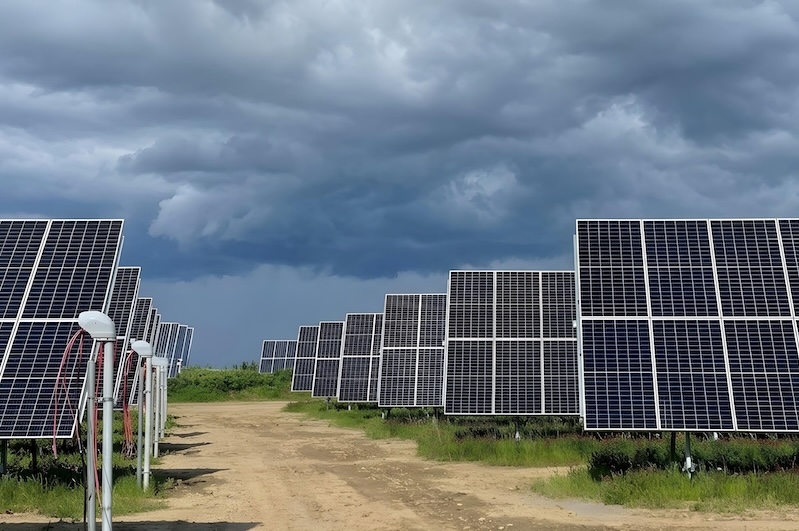
Adapture Renewables, Inc. (Adapture), a U.S. utility-scale solar and energy storage developer, owner, and operator, recently announced that its Cherry Valley Solar Energy Project located in Arkansas has achieved substantial completion and commercial operations. Located in Cross County, Arkansas, the Cherry Valley Solar Project is a 185-megawatt, utility-scale renewable energy facility that contributes long-term, locally sourced clean power to meet growing regional energy demand.

The project is expected to generate enough clean energy to power approximately 30,000 Arkansas homes annually and is expected to deliver an estimated $16 million in economic impact to the region over its lifetime — funds that can help support local public services and infrastructure. The project reached substantial completion on schedule at the end of last year.
“Reaching commercial operation at the Cherry Valley Solar Project underscores Adapture’s ability to deliver scalable clean energy projects that strengthen regional grid reliability while creating real economic impact at the local level,” said Thomas Houghton, President and CEO of Adapture Renewables. “This milestone reflects not only our team’s commitment to responsible development, but also the collaboration and trust we built with local stakeholders and our contractors throughout construction.”
Adapture drew on its full suite of in-house development, EPC management, legal, and project finance capabilities to bring the Cherry Valley Solar Project from acquisition through commercial operation. The company is actively developing a growing pipeline of utility-scale solar and battery energy storage projects across the United States, building on the operational discipline and long-term ownership philosophy that have defined its approach from the start.
“Projects like Cherry Valley demonstrate how developers can help meet rising energy demand with new, locally sourced generation,” added Houghton. “By adding reliable renewable capacity in Arkansas, the Cherry Valley Solar Project supports a more resilient energy system and contributes to the state’s continued economic growth.”
Acquired, financed, and constructed in just over two years, Cherry Valley represents the final project to achieve commercial operation within Adapture's Titanium Portfolio, a three-site, 441 MW portfolio spanning Arkansas and Illinois.
Adapture Renewables | https://adapturerenewables.com
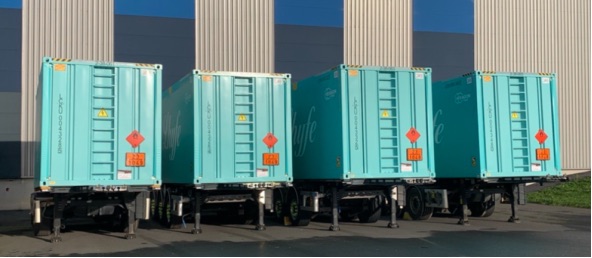
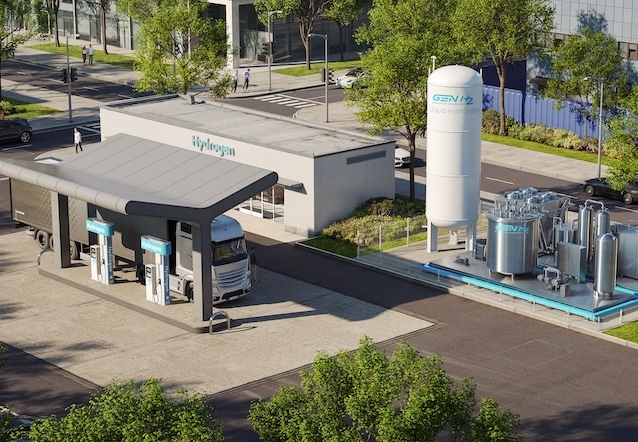
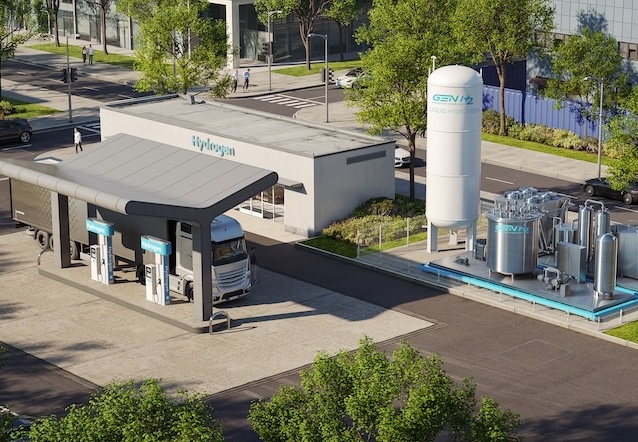
Lhyfe (EURONEXT: LHYFE), one of the world’s pioneers in the production of green and renewable hydrogen for decarbonisation, is strengthening its logistics capabilities, which since 2021 have supported some sixty or so industrial and mobility players in their energy transition.
Lhyfe is thereby reinforcing its ability to further develop the European green and RFNBO hydrogen market through bulk distribution. On this occasion, the company is proud to present the key pillars of its supply chain.
Green hydrogen production and supply: key drivers of Lhyfe’s growth
In 2021, Lhyfe commissioned its first green hydrogen production site in France (Pays de la Loire), followed by two additional sites in Brittany and Occitanie. In 2025, a first site was installed in Germany (Baden-Württemberg). These four sites obtained RFNBO certification in 2025.
The company now has 21 MW of installed capacity, which is set to increase by 70% in 2026, enabling broader territorial coverage and closer proximity to customers.
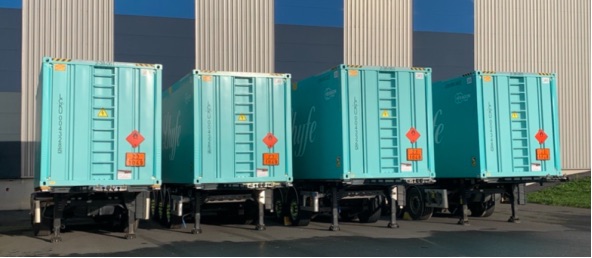
Alongside its production activities, Lhyfe has developed one of the most advanced hydrogen supply operations in the European market:
For the order of its 10 new containers, Lhyfe once again placed its trust in Hexagon Purus. The two companies share a strategic industrial shareholder, Mitsui & Co., a global trading and investment company headquartered in Japan.
Investment to support ramp-up in deliveries
In 2025, Lhyfe passed the milestone of 1,000 deliveries. The company significantly accelerated operations in France, Sweden, and Germany, averaging 55 deliveries per month to mobility and industrial customers, thereby strengthening its European footprint.
Over the year, the Group completed more than 850 deliveries in Europe, an increase of over 80% compared to 2024. Lhyfe works with a wide range of players: mobility players (such as BMW Group, TEAL Mobility, H2 MOBILITY) and industrial companies (including Karp Kneip, Essent – energy supplier for the industry), illustrating the broad spectrum of decarbonised hydrogen applications—from heavy mobility to industrial processes.
Lhyfe’s expansion of its operational and logistics capabilities gives it access to the most demanding markets—particularly the chemicals sector—which require not only high hydrogen purity but also absolute reliability and consistency of supply.
Since commissioning its first site in 2021, Lhyfe has avoided the emission of 4 million tonnes of CO2 thanks to its green hydrogen production.
Matthieu Guesné, Founder and CEO of Lhyfe: “The development of the green hydrogen supply chain is a cornerstone of the sector’s growth. The bulk market is the first to scale up—it is already enabling pioneering players to initiate their energy transition. To support them, we have been committed since 2021 to building a comprehensive, efficient, reliable, and flexible supply chain.
Beyond challenging traditional hydrogen industry practices, we have fundamentally rethought them, particularly to adapt to production based on renewable energy. It is an exciting challenge that we continue to address every day, constantly improving our model alongside our on-site projects—installed directly at customer facilities with hydrogen supplied via pipelines—and pipeline network solutions. The sector will require multiple distribution formats to meet diverse use cases, and we are ready to deliver on those needs.”
Lhyfe | https://www.lhyfe.com/

Alternative Energies Jul 06, 2026
From extreme ice in the Midwest to the high winds in the Southeast, extreme weather is becoming more frequent and consequential for utilities and the communities they impact. For decades, choosing a conductor often centered on ampacity, cost, and sta....
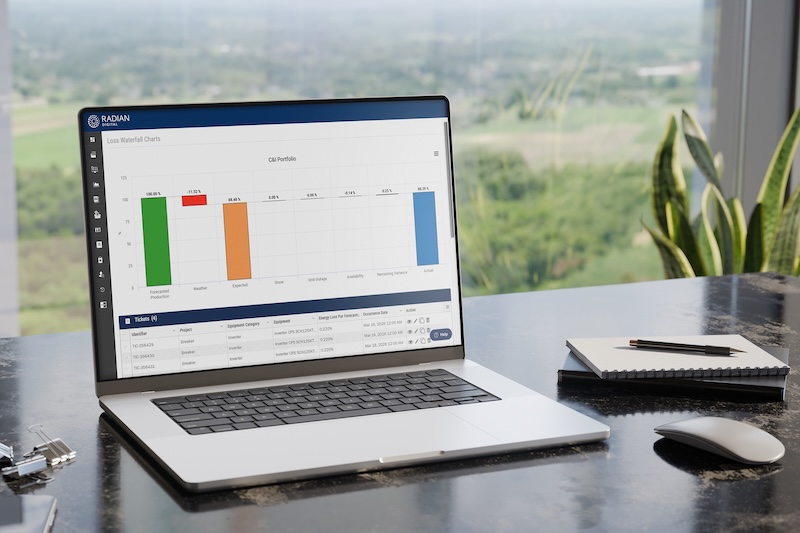

Building or operating energy infrastructure today entails managing more complexity with fewer people. Fueled by the data center buildout and rising energy demand, operators face long interconnection queues, greater project volume and scale, and an in....
A decade ago, most utility-scale solar projects were built on flat, well-drained land. Today, those sites are largely gone. What remains are parcels that sit lower, drain poorly, or come with a history of standing water. At the same time, storms a....

The season for hail storms is getting longer, producing storms with large hail more frequently during an expanded season. Case in point: On March 10, 2026, softball-sized hail fell in northern Illinois. While that might not have been news had it occu....

As wind development pushes into more rem....

They equip existing wind turbines with n....

Half of North America's installed wind f....
Power transformers play a vital role in maintaining stability across electrical networks. Their failure can result in unplanned outages, high repair costs, and significant operational disruptions. Traditionally, transformer maintenance has relied on ....

The 54,000-square-foot Victory Pickleball looks ordinary from the parking lot. Inside, fifteen indoor pickleball courts host leagues, lessons, and open play seven days a week. Hiding on the southern roof is a 250kW solar array, while on a pad behind ....
Extreme weather events such as hurricanes, tornadoes, earthquakes and blizzards have increased over the past several years. Alongside this trend, the need to protect critical onsite energy storage equipment has grown in order to maintain grid reliabi....
From extreme ice in the Midwest to the high winds in the Southeast, extreme weather is becoming more frequent and consequential for utilities and the communities they impact. For decades, choosing a conductor often centered on ampacity, cost, and sta....
Monitoring platforms tell you how an asset performs. Investment-grade asset management tells you whether the investment is working, and what to do about it when it isn't. Most renewable energy monitoring platforms have the same basic architecture:....
Energy transition is entering a new phase, defined less by how energy is generated and more by how it is stored, managed, and delivered. As energy systems become increasingly decentralized, the ability to provide reliable, high-density, long-duration....