




Curtailing Catastrophe


As the wind energy industry pushes toward higher power ratings and increased torque densities, a significant architectural shift is occurring within the drivetrain: the replacement of traditional rolling element bearings with journal bearings (also known as plain or sliding bearings). While this transition offers benefits in terms of reliability, compact design, and load-carrying capacity, it fundamentally changes how the industry must monitor these assets to prevent catastrophic failure.
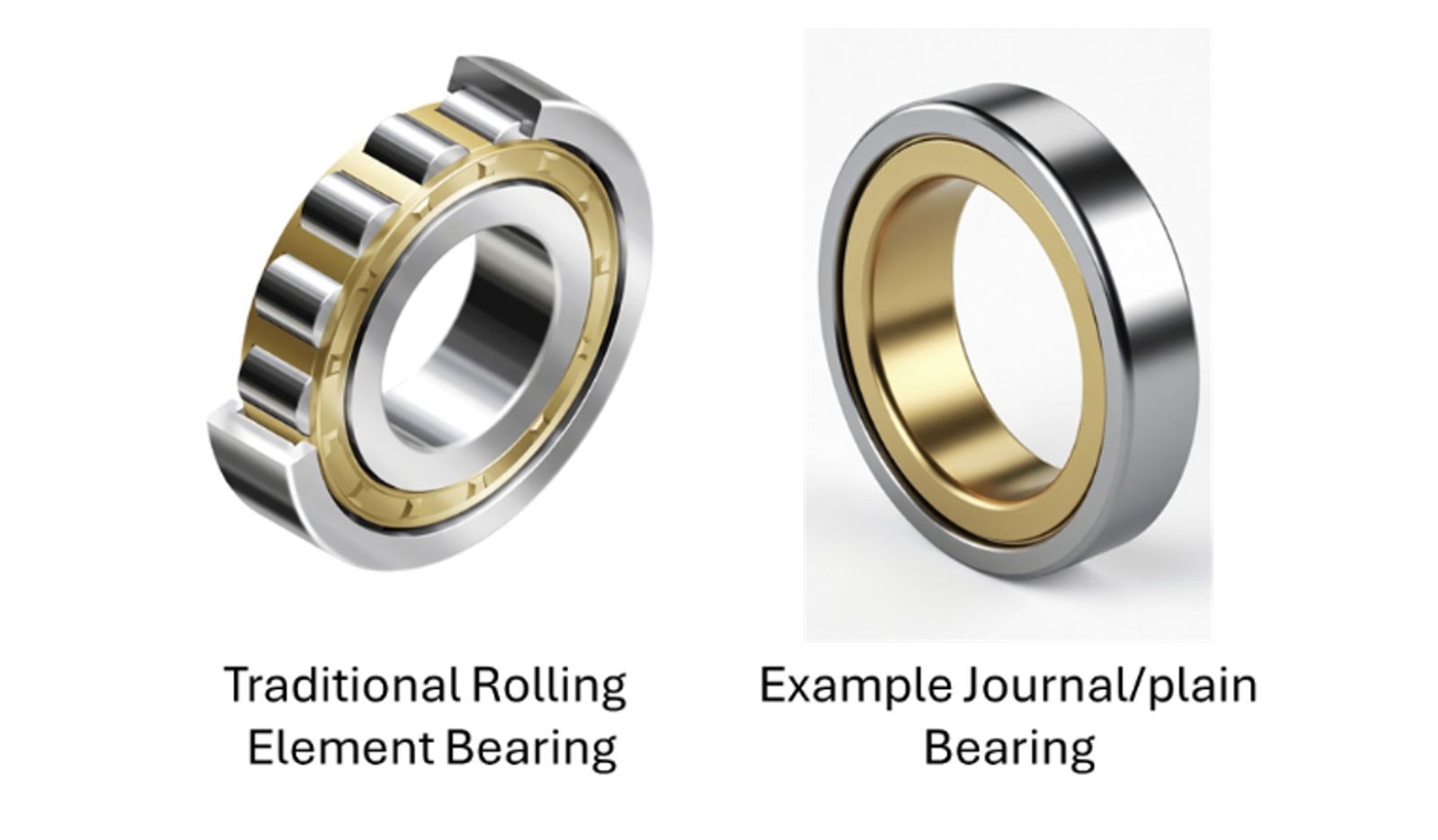
The shift to journal bearings
Next-generation gearboxes are increasingly adopting planetary journal bearings. Unlike roller bearings, which rely on the physical contact of steel balls or rollers, journal bearings operate on a thin film of pressurized oil. This oil “cushion" eliminates the fatigue-limited life of rolling elements, theoretically allowing for extended service life under ideal conditions.
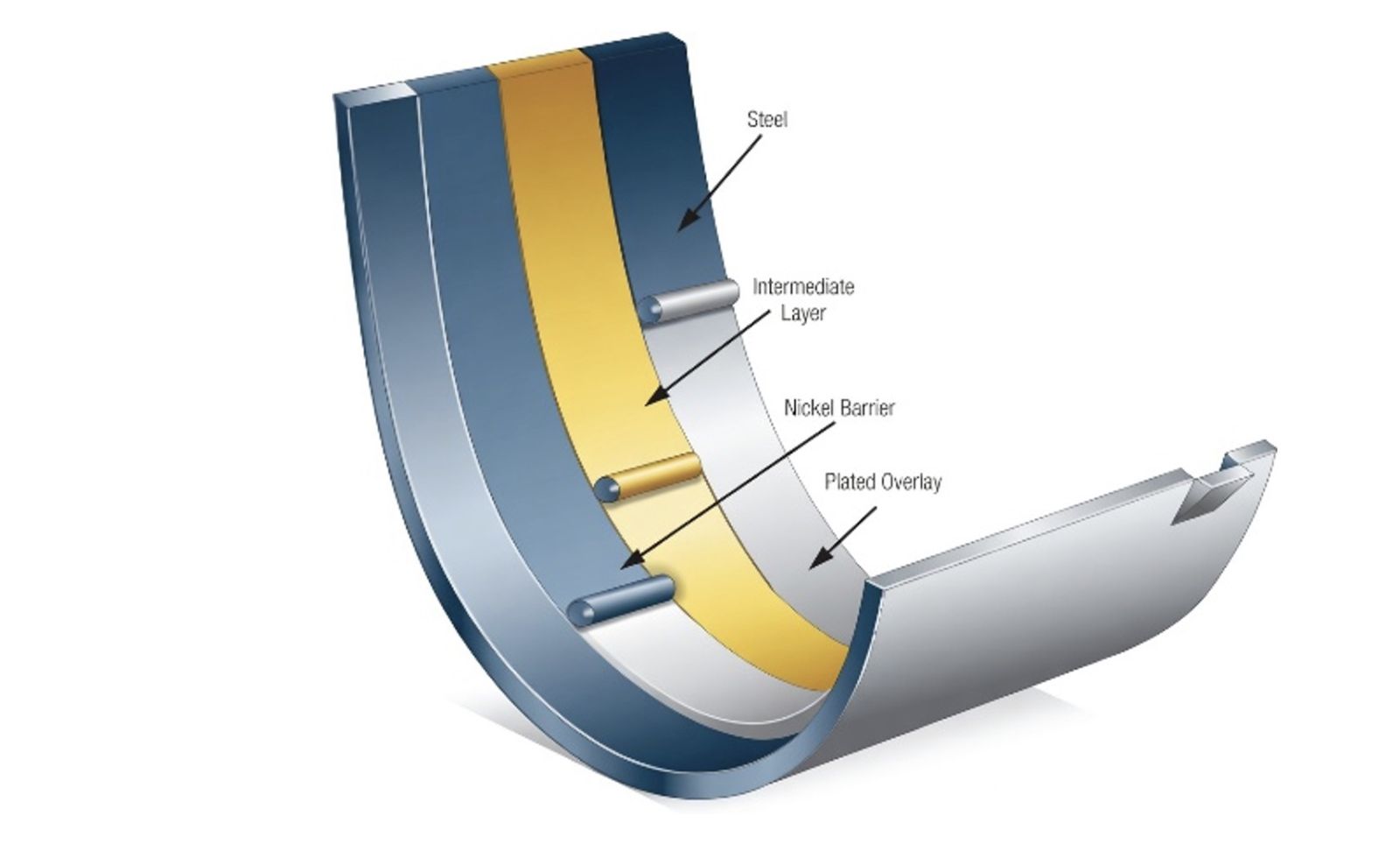
However, this simplicity comes with a trade-off. Journal bearings can be sensitive to lubrication quality and supply. A momentary loss of oil pressure or the presence of abrasive contaminants can lead to a "seizure" or "wipe" of the bearing material (often a non-ferrous babbitt or bronze alloy) with almost no warning time. In addition, commonly used condition monitoring systems (CMS) like vibration may face challenges diagnosing journal bearing failures since there are no rolling elements to induce identifiable vibration signals.
Vibration monitoring may not be enough
For decades, vibration analysis has been the gold standard for wind turbine condition monitoring. It excels at detecting "modulation" or "impacting" from spalled races or cracked teeth in traditional gearboxes. Journal bearings are different. Since they have no rolling elements, journal bearings do not produce the distinct high-frequency "ringing" or impact signatures that vibration systems are designed to catch.
In fact, a journal bearing can be in a state of advanced wear — with its soft metal lining literally being wiped away — while still appearing "smooth" to a standard vibration sensor. By the time a journal bearing generates enough vibration to trigger an alarm, the damage is typically catastrophic, requiring a full gearbox replacement.
The critical role of wear debris monitoring
Wear debris monitoring offers advantages for journal bearings. Journal bearing failures involve the rapid shedding of non-ferrous (babbitt) material (like copper or lead), detecting these microscopic particles in the oil is the most reliable way to spot early-stage damage.
- Early detection: Online wear debris sensors can detect non-ferrous particles as small as 150µm [detection of ferrous particles at even smaller sizes], providing an "early warning" before a total seizure occurs.
- Material specificity: wear debris analysis can distinguish between ferrous (steel) particles from gears, and non-ferrous (babbitt/bronze) particles from journal bearings. Detection of nonferrous particles indicates the increased risk of a potential fast journal bearing failure, allowing operators to make quick and informed decisions about shutdown.
- Predictive maintenance: By tracking the rate of ferrous debris generation, operators can perform "smart de-rates" lowering the turbine's power output to extend its life until a planned repair can be scheduled during a low-wind period.
Oil condition: The preventive partner
While wear debris monitors and vibration detect damage to the mechanical components, oil condition monitoring (OCM) detects issues with the lubrication. Typical OCM sensors track parameters like viscosity, water contamination, and degradation in real-time.
In a journal bearing system, maintaining the correct viscosity is non-negotiable; if the oil becomes too thin or too thick whether through degradation or contamination, the hydrodynamic film can collapse. Real-time OCM ensures the "oil cushion" remains thick enough to prevent metal-to-metal contact during harsh operating conditions like low-speed idling or high-torque gusts.
A combined approach: The new standard
The most effective strategy for next-gen gearboxes is a holistic combination of vibration, wear debris, and oil condition monitoring. By integrating these three data streams, wind farm operators can transition from reactive "firefighting" to a proactive strategy. For example, if an OCM sensor detects a spike in water contamination, an operator can check for ingress or dehydrate the oil before the wear debris sensor starts seeing particles and vibration increases.
|
Monitoring Type |
Primary Strength |
Weakness |
|
Vibration |
Detects gear teeth pitting and high-speed shaft issues. |
Often misses early-stage journal bearing wear. |
|
Wear Debris |
Provides the earliest detection of journal bearing "wiping" and gear wear. |
Does not monitor the quality of the lubricant itself. |
|
Oil Condition |
Identifies water, degradation, and viscosity changes that lead to film collapse. |
Cannot detect damage that has already occurred. |
Conclusion
As the industry scales, the margin for error shrinks. The inclusion of journal bearings is a bold step forward in wind turbine engineering, but it necessitates a smarter approach to maintenance. For the next generation of gearboxes, online wear debris and oil condition monitoring are no longer optional "add-ons,” they are the essential sensors that ensure these assets reach their 25-year design life.
Jeremy Sheldon is Director - Asset Management & Analytics at Poseidon Systems, which develops and manufactures real-time condition monitoring sensors and solutions that provide users with reduced O&M costs and improved asset reliability.
Poseidon Systems | www.poseidonsys.com
Author: Jeremy Sheldon
Volume: 2026 May/June