




On Shaky Ground: Why Cheap Foundations Become Expensive on Difficult Sites


The solar industry has spent the last decade relentlessly driving down cost. Module prices fell. Installation efficiencies improved. Supply chains have globalized. In many ways, the playbook worked.
But as development pushes into more challenging terrain: rocky soils, variable geotechnical conditions, and remote locations, that same cost-first mindset is beginning to show its limits. Developers now routinely confront conditions earlier generations of projects didn’t face: colder climates, uneven ground, and subsurface compositions that dramatically vary within a single site.
Suddenly, what looks cheap on paper often becomes expensive in reality.
In competitive procurement environments, foundation systems are often evaluated on unit cost: dollars per pile, dollars per screw, dollars per installed watt. This works on straightforward sites with predictable soils. Crews move faster. Designs hold. Schedules stay intact
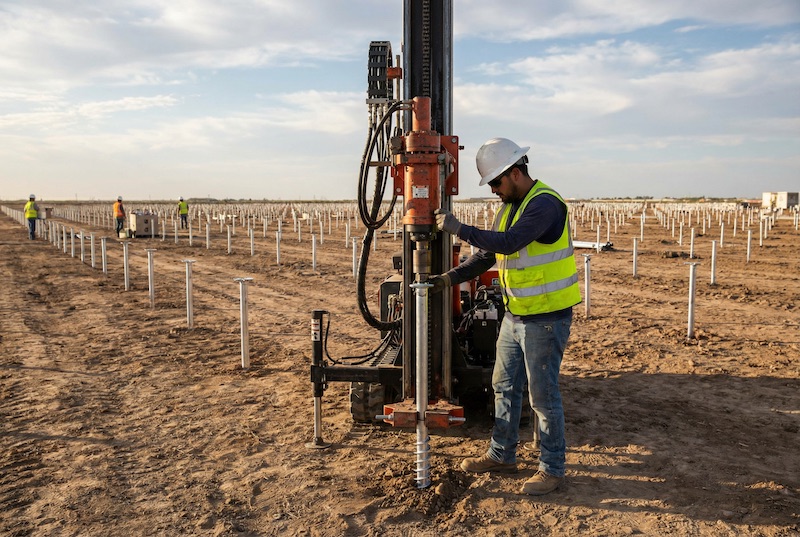
But difficult sites do not behave that way. They expose every weakness in the system. Minor inconsistencies in product geometry become installation delays. Variability in material performance increases refusal rates. Delivery uncertainty disrupts tightly constrained installation windows. The real cost of a foundation system is driven by real conditions: crew productivity, installation predictability, rework and redesign, and schedule adherence. When any of these break down, the economics shift dramatically.
What was a marginal cost advantage quickly turns into a compounding liability. Add schedule delays, and the impact compounds across the entire project.
Hidden multiplier: Supply chain rigidity
One of the most overlooked drivers of this cost escalation is supply chain structure.
Many foundation systems rely on fragmented, globally distributed supply chains. Design happens in one place, manufacturing in another, and delivery spans oceans. This model optimizes for price but sacrifices responsiveness. On difficult sites, conditions evolve in real time. Geotechnical assumptions prove incomplete. Installation crews encounter variability that demands field-level adjustments.
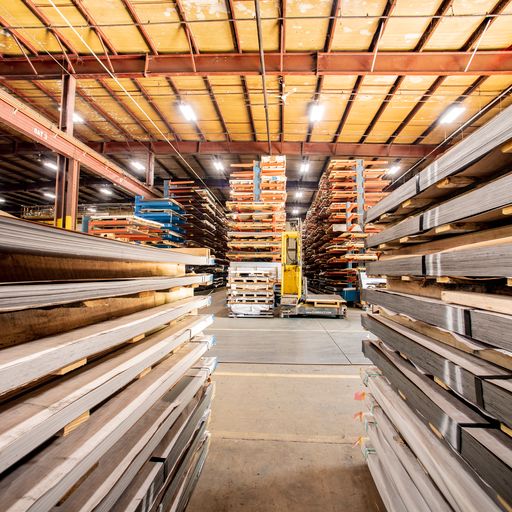
But when materials are already in transit, weeks or even months away, adjustments are no longer possible. The project is effectively locked into decisions made before the site was fully understood. What could have been a minor, low-cost adjustment becomes a major disruption: delays while waiting for revised components, workarounds in the field that reduce performance, and increased labor and equipment costs.
This dynamic is compounded by the current trade environment. Tariffs directly impact ground-mount solar with steel as the primary structural material. The broader regulatory direction is clear: domestic sourcing for supply chain transparency and traceability. In this context, rigidity, not price, becomes the dominant cost driver.
Why foundations are unforgiving
Foundation systems sit at the intersection of design assumptions and physical reality. Unlike other components, they cannot be easily adjusted once installation begins. They are directly exposed to soil variability, rock presence, moisture conditions, and installation constraints.
Utility-scale solar projects can extend over hundreds of acres, with a wide range of conditions. Even small deviations in geometry, coating, or material properties can have immediate consequences: increased torque, misalignment with racking systems, reduced installation speed. On a difficult site, there is little margin for error and limited ability to recover when things go wrong.
The stakes are rising. According to research, U.S. solar facilities can lose $5,720 per megawatt in a year alone due to equipment losses, with weather a key risk factor. When above-ground forces are already testing system integrity, the last place to introduce uncertainty is below ground.
The case for control over cost
As projects move into more complex environments, the definition of value must evolve.
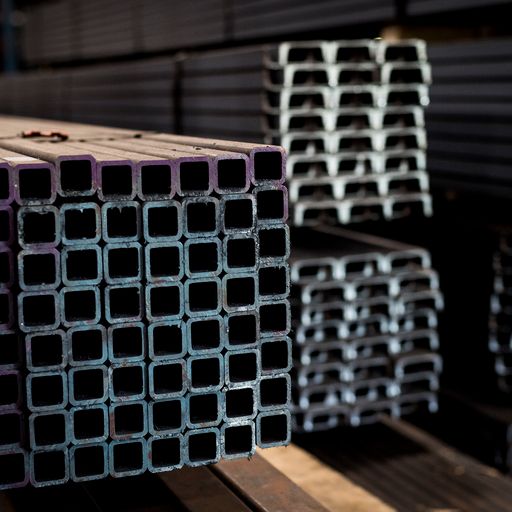
The lowest-cost solution is no longer the one with the lowest unit price. It is the one that minimizes variability, uncertainty, and the inability to adapt. This shifts the advantage toward more integrated supply models, where engineering and manufacturing are closely aligned, production can respond quickly to field feedback, and delivery timelines are shorter and more predictable.
This kind of vertical integration is not just a manufacturing preference. It is a direct response to the realities of building on difficult sites, where the ability to adapt is often the difference between a project that stays on schedule and one that doesn’t.
These systems may not always win on initial price. But they consistently win on execution certainty. And on difficult sites, certainty is what protects both schedule and margin.
The industry is entering a new, inherently more complex phase that requires a shift in how decisions are made. Procurement models that don’t account for execution risk will increasingly fail in these environments. Developers, EPCs, and asset owners must begin evaluating foundation systems and supply chains through a different lens. Not just what does it cost, but what happens when conditions are not ideal.
Cheap foundations do not stay cheap on difficult sites. They become expensive through delays, inefficiencies, and lost flexibility, costs that rarely appear in initial bids but ultimately define project outcomes. In complex solar projects, the winning strategy is not minimizing price. It is minimizing regret before the site has a chance to create it.
Robert Souliere is a solar infrastructure expert and the Director of Business Development at American Steel and Aluminum LLC (ASA), a New England-based manufacturer of domestically produced ground screws for utility-scale and commercial solar applications. ASA’s ground screws are compatible with most major tracker systems, fixed-tilt racking, and cable management platforms.
American Steel and Aluminum LLC | americansteelandaluminum.com
Author: Robert Souliere
Volume: 2026 May/June