




Keep Turbines Running in Punishing Environments


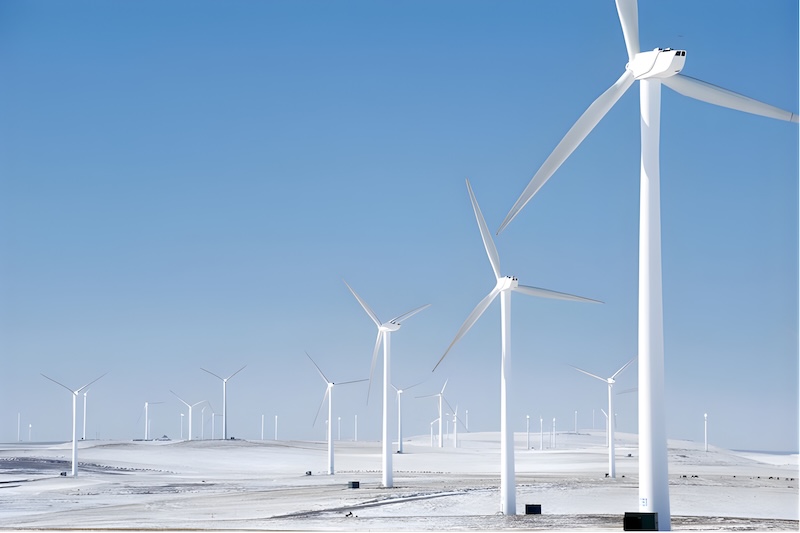
Half of North America's installed wind fleet has operated for fifteen to twenty years, with many turbines now facing conditions far harsher than original design parameters anticipated. From frozen plains where temperatures plunge below -20°F to mountainous regions with turbulent winds, and coastal installations battling corrosive salt air, heat and humidity; extreme weather accelerates aging of critical electrical components.
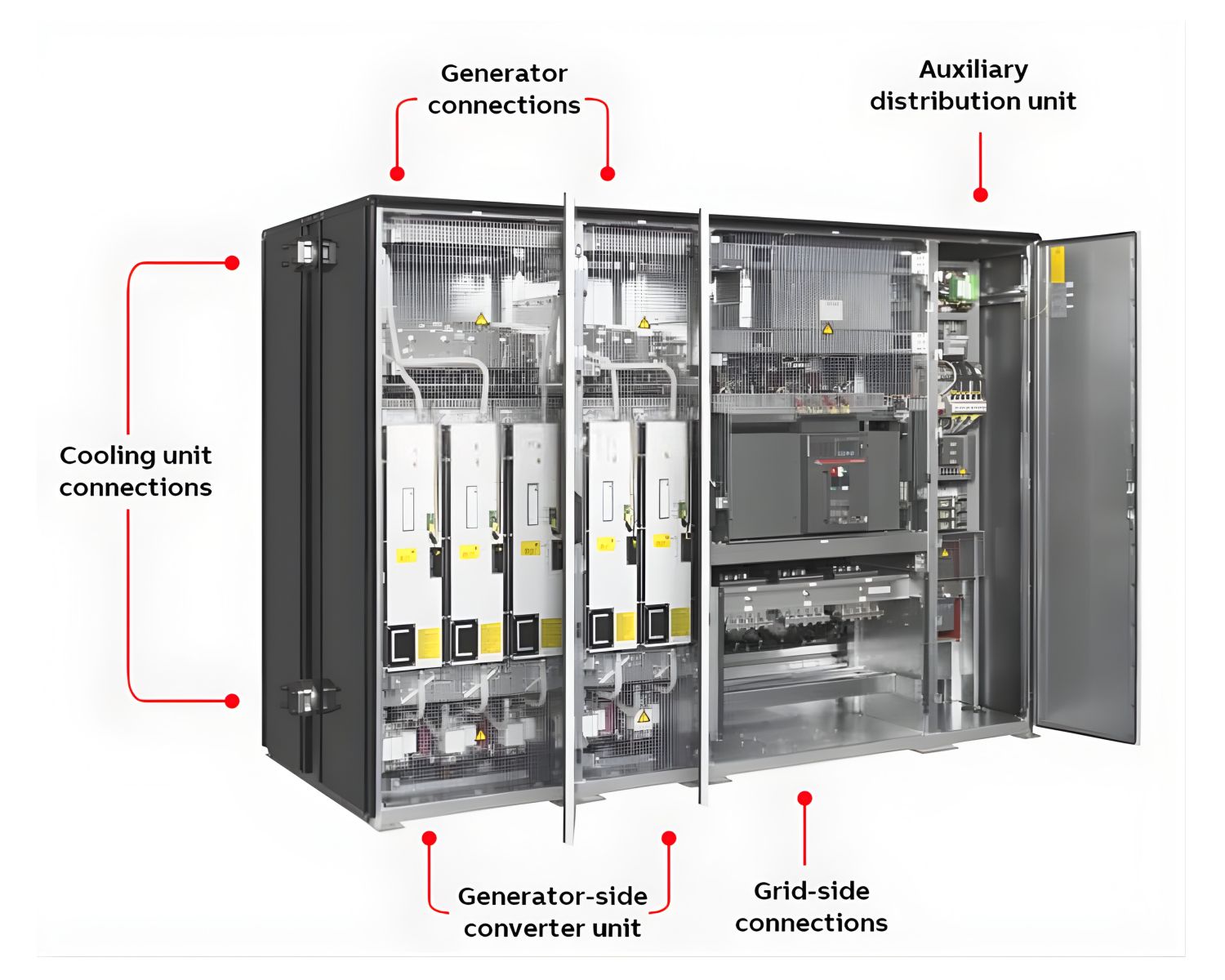
The challenge: electrical systems such as power converters and control hardware typically survive only ten to twenty years. Those components in the electrical powertrain are often overlooked and do not receive proper maintenance. With harsh environments that include large swings in temperature, dust, humidity, and corrosion, this timeline compresses further.
The environmental stress factor
Without proper lifecycle maintenance, the power converter, which regulates current flow from generator to grid, can quickly become the limiting factor. Control electronics face ten-to-fifteen-year lifespans as circuit boards succumb to environmental damage. Semiconductors (switching kiloampere currents at microsecond intervals) endure only fifteen to twenty years as rapid thermal cycling from on-off switching creates relentless stress.
Extreme environments intensify these challenges. Cold installations experience freeze-thaw cycles which stress power electronics, causing condensation. High-altitude sites face reduced cooling efficiency while day-night temperature swings accelerate degradation. Coastal turbines endure salt-laden air corroding connections. Complex terrain creates turbulent conditions and electrical transients that push components beyond design assumptions.
Traditional reactive maintenance cannot keep pace: original components become obsolete, spare parts grow scarce, and accessing remote locations adds cost. Installing 15-year-old technology in turbines experiencing extreme stress simply restarts the failure cycle.
Doubling lifetime through modernization
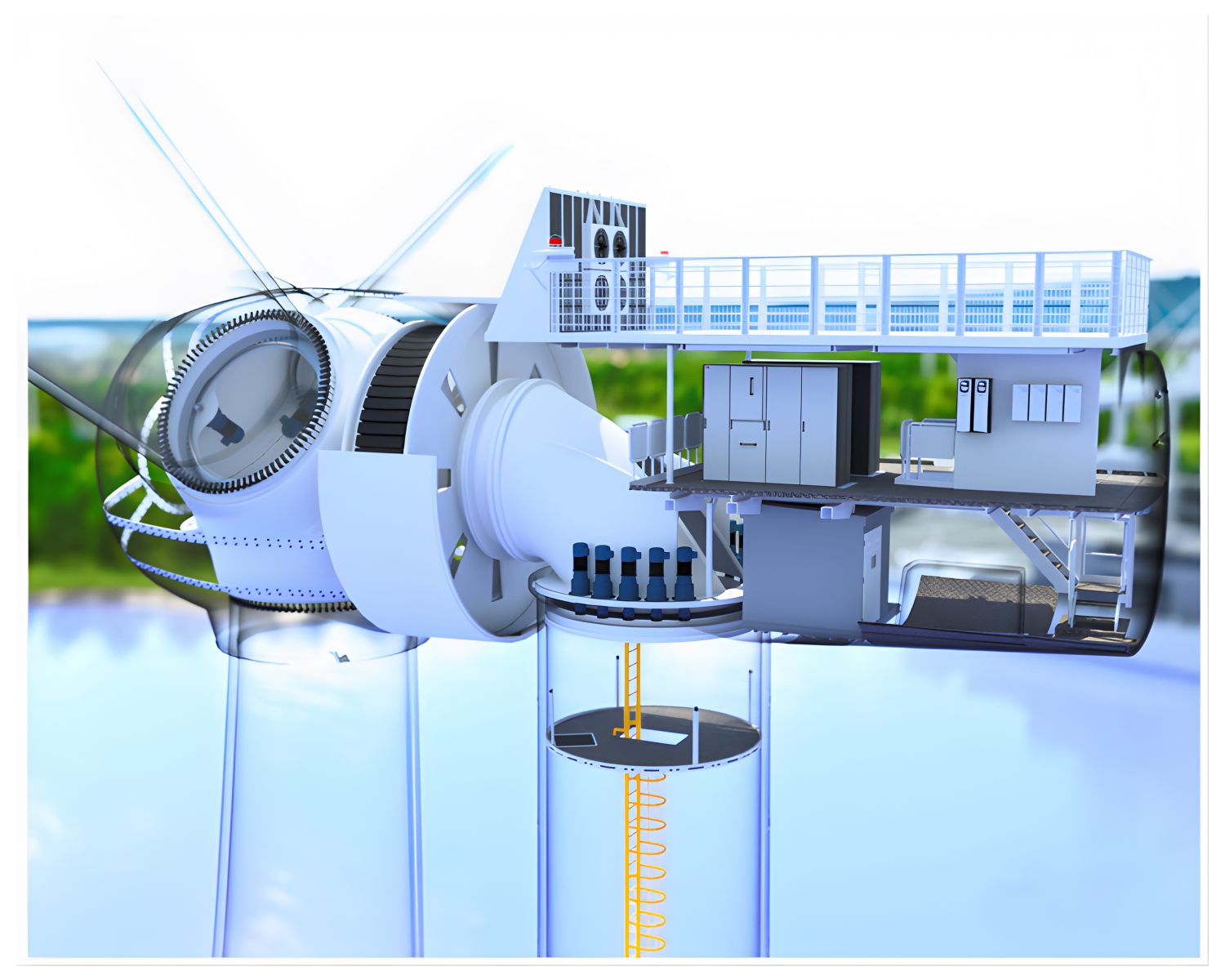
Power converter modernization offers a different path. Rather than repeatedly repairing aging components, modernization selectively upgrades the converter controller and power electronics (components with the shortest lifespans) while preserving busbars and cooling systems that support 40-year operation.
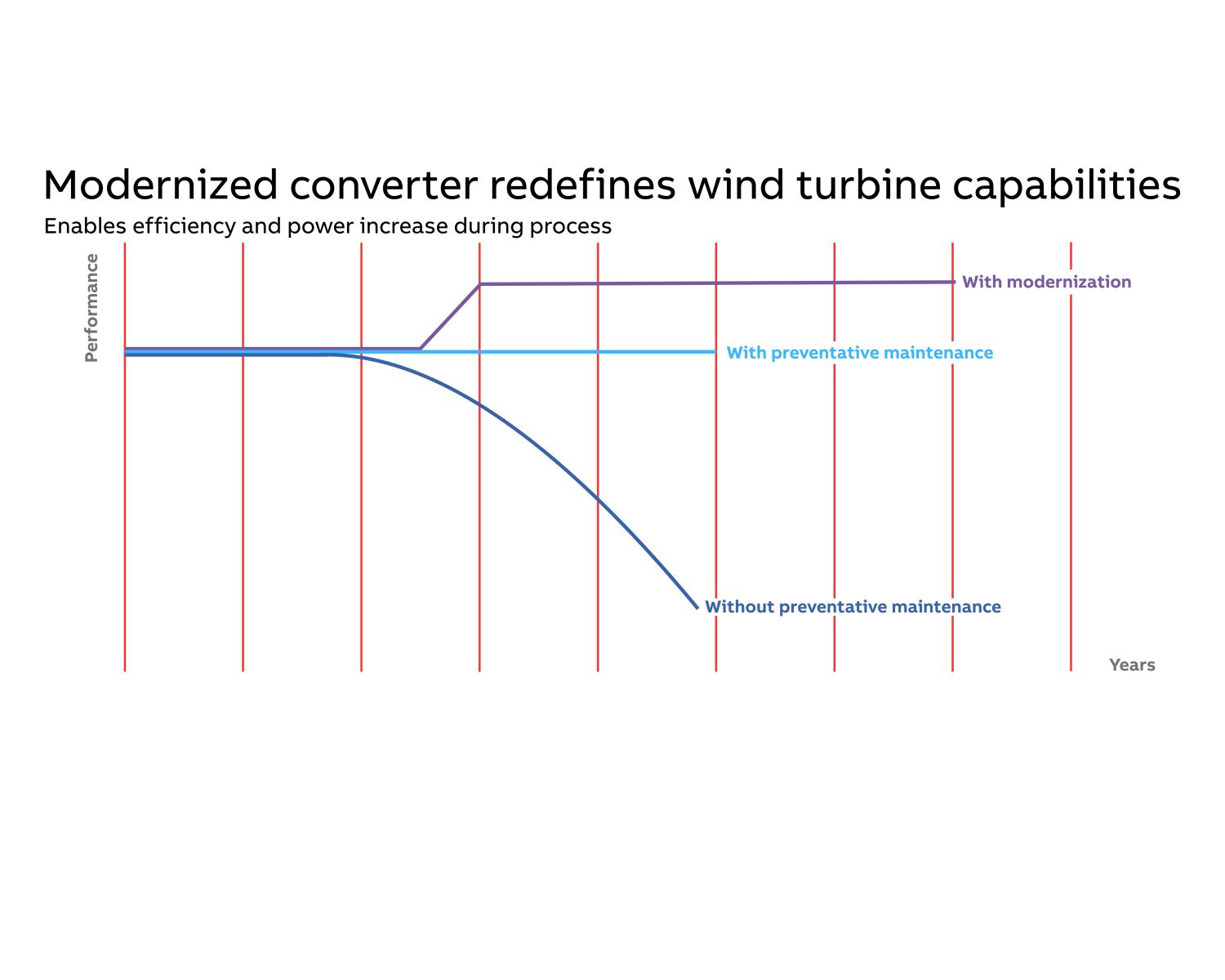
This leverages a significant leap in electronics performance. Today's controller CPUs operate up to five times faster than units installed two decades ago, with designs featuring no moving parts for better environmental protection. Modern semiconductor packaging delivers dramatically improved resistance to thermal cycling and higher switching frequencies which directly address thermal stress challenges.
Software advances also complement hardware improvements. New control methodologies improve converter efficiency by up to 5 percent. Combining advanced software with improved semiconductors enables power factor optimization by increasing power output by 5-10 percent. Modern control software provides inertia response ensuring power production continues during grid disturbances, and enables grid-forming capabilities providing voltage stability even when main grid voltage is absent —critical for turbines on weak grids in remote locations.
Field-proven performance in harsh conditions
Field experience across North America demonstrates measurable benefits. In cold climate wind farms, upgraded control hardware with improved thermal management has reduced unplanned outages from temperature-related failures by up to 40 percent. Modern converters maintain functionality during extreme cold snaps that would have disabled older systems.
Mountain installations benefit from advanced control algorithms smoothing power fluctuations from turbulent wind, reducing stress on power electronics while maintaining grid stability. Coastal sites with modernized converters featuring enhanced environmental protection from humidity show dramatically improved reliability. Sites that previously experienced annual corrosion-related failures now operate for years between maintenance interventions.
Operators report increased availability, reduced maintenance interventions, and annual energy production gains up to 5 percent. These improvements translate directly to ROI while avoiding capital costs, permitting challenges, and extended timelines of full repowering.
Pathways for environmental challenges
The industry offers approaches to modernization based on asset type, condition, and environmental severity:
Upgrade: Selective replacement of aging components with the latest technology, featuring enhanced environmental resilience through improved thermal management, advanced coatings, and superior sealing. This extends lifetime operation while adding new functionalities, making it ideal for extreme weather locations.
Replacement: Full installation of next-generation converter technology engineered for harsh environments, designed for placement inside the tower with enhanced climate control or in ruggedized outdoor configurations. It doubles converter lifetime even in the most demanding locations.
A practical alternative in challenging terrain
Full repowering in extreme environments faces compounded challenges: lengthy permitting, limited construction windows, difficult access to remote or mountainous sites, and environmental sensitivities. These barriers often make repowering impractical or prohibitively expensive.
Converter modernization offers a lower-risk alternative implemented during standard maintenance windows, requires minimal heavy equipment access, and avoid permitting complexity. By improving electrical resilience without replacing mechanical components, operators maximize return on investment while maintaining operational flexibility.
Engineering resilience for the long term
As the wind industry expands into increasingly challenging environments, extending asset lifetimes in extreme weather and complex terrain becomes as critical as deploying new capacity. Power converter modernization that respects original design principles while upgrading selected older component technology emerges as a practical, field-proven strategy doubling turbine lifetimes to forty years or more.
By addressing root causes of electrical degradation with technology engineered for environmental resilience, modernization enables aging turbines to operate reliably through extreme cold, intense heat, corrosive atmospheres, and turbulent wind patterns. This transforms today's aging wind infrastructure into tomorrow's resilient clean energy backbone, capable of withstanding whatever conditions North America's diverse climates deliver while producing clean electricity every single day of the year.
 Michelle Schwery, US Business Line Manager for Renewable Power at ABB, is responsible for the strategic initiative and deployment of the Renewable business in the United States, from product to service. She has over 20 years of experience in industrial motors, drives, and electrical power distribution for critical environments across a variety of industries. Michelle holds an MBA with a focus on Organizational Development. She is also a champion for Circularity, advocating for and implementing sustainable products and practices.
ABB | www.abb.com
Author: Michelle Schwery
Volume: 2026 May/June