




Balancing Strength, Stability, and Resilience: Choosing the right conductor for the weather


From extreme ice in the Midwest to the high winds in the Southeast, extreme weather is becoming more frequent and consequential for utilities and the communities they impact. For decades, choosing a conductor often centered on ampacity, cost, and standard sag-tension performance. While those factors still matter, they no longer tell the full story. As extreme weather continues to threaten grid reliability, utilities need to reevaluate their approach to conductor selection to accommodate various types of storms.
What “extreme weather” means for overhead conductors
Extreme weather affects overhead conductors in several distinct ways. The main stressors include heavy ice with concurrent wind, hurricane-level wind pressures, and emergency thermal loading during contingencies. These stressors can cause several familiar but costly failures: excessive sag that threatens clearance, structural overload that damages towers or poles, and long-term fatigue that leads to outages.
Utilities must evaluate what types of weather and associated risks cause the most impact and choose the appropriate conductor to combat the dominant failure mechanisms. When doing this, utilities typically take one of two approaches: they prioritize mechanical loading and clearance preservation, or they deploy solutions that mitigate vibration and galloping.
Extreme ice: Prioritizing mechanical survivability
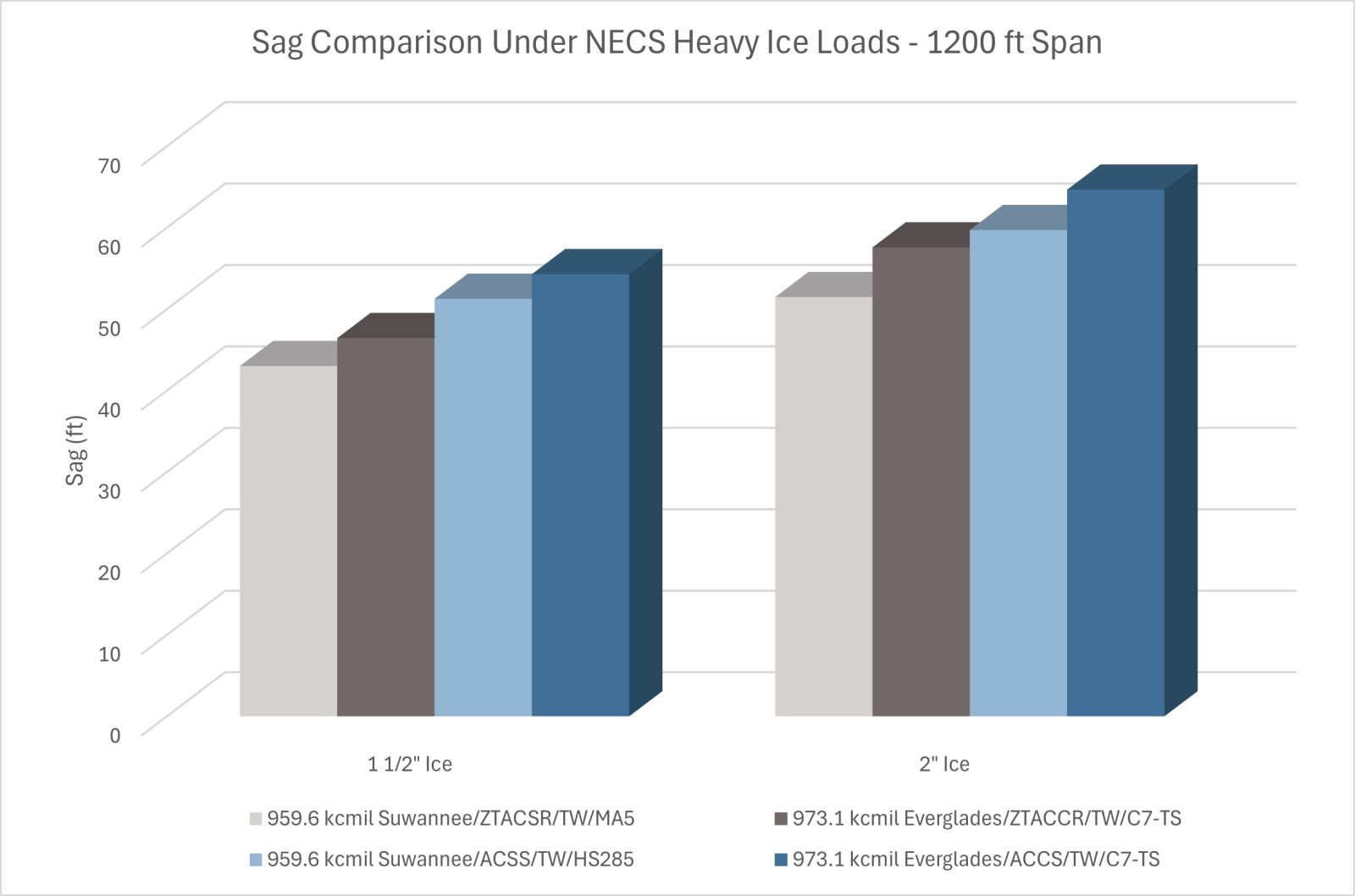
When it comes to extreme ice, the conductor has two performance objectives: having a high-rated breaking strength and minimal elongation during extreme load events, such as heavy ice and wind. To achieve these objectives, utilities commonly design lines using NESC heavy ice and extreme wind loading assumptions to ensure adequate mechanical margins. High initial stringing tensions are then applied to control sag and preserve required electrical clearances under severe loading conditions.
An ultra-high-strength steel core allows the overhead conductor to be strung at greater tensions during installation, reducing the conductor’s sag and lowering the risk of problems associated with excessive sag, including clearance violations, faults, and increased operational costs. In addition, steel cores incorporating mischmetal-coated steel strands offer improved corrosion resistance compared to standard zinc galvanized strands, further increasing the reliability of the line.
Aluminum strands also play an important role in extreme ice conditions. There are various types of aluminum stranded conductors for utilities to choose from. Traditional Aluminum Conductor, Steel Reinforced (ACSR) conductors with 1350-H19 aluminum strands provide adequate conductor strength, but the maximum continuous operating temperature is limited to 75°C. By contrast, 1350-O fully annealed aluminum strands can be used in high-temperature, low-sag conductors, including Aluminum Conductor, Steel Supported (ACSS). These conductors support a maximum continuous operating temperature of 250°C, increasing ampacity by almost 150%. However, these strands are weaker than strands made with 1350-H19 aluminum, resulting in a lower overall rated breaking strength for the conductor.
Aluminum-zirconium offers a balanced approach by enabling elevated operating temperatures (maximum continuous operating temperature of 210°C/240oC emergency) while maintaining strength characteristics more comparable to 1350-H19 aluminum. This preserves the mechanical strength of the conductor while allowing higher operating temperatures, which increases ampacity. In addition to the type of aluminum used, the strand shape also plays a role. Trapezoidal aluminum strands reduce the overall diameter of the conductor and, therefore, lower ice and wind loading. This makes the conductor better suited to extreme mechanical loading.
Steel core vs carbon fiber composite core
Carbon fiber composite cores excel at reducing thermal sag and often appeal to utilities for that reason. However, they do not match the axial stiffness of steel cores, which are more resistant to elastic elongation. Mechanical loading is a major factor in a conductor’s resistance to extreme weather conditions. Steel cores have a higher elastic modulus, making them more resilient to extreme ice and wind loading. As a result, in applications where extreme ice conditions dominate, steel-core conductors offer a more effective solution.
Extreme wind: Reducing aeolian vibration and galloping
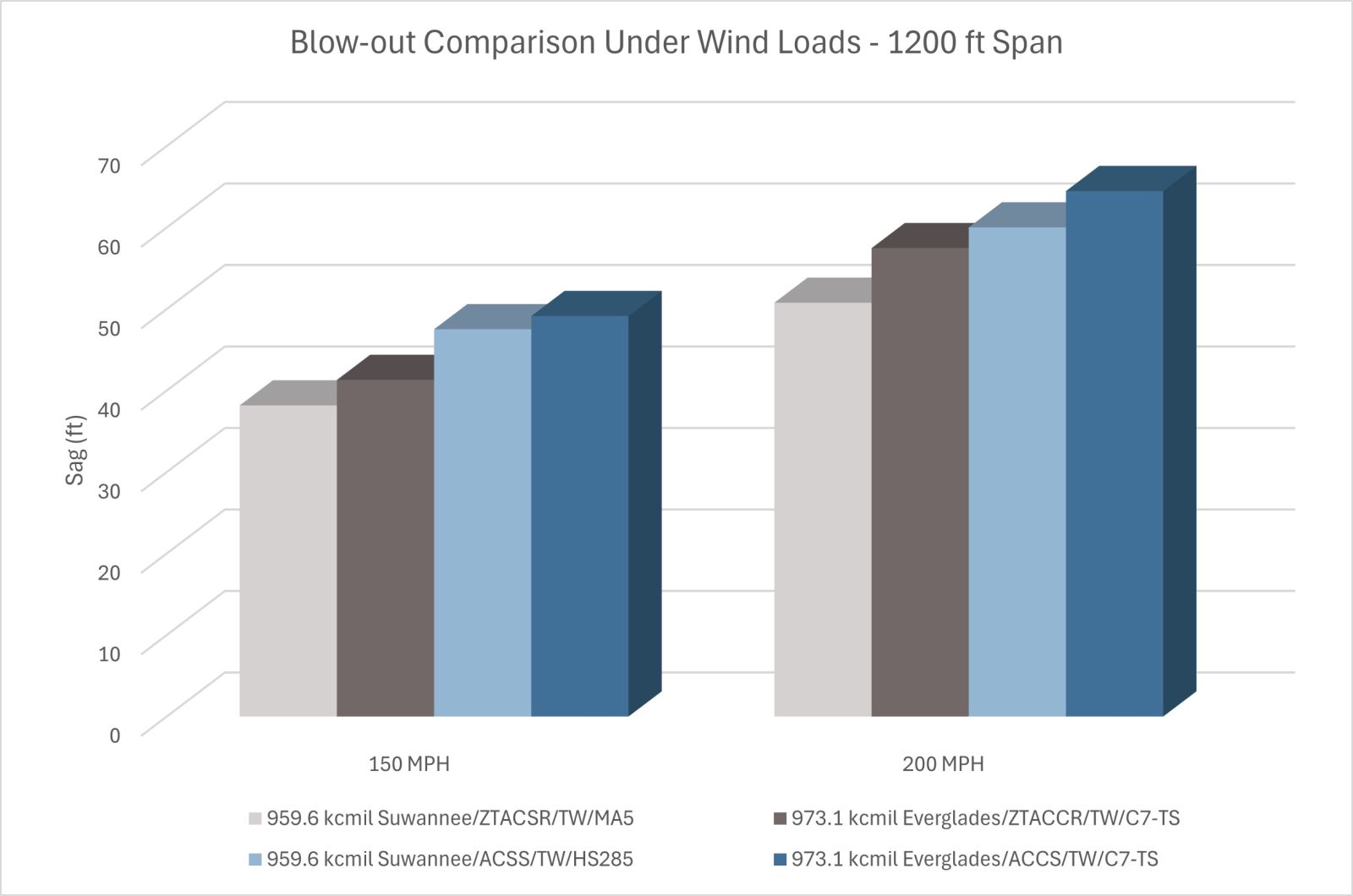
When overhead conductors are exposed to extreme wind, they can experience aeolian vibration, a high-frequency, low-amplitude vibration that can cause fatigue and potentially break the aluminum strands. Dampers are commonly used to control aeolian vibration by dissipating wind-induced energy and reducing fatigue damage on overhead conductors.
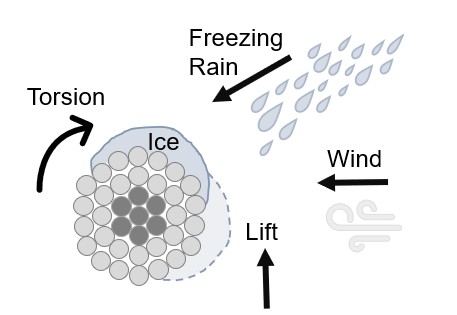
Another risk associated with high winds is galloping, a low-frequency, high-amplitude vibration caused by wind acting on the ice buildup of a conductor. The uneven ice creates an aerodynamic shape similar to an airfoil, allowing wind to generate lift that causes the conductor to move in large vertical or elliptical motions. These movements can be severe enough to cause phase-to-phase contact, flashovers, and increased mechanical loading on structures and hardware, making galloping a major reliability and grid-hardening concern in wind‑ and ice-prone regions.
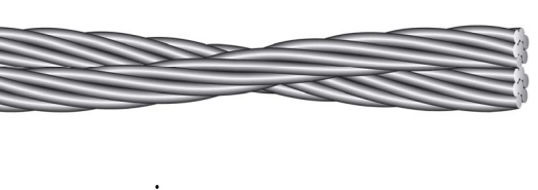
To address these issues, utilities can use twisted-pair (TP) conductors. The dual-conductor geometry of TP conductors disrupts the aerodynamic forces to reduce aeolian vibration without adding additional dampers or hardware. Additionally, TP conductors create a constantly changing shape, preventing steady aerodynamic lift along the cable's span. TP conductors can be made from several conductor types, making them adaptable to extreme ice and wind conditions.
The future – decisions matter
The future of conductor selection is not about chasing a universal answer. It is about matching technology to risk with greater precision and keeping conductor design in the driver’s seat of decision-making. Utilities that adopt this best practice are likely to see improved grid resilience, an increase in general safety, and reduced lifecycle costs, ensuring efficiency and efficacy.
Emily Witcher is Manager of Overhead Transmission Engineering at Southwire, which manufactures wire and cable used in the transmission and distribution of electricity.
Southwire | www.southwire.com
Author: Emily Witcher