




Teaming Up Against Hail


The season for hail storms is getting longer, producing storms with large hail more frequently during an expanded season. Case in point: On March 10, 2026, softball-sized hail fell in northern Illinois. While that might not have been news had it occurred in Texas, this happened to be the second major severe weather outbreak near the Great Lakes in three weeks, just as winter was winding down.
This is an unwelcome trend, given the historic growth of solar energy in the past few years. In 2025, the US solar industry installed a record amount of utility scale solar power This record setting pace is expected to be matched or surpassed in 2026. The threat of large hail jeopardizing new and established solar farms has forced the industry to adapt to this growing weather challenge.
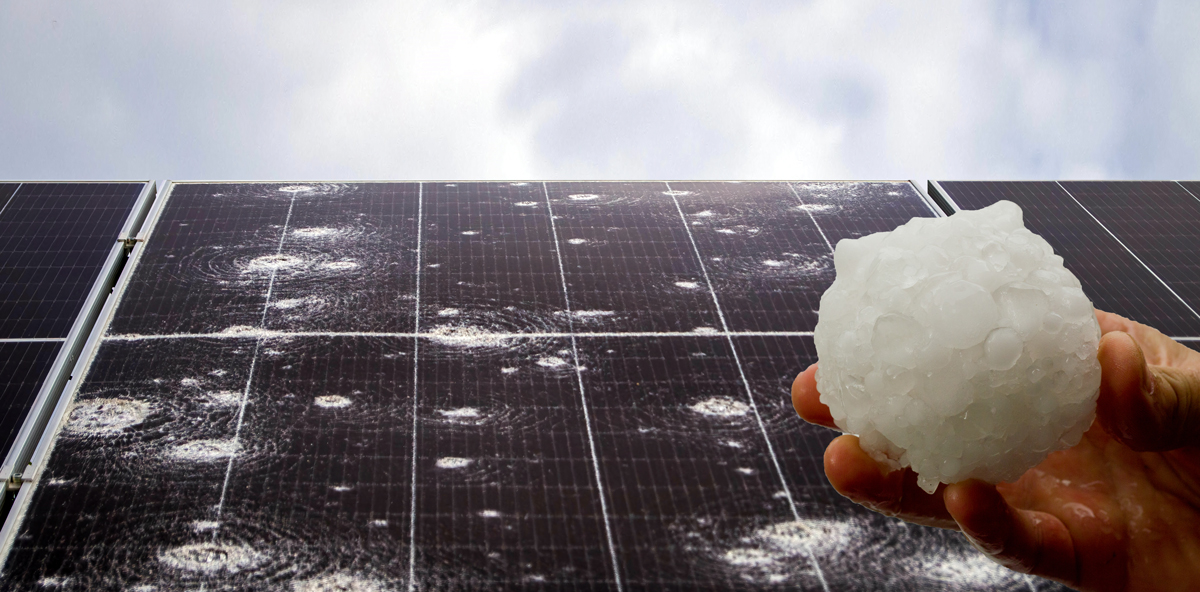
Further research has also shown that large hail events can be successfully mitigated by taking action to stow solar panels at maximum tilt before the hail arrives. Commercial weather providers and tracking manufacturers have adopted strategies for early identification of hail threats and proactive stowing of panels, both manually and automatically. Successful mitigation must first be addressed with a plan. Over my nearly 40 years in meteorology, I’ve seen many businesses fall short of planning, preparing, and acting on extreme weather threats. From hurricanes and ice storms, to high winds and worse, I’ve watched businesses get caught off-guard when readily available information was sounding the warning alarms.
Take the team approach!
Effective hail mitigation requires representation from all key stakeholders whose responsibilities or assets may be impacted, forming a dedicated Hail Mitigation Team. This team should include roles from Asset Management, Operations and Maintenance, Control Center Operations, and Ownership to ensure comprehensive coordination and decision-making. Each participant should understand their role and responsibility in this process, and communication channels should be clearly understood. The entire plan should also be documented and include flow diagrams if possible. Some of the key questions or actions that need to be addressed include:
- Who has the responsibility for using the commercial weather service and ensuring all stakeholders are aware of potential hail threats?
- When a threat is identified, how is that communicated to all Stakeholders, particularly those in the field?
- When the hail threat is heightened — for example, 2” hail is possible — a conference call should be conducted with the Hail Mitigation Team to ensure alignment, clear communication, and operational readiness, including verification of any activities that could impact system availability during the event, such as a large maintenance project.
- When data shows large hail may have impacted the site, what is your process for an immediate inspection and assessment?
- Do you hold an annual preseason dry run of your hail mitigation process?
Business in the solar industry is booming and all businesses’ resources are working at maximum capacity. In other words, the tendency could be to not dedicate the resources to this task. And yet, successful mitigation of large hail could reduce damage by millions of dollars, lower your insurance premiums, and keep portions of your plant operating and producing energy. This is an outcome any business executive would be happy to support.
Leverage weather intelligence
A critical element of your hail mitigation plan is a business grade weather solution. Commercial weather companies have recognized the need for solutions to mitigate large hail; they have stepped up to meet the challenge.
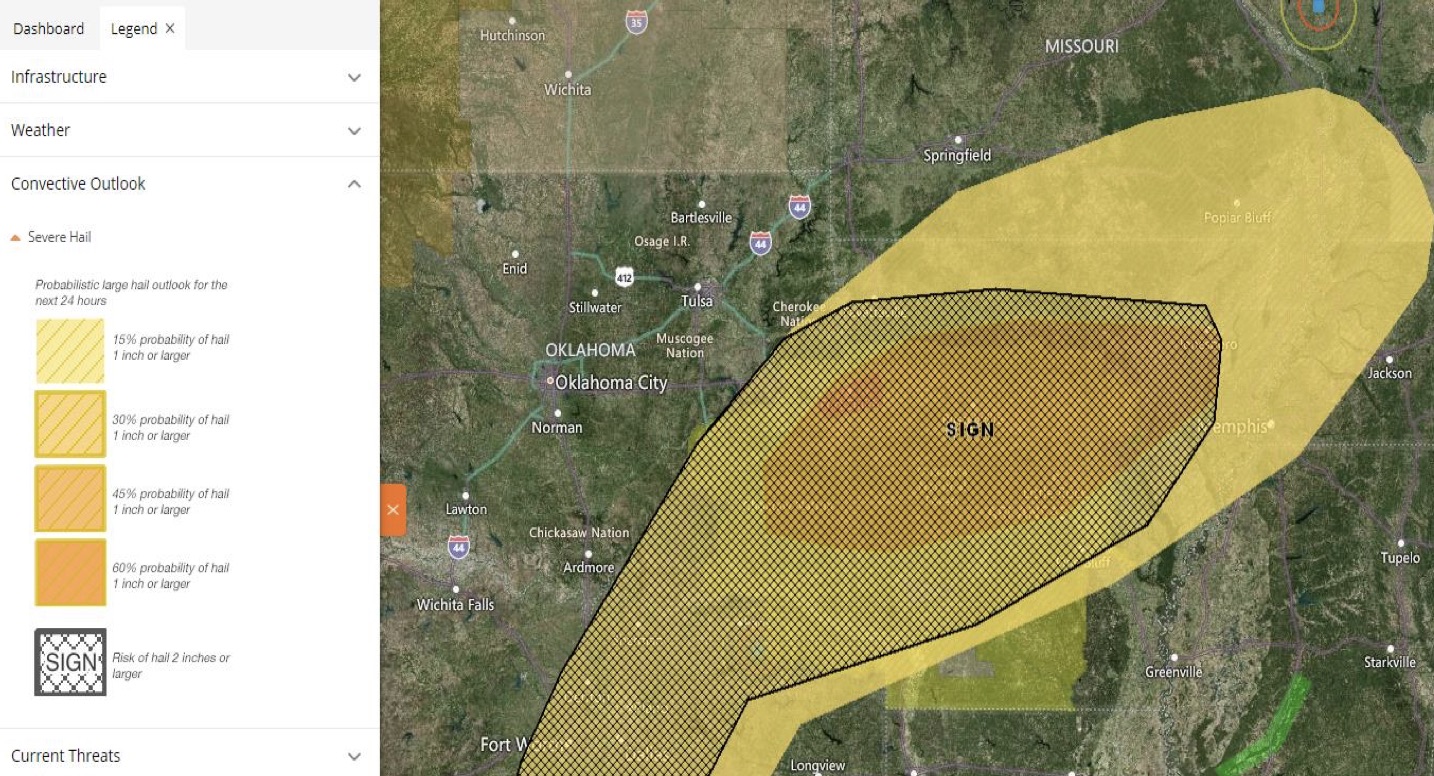
A best practice is for your weather service to provide early identification of the threat. That equates to a 12–24-hour awareness that large hail could impact your asset(s). This allows your team to be prepared and in the mindset that action may be needed, but does not impact their normal duties. The commercial weather solution should monitor the situation and provide updates on if the hail threat is growing or waning, leveraging all relevant NOAA data sources that predict the timing and location of the event.
As the end user of the weather solution, stakeholders should have the ability to set their risk profile for hail detection. The risk profile is based on how conservative you want the alerts, factoring in the tracking system and panel hardware of an asset, the location of the asset, and how prone it is to large hail, etc. Stakeholders should be able to set a custom risk profile for each asset; a site in Texas with the fastest tracking system and highest stow tilt does not have the same risk profile as a site in Pennsylvania with older technology.

Another application for weather intelligence is fine tuning hail alerts to increase accuracy. While the goal is mitigating hail that could damage assets, stakeholders should consider how many false positive alerts they feel comfortable receiving. Monitoring a 30-mile area around the asset will capture many hail events that pose no threat. For example, the storm cell could be 27 miles to the northwest of the asset moving northeast. If these events happen often, stakeholders need to decide if they are okay with repeated stowing, potentially many times in a 24-hour period, when the threat fails to materialize. You may get the same result from setting a very small hail size threshold for the alert. Stakeholders need to decide if they want to receive hail alerts for pea size hail that may send the solar site into automatic stow. The commercial weather service should give you the flexibility to make that decision by asset, as well as giving immediate feedback after the storm has exited, including the path of the hail swath and the estimated size of hail that impacted your asset.
The good news is that excellent tools exist to mitigate large hail impacts. An organized hail mitigation team that is prepared with a good plan will be able to leverage those tools. The industry’s eyes are on this challenge; great strides have been made, with more to come. Meeting this challenge is truly a team effort. This is vital to continuing the strong growth and success of the solar industry.
Marty McKewon is a Meteorologist and Director of Renewable Energy at Indji Systems. A key role he fulfills is working with Product Management to ensure best in class hail mitigation capabilities enhance the industry’s Indji Watch platform. Indji Watch is utilized by 70 renewable energy companies worldwide to mitigate the impacts of extreme weather.
Indji Systems | www.indji.com
Author: Marty McKewon
Volume: 2026 May/June