




Clocking-In at Sea: A day in the life of an offshore wind crew


They equip existing wind turbines with new sensor and monitoring technology, install, document, and ensure that measurement data provides the right fundamentals for safe and profitable operation of wind turbines. These are the technicians that keep everything running. Come tag along for a day at the office when your office is an offshore wind turbine.
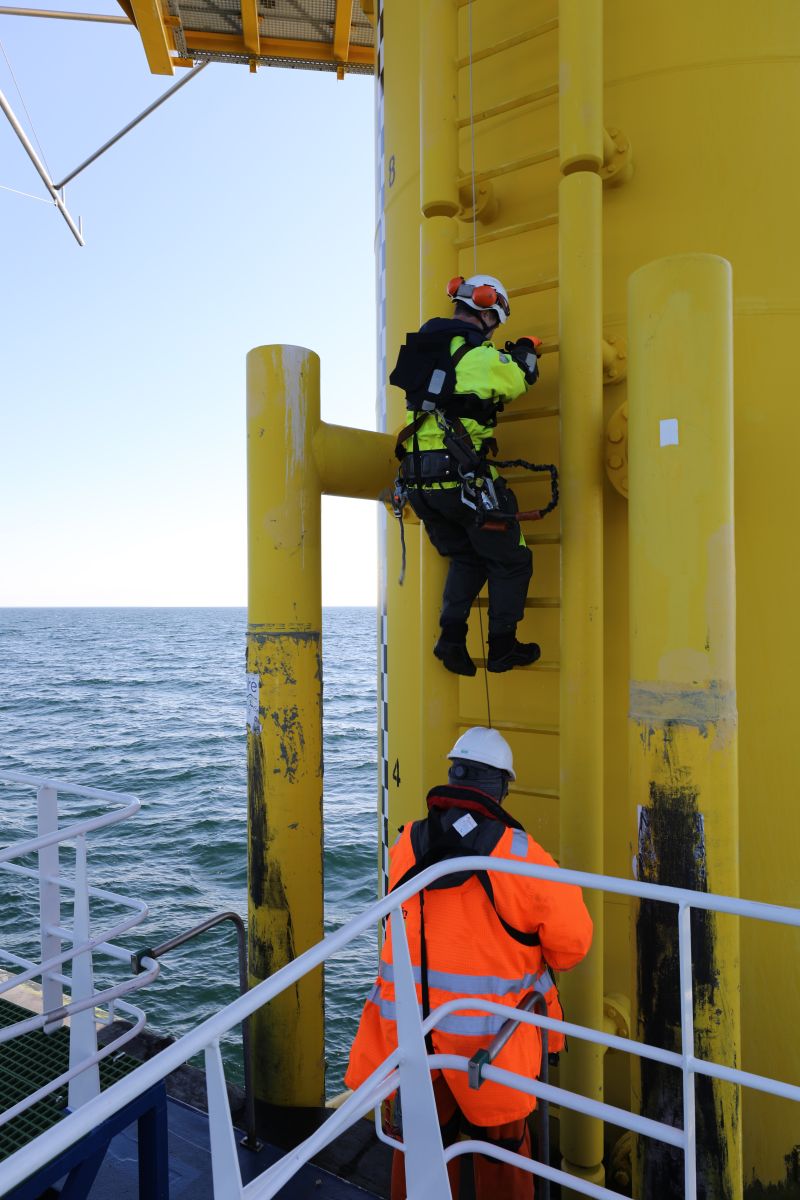
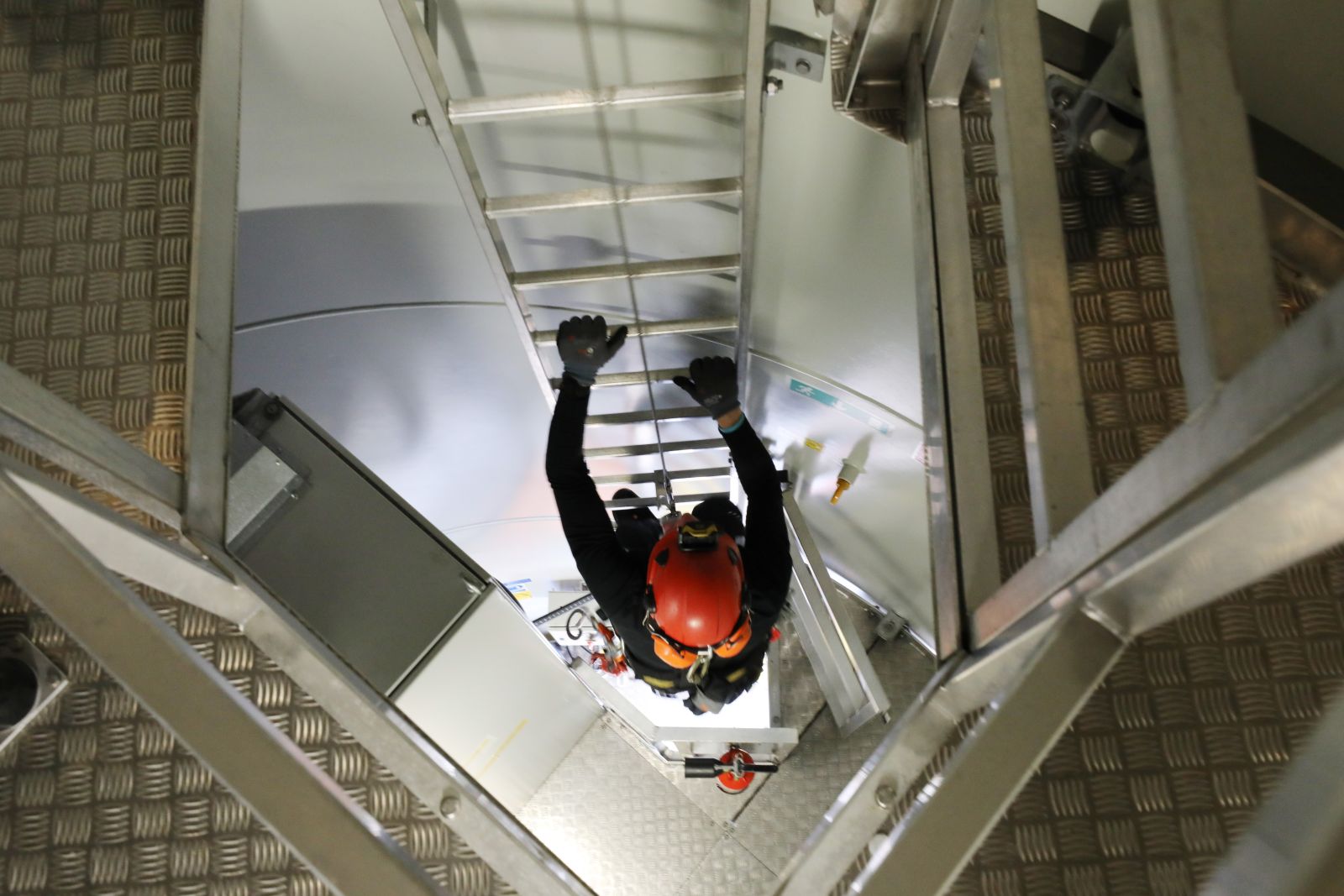
Thomas Stauche is standing on the ladder installing a new sensor. He is totally relaxed and smiles, even though he is approximately 100 meters above the North Sea inside the tower of a wind turbine. A few days ago, he was in Japan. Now he is in Germany, or, to be more precise, in the middle of the North Sea. Stauche is part of the offshore crew and works around the world on pilot systems at sea. Currently, the crew consists of a fixed, five-person team. Technicians, engineers, all-rounders — this is how the crew is perhaps best described.
Risks are everywhere
Despite Stauche's calm demeanor, working on a wind turbine involves a fair share of hair-raising experiences and risks. Though they are all well secured for working at height, and the entire crew has undergone appropriate training, the work on an offshore wind turbine remains dangerous. Special care and caution are important with every move and each step. Above all, maneuvering from the ship or from the helicopter onto the wind turbine is an extreme hazard. Good physical condition is essential, but excellent mental condition also plays a part in reaching the wind turbine safely.
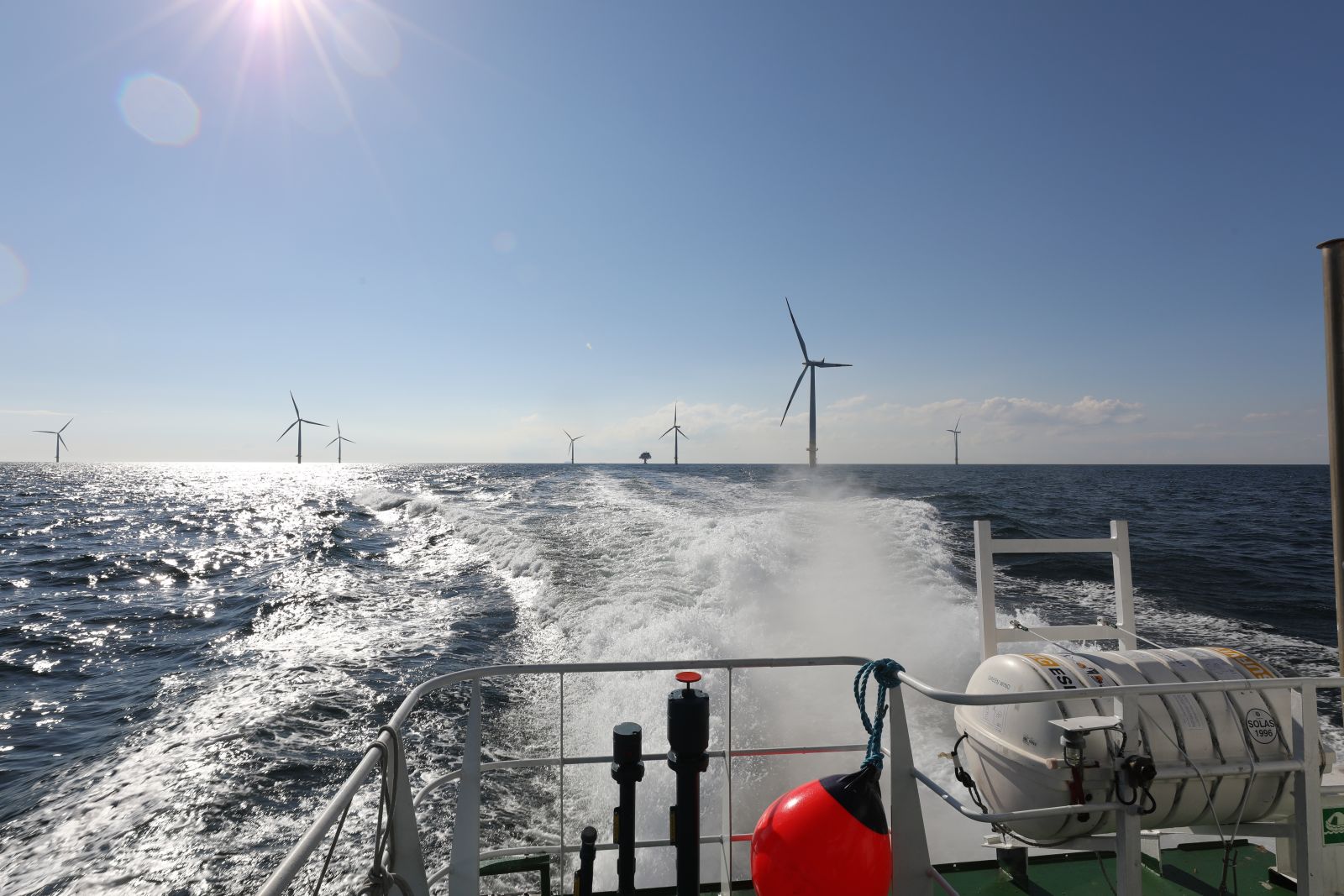
Even today's boat trip to the "Nordsee One" wind power plant is turbulent: With waves over nine feet high, the responsible parties on the transport ship do not even want to cast off from the support point. After some delay, the crew makes the attempt. After more than one hour, the crew reaches its work site. Next comes the risky step onto the wind turbine: With full thrust, the ship presses its bow against the monopile and its attached ladder. The swell is just about at the limit for permissible step-over; the ship rises and falls, screeching and banging with the rhythm of the waves. Then you hear the boarding chief's command, "3-2-1 go”!
Like lightening, you grab the ladder. Moving fast, you clamber up the approximately 20 meters to the supply platform. You climb up the first five or six rungs quickly and safely so the ship doesn't knock you off with the next swell. This danger is precisely why Stauche doesn't want any other job. He says this is where the technology of the future and adventure come together in a fulfilling symbiosis.
Adventure
On your first deployment at a new wind turbine, not everything is the way it is depicted in plans and descriptions. The job is all about improvising, explains crew member Frank Köllner. For example, sometimes the ladder on the tower is mounted at a different place, or you have to watch out for unexpected intermediate levels or obstacles that have not been noted. In such situations, workers rearrange cable routes on the spot and reselect intended mounting areas. "None of this would be so dramatic if you could just walk up close to the wind turbine and there was a service vehicle with additional material parked nearby", laughs Köllner, “but out here there's only the open sea." It’s a long way back to the supply hub; the material you bring along with you must be just right. The connection cables are virtually measured to the meter. Things get particularly tricky when parts are missing and it's not possible to continue working. In this case an entire day is lost. Deployment days at sea are a costly affair and every minute on the wind turbine invaluable.
Experience in each product
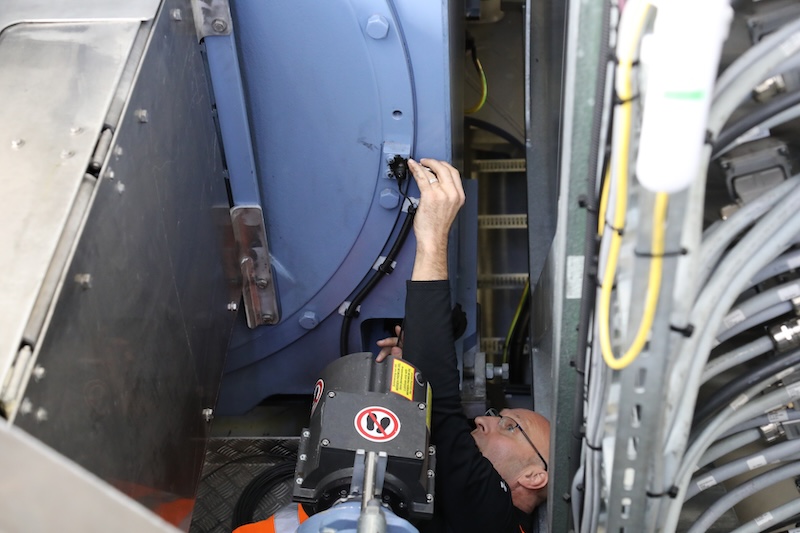
The experience of the offshore crew on the wind turbine is invaluable: It feeds back into development, turning products into solutions that do precisely what they need to do, "out there". Products deployed on an offshore wind turbine not only need to be safe, but function long term. Moreover, installation and commissioning must be efficient and straightforward. That’s the only way a mounting crew can comply with the tight time windows available to them.
The results of these experiences are evident. In developing a cantilever sensor (CLS), for example, along with long-term and stable function, the utmost value was placed on easy mounting. Why? Well, anyone who has ever retrofitted a sensor into a rotor blade at sea, at a height of 140 meters and a wind force of 5 to 6, knows precisely what we are talking about here. The wind turbine sways and wobbles such that it is almost impossible to mount the sensor accurately using conventional materials. Mounting can be extremely complex, and there is a high probability of error due to system-specific mounting accuracy. Additionally, the components are often not robust enough for this harsh implementation environment.
Fail-safe over years to come
Ultimately, there is one thing that matters most to a utility company: the profitability of the selected solution. In addition to low investment costs, the utility company is also looking for low installation and commissioning costs. Beyond that, the basic prerequisite means everything must do its job fail-safe and error-free for many years to come. That is why utility companies appreciate the extensive experience and training in teams like this, where they take a holistic view of all aspects of a retrofit, conversion, or initial installation. They also ensure that systems work right from the start. "A supposedly inexpensive sensor and system solution can quickly add one or two days for the installation work", notes crew member Holger Fritsch. "This pulverizes the presumed cost advantage of lower-priced hardware". For now, though, he can leave those worries behind him, because he and his team are heading home.
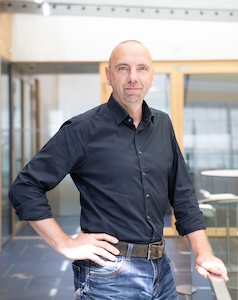 Stephan Unger holds a degree in electrical engineering, and is a marketing specialist who has run his own agency for strategic marketing. He is certified for offshore deployments and has accompanied Bachmann crews at offshore wind power plants. The technology from Bachmann electronic GmbH can be found in over 150,000 turbines worldwide. The highly available and durable solutions are designed to withstand the toughest conditions, minimizing both capital and operational expenditure. To ensure robustness and reliability, Bachmann performs 100% testing on every single module, including a 48h run-in test.
Bachmann | www.bachmann.info
Author: Stephan Unger
Volume: 2026 May/June