




What the AI Buildout Means for Wind


Data centers — driven by rapid AI adoption and expanded cloud services — could use up to 12 percent of U.S. electricity by 2028, according to a December 2024 Department of Energy summary of a Lawrence Berkeley National Laboratory report.
For the wind and renewable energy industry, this represents an unprecedented demand driver. Renewable energy developers, EPCs and the supporting transmission and grid teams are critical in delivering the reliable power data centers need.
What are the energy needs of data centers?
"Because of AI, the energy and tech sectors are now on a journey together," according to the International Energy Agency (IEA). Energy and technology will continue to become more intertwined as generative AI tools are integrated to produce more efficiency both at work and at home.
A 2025 study showed that 88 percent of participants surveyed reported regularly using AI in at least one business function – a 10 percent increase from the previous year's survey. Increased adoption of AI means increased energy consumption, from both data centers operating and the increased computing power required.
Training AI models also requires more computing power. Processing units used to train AI use five to eight times more energy than conventional processors, with an estimated combined investment of $5.2 trillion from companies across the compute power value chain by 2030.
What energy sources are used to power AI?
With the great need for energy infrastructure to support these data centers, part of the buildout will be expanding the power grid and the generation and transmission work that comes with that. To meet the need for consistently reliable energy, companies are looking at every energy source as a solution to keep data centers up and running.
The leading energy sources for data centers are natural gas and renewables, according to the IEA. Natural gas is a popular energy source due to its consistency in availability. Data centers can depend on it to provide the electricity they need, no matter the weather.
Although it is seasonal, the use of renewable energy sources is in part due to regulations to reduce greenhouse gas emissions. Renewable sources like wind and solar power could also see a rise in construction. In all, every power source that enhances the grid will see a rise in construction to match the demand.
How does data center construction impact transmission infrastructure?
The power infrastructure needed to support data centers can be installed under or above ground, and installation costs can be a differentiator. But companies building data centers are increasingly looking at underground installation for two main reasons: reliability and pressure from communities living near the projects.
Underground infrastructure reliability in extreme weather
According to the U.S. Department of Energy Grid Deployment Office, the key advantage of underground transmission and distribution lines is substantially reduced vulnerability to disruption from extreme weather, including hurricanes, thunderstorms, snowstorms, and wildfires. The report provides case studies of weather events where underground infrastructure faced minimal impact compared to aerial lines.
Communities want minimized visual impact
Communities surrounding major data centers, like those in Loudoun County, Virginia, are large proponents of underground infrastructure. With more data center projects on the horizon, residents are speaking out against powerlinesciting concern for property values and aesthetics, as reported by the BBC. These concerns have grown into proposed bills, legislation and investments by governments in Virginia and across the country. Investing in underground installation is a solution that can balance the needs of communities and the projects they host.
Is the industry ready to support the data center buildout?
The demand is real and the buildout has already begun. What remains in question is whether transmission can keep pace with new generation, and whether the communities those lines cross will accept what arrives at their door.
That is the work ahead for the renewable energy industry. Generation alone will not deliver the megawatts. Transmission planning, undergrounding where it matters, and early and sustained community engagement should be part of every project schedule.
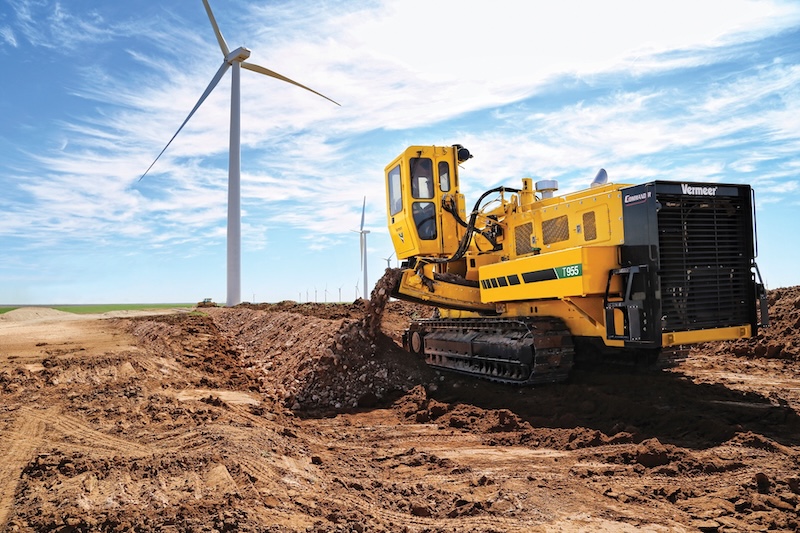
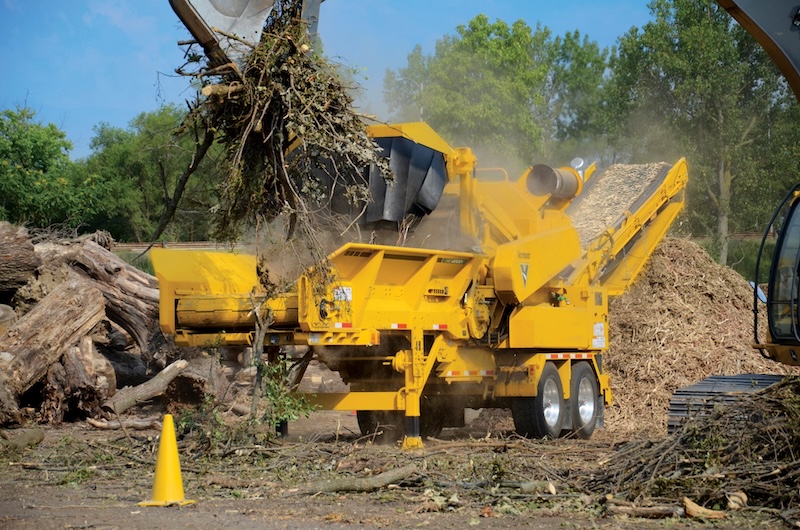
The equipment to do that work is already proven. Horizontal directional drills (HDD) install cable with minimal surface disturbance. Vibratory plows and utility trenchers handle open-cut work across the variable soils of rural transmission corridors. Vacuum excavators support soft digging and potholing where conditions demand it. Horizontal grinders, tub grinders and whole tree chippers clear new wind sites before construction begins.
For the renewable energy industry, the data center buildout is not coming. It’s already here.
Amy Olsen is Brand Experience Lead at Vermeer, headquartered in Pella, Iowa. company produces heavy machinery for underground utility installation, surface mining, tree care, environmental waste, and agriculture. Globally headquartered in Pella, Iowa, Vermeer has more than 600 dealers located around the world.
Vermeer | vermeer.com
Author: Amy Olsen
Volume: 2026 July/August