




The Emerging Economics of Wind Turbine Component Reuse


The American wind industry has reached an inflection point.
Since 1992, more than 11,000 turbines have been decommissioned across the United States, with retirement velocity accelerating sharply as first- and second-generation projects reach end-of-service life.
By 2050, industry analysts project wind turbine decommissioning will generate in excess of 2.2 million tons of waste material, a figure that transforms blade disposal from a peripheral concern into a central operational and financial challenge.
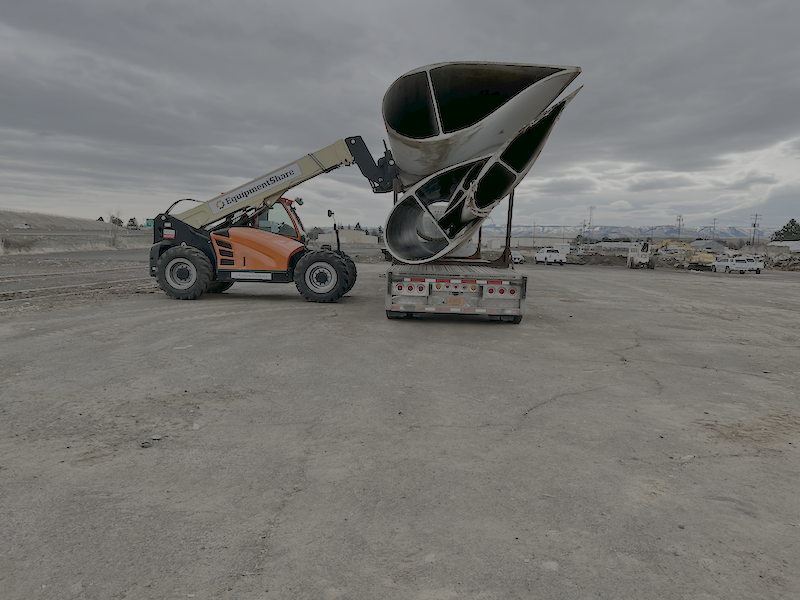
The technical obstacle is formidable. Modern turbine blades, engineered from glass fiber-reinforced epoxy resin and stretching beyond 120 meters in many installations, were optimized for aerodynamic performance and structural endurance, not recyclability. These composite materials resist decomposition and present extraordinary challenges for conventional waste management infrastructure. The result has been predictable: rural blade graveyards, mounting landfill costs, and growing regulatory scrutiny of an industry positioning itself as the vanguard of environmental sustainability.
Yet within this challenge lies a sophisticated circular economy opportunity that is moving from laboratory validation to commercial deployment.
Mechanical recycling technologies are now converting decommissioned blade materials into structural reinforcement fibers for concrete, and, critically, those fibers are being reintegrated into the wind industry itself, forming the foundations, access roads, and electrical infrastructure for the next generation of wind farms.
 The scale and specificity of the problem
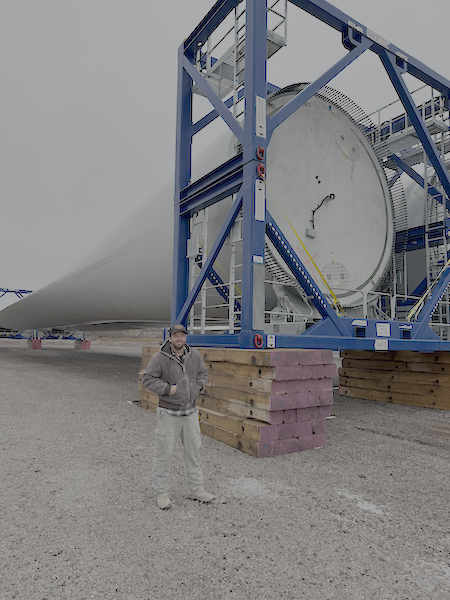
Understanding the economic implications requires precision about the waste stream's composition and volume. Unlike tower steel or copper wiring which maintain robust secondary markets, turbine blades lack obvious aftermarket value. The thermoset epoxy resins binding their composite structure cannot be remelted and reformed. Traditional recycling pathways — pyrolysis, chemical breakdown, co-processing in cement kilns — either remain cost-prohibitive at scale, generate problematic emissions, or reduce materials to low-value applications like cement kiln fuel.
Current disposal economics are stark. Landfilling blade sections costs between $50 and $150 per ton, varying by regional tipping fees and transportation distances. For a single 2-megawatt turbine with three 50-meter blades, disposal costs alone can exceed $60,000 — before accounting for cutting, transportation, and contractor management. Multiply this across hundreds of turbines in a repower project, and blade disposal becomes a seven-figure line item that directly impacts project return on investment.
Regulatory pressure compounds the financial case, too. Several U.S. states are advancing legislation to restrict or prohibit wind turbine blade landfilling, following similar restrictions already in place across portions of the European Union. Simultaneously, Environmental, Social, and Governance (ESG) reporting frameworks increasingly scrutinize emissions and waste management practices, creating reputational and financial reporting implications for developers who default to landfill disposal.
Commercial-scale solutions enter the market
Against this backdrop, patented mechanical recycling processes have emerged that transform blade waste into a technically validated, economically viable product: fiber reinforcement for structural concrete.
The process begins with blade segmentation and industrial shredding, reducing decommissioned sections into 2-to-6-inch composite fragments. Critically, this mechanical approach operates without heat or chemical solvents, preserving the structural integrity of the glass fibers while minimizing processing energy inputs and emissions. The resulting material retains the tensile strength characteristics that made these fibers effective in turbine blades — properties that translate directly to concrete reinforcement applications.
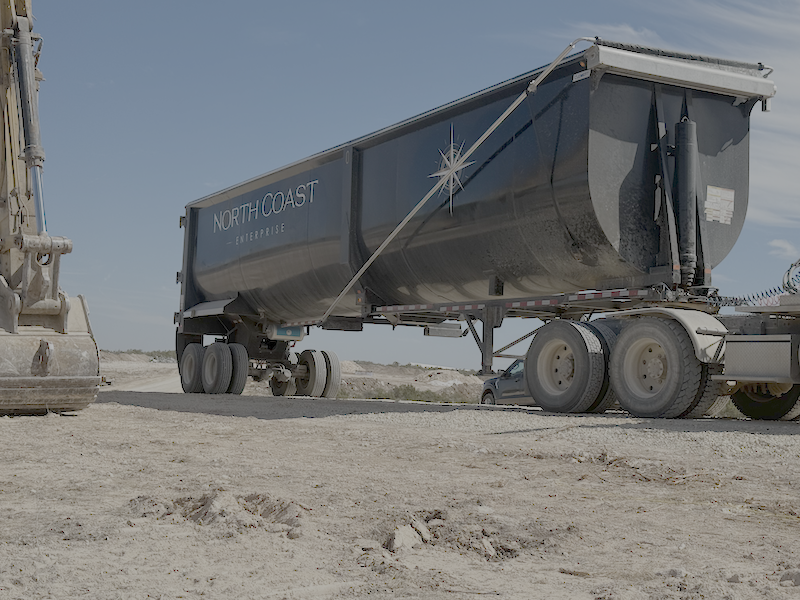
Performance validation has been rigorous. Testing conducted under ASTM and ACI protocols demonstrates that recycled blade fibers deliver comparable or superior performance to virgin synthetic fibers across key metrics: tensile strength, crack resistance, and freeze-thaw durability. In certain applications, the recycled fibers show enhanced moisture management characteristics within concrete matrices — a valuable attribute for outdoor infrastructure exposed to precipitation and thermal cycling.
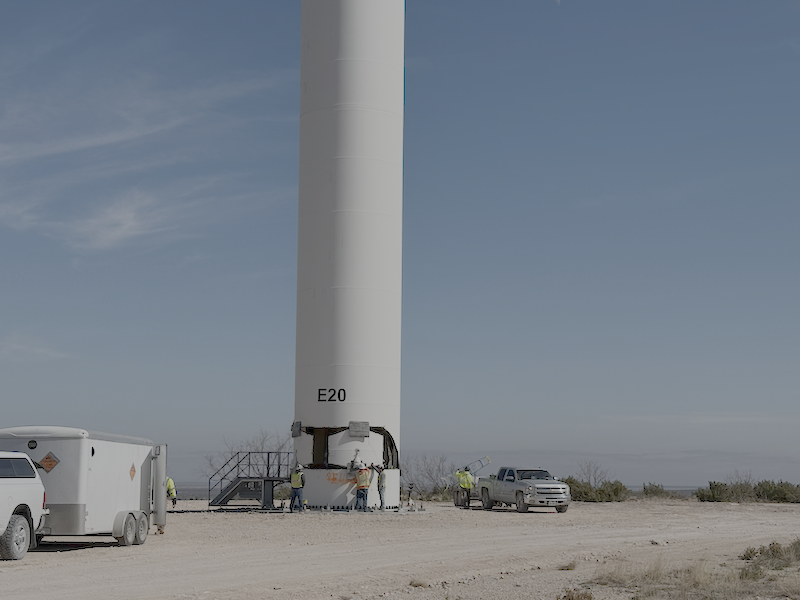
The most elegant aspect of this solution is its target application. Wind farms require substantial volumes of reinforced concrete: 1,000 to 1,200 cubic yards per turbine foundation, plus additional quantities for access roads, crane pads, transformer bases, and substation structures. By incorporating recycled blade fibers into these concrete specifications, the wind industry creates a closed-loop material pathway — yesterday's blades become structural components in tomorrow's projects.
Project economics and implementation pathways
For developers and engineering, procurement, and construction (EPC) contractors evaluating recycled content integration, the economic case is increasingly compelling. While fiber-reinforced concrete using recycled blade material may carry a modest premium over conventional concrete (typically 3-7 percent depending on specification and volume), this cost is offset by avoided disposal expenses, reduced landfill liability, and enhanced ESG positioning in financing and power purchase agreement negotiations.
The implementation pathway begins with pilot applications in non-critical infrastructure. Access roads, equipment laydown pads, and perimeter fencing provide low-risk opportunities to validate material performance and contractor familiarity. As confidence builds, specifications can extend to transformer pads and eventually to turbine foundation applications, where structural certification requirements are most stringent.
Procurement framework integration requires specification language that recognizes recycled blade fiber as an approved reinforcement additive, with clear performance standards and testing protocols. Forward-thinking developers are incorporating this language into master service agreements and request-for-proposal documents, signaling to contractors that circular material sourcing is an expected, not exceptional, practice.
The path forward
Commercial recycling facilities are already processing approximately one million pounds of blade material monthly — not pilot-scale demonstration, but operational industrial capacity. The supply chain infrastructure is being built. What remains is demand-side adoption: developers, EPCs, and concrete suppliers recognizing that blade recycling has transitioned from aspiration to available service.
For an industry that has spent two decades driving down the cost curve of clean electricity generation, solving the blade disposal challenge through circular material flows represents both an economic opportunity and a credibility imperative. The graveyards can be emptied. The building blocks are ready.
Tom Sheridan is a Managing Partner at North Coast Enterprise, a veteran-owned firm with an ISO certification specific to wind farm decommissioning. The company specializes in wind farm services for wind turbine repower, decommissioning, replacement, critical-repair, and end-of-life projects across North America.
North Coast Enterprise | northcoastenterprise.com
Author: om Sheridan
Volume: 2026 March/April