




Powering the Build: Texas wind construction demands a smarter energy strategy


Texas leads the United States in installed wind capacity by a significant margin. With more than 40,000 megawatts of wind generation online and a development pipeline that continues to expand across the Panhandle, West Texas, and the Gulf Coast, the state has become the proving ground for utility-scale wind in North America. What gets less attention than the turbines themselves, is what it takes to build them. Specifically, how construction teams power their operations in some of the most remote and grid-isolated terrain in the country.
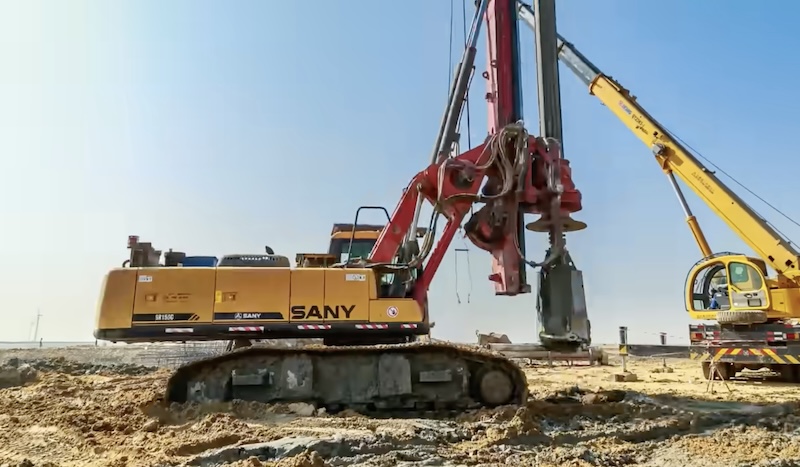
For decades, the default answer has been diesel. Generators trucked to the site, fuel resupplied across unpaved caliche roads, and the associated costs, emissions, noise, and mechanical risk absorbed as the standard cost of doing business in the field. That default is increasingly difficult to justify, not only economically and operationally, but from a project timeline perspective. A new category of mobile power infrastructure is changing how wind farm construction gets done, and Texas is where the difference is most visible.
The construction power problem nobody talks about
A utility-scale wind farm takes 12 to 24 months to build. During that window, a construction site spanning thousands of acres requires continuous, reliable power for lighting, power tools, communications infrastructure, worker welfare facilities, instrumentation, and increasingly, the sophisticated digital equipment used in turbine commissioning and SCADA integration.
None of that power comes from the grid. By definition, a wind farm under construction exists before the interconnection is energized. The site is on its own.
Diesel generation handles this, in theory. In West Texas practice, it creates a compounding set of operational problems. Fuel logistics on remote sites — particularly during the extreme weather events that Texas experiences with regularity — are expensive and unreliable. Diesel generators require consistent maintenance, carry significant noise footprints that affect both workforce conditions and, in some cases, permitting compliance, and produce emissions that increasingly conflict with the environmental commitments of the project owners commissioning the work. When a generator fails at a critical commissioning milestone, the downstream cost is measured in days, not hours.
What mobile lithium power systems bring to the site
The emergence of mobile lithium-based power systems as a credible alternative to diesel generation reflects a broader maturation in battery technology (the same technology driving the utility-scale BESS market) applied at the scale of a construction site rather than a grid asset.
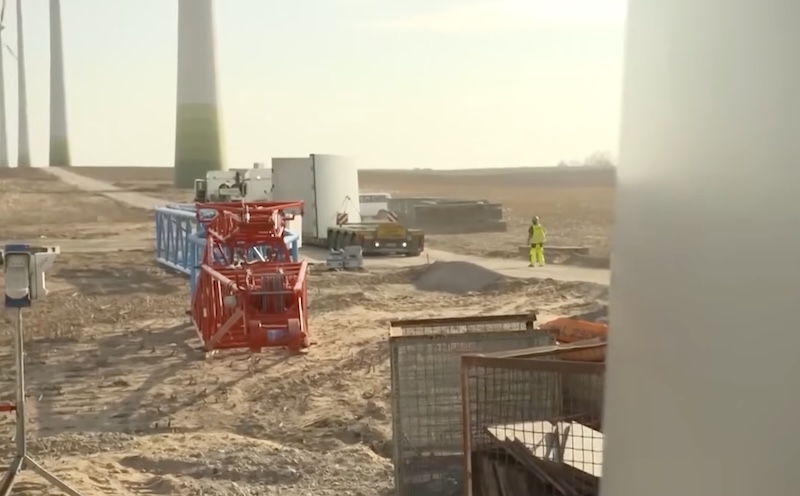
The operational advantages are concrete. A mobile lithium system delivers clean, silent power with no combustion emissions and no fuel logistics tail. For remote wind construction sites, eliminating the fuel supply chain is not a minor convenience — it removes a persistent scheduling variable that affects daily productivity. Fuel delivery windows, inventory management, and spill risk mitigation are real costs that disappear from the project's operational burden.
Noise elimination matters more on wind construction sites than is commonly recognized. Turbine commissioning requires precise acoustic measurement. Diesel generators running in proximity to commissioning activities introduce interference that forces sequencing workarounds. Silent power systems remove that constraint entirely, allowing commissioning and construction activities to run in parallel rather than in managed sequence.
Performing in the Texas environment
Texas does not offer a forgiving construction environment. Summer temperatures across West Texas and the Panhandle routinely exceed 100°F. Worker welfare — cooling, hydration stations, medical monitoring equipment — requires reliable power that does not depend on a generator that overheats in the same conditions it is supposed to be mitigating. Winter brings its own risk: the 2021 grid failure demonstrated in the starkest possible terms what happens when power infrastructure is not engineered for cold-weather performance.
Mobile lithium systems designed for field deployment must be built for this range of conditions. Battery thermal management, enclosure ratings, and charge/discharge performance across temperature extremes are not specifications to evaluate casually. For wind construction sites that operate year-round in Texas, a power system that performs at 105°F in August and holds capacity at 15°F in February is a baseline requirement, not a premium feature.
The economic case across the project timeline
The capital cost of mobile lithium power has decreased substantially over the past five years, tracking the broader decline in battery pack economics. For wind farm construction projects, the economic comparison against diesel generation must account for total cost of ownership across the build duration — not just the equipment procurement line item.
Fuel cost, fuel delivery logistics, generator maintenance contracts, unplanned downtime events, and the productivity impact of generator failures are all variables that favor battery-based alternatives when modeled across a 12- to 24-month construction timeline. For general contractors and EPC firms managing tight margin environments, the reliability premium of eliminating the generator failure scenario carries real economic weight.
Carbon accounting is an additional consideration that is growing in practical significance. Project owners — particularly institutional investors and corporate offtakers with public emissions commitments — are increasingly scrutinizing construction-phase carbon footprint alongside operational performance. A construction methodology that displaces diesel generation with clean mobile power is a differentiator in a procurement environment where sustainability credentials influence contractor selection.
The broader signal
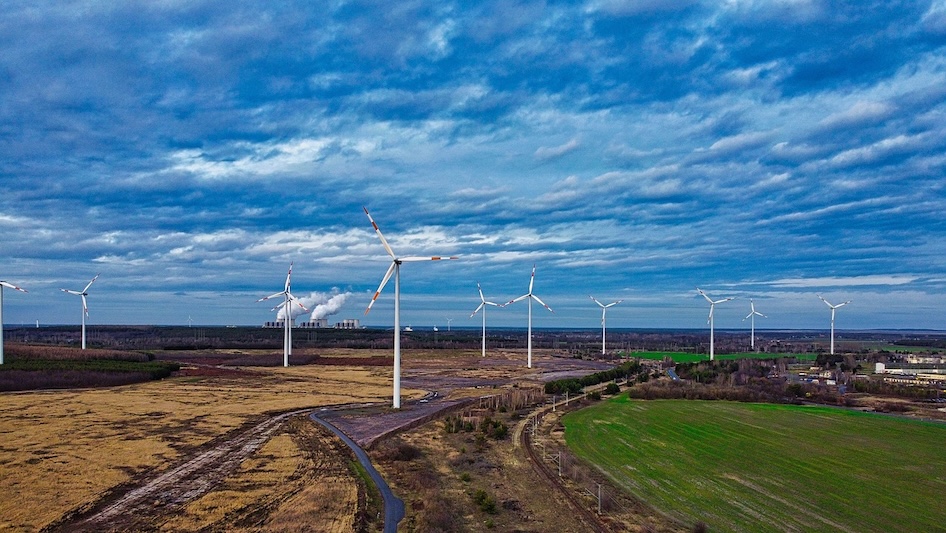
Wind farm construction in Texas is not slowing. The combination of strong wind resources, favorable transmission expansion, and sustained demand from industrial and commercial offtakers ensures that the development pipeline will continue to produce large, complex, remote-site construction projects for the foreseeable future.
The question for construction teams, EPCs, and project owners is whether the power strategy for those sites keeps pace with the sophistication of everything else on the project. The turbines being installed are engineering marvels. The infrastructure powering the teams that build them deserves the same standard.
Women are playing an increasingly prominent role in driving that standard — leading energy companies, managing complex field operations, and bringing the cross-disciplinary thinking that the intersection of construction, technology, and sustainability demands. The clean energy transition is being built by a workforce that looks different than it did a decade ago, and the Texas wind industry is one of its most visible proving grounds.
Maritza Vera is President and Co-Founder of Pulsar Industries North America, a Texas-based renewable energy engineering, consulting, and manufacturing company specializing in mobile and stationary energy storage systems, resilient power solutions, and clean energy infrastructure for industrial and commercial applications.
Pulsar Industries | pulsar.industries
Author: Maritza Vera
Volume: 2026 July/August