




Moving Beyond “Either-Or” Land Use


Nearly all utility-scale wind and solar projects are hosted on private farms and ranches. These projects take root in places where families are working the land, passing it on through generations and weighing decisions that will affect both their livelihood and their legacy. For developers and power producers, this reality underscores a simple truth: farmers and ranchers are not just site hosts, they are long-term partners whose buy-in is essential to project success.
The agriculture industry has always adapted to change, from adopting new machinery to using precision technology. Renewable energy is the latest opportunity in that long arc of innovation. When renewable energy is designed to complement agriculture rather than compete with it, everyone benefits. Projects advance more smoothly, landowners gain reliable income streams, rural communities see new jobs and tax revenue, and the land itself remains productive for generations to come.
Bridging agriculture and renewable energy
The old debate that farmland must be used for either food or energy overlooks the potential of dual-use strategies. Agrivoltaics and regenerative land management practices demonstrate that agriculture and energy can coexist in ways that strengthen both.
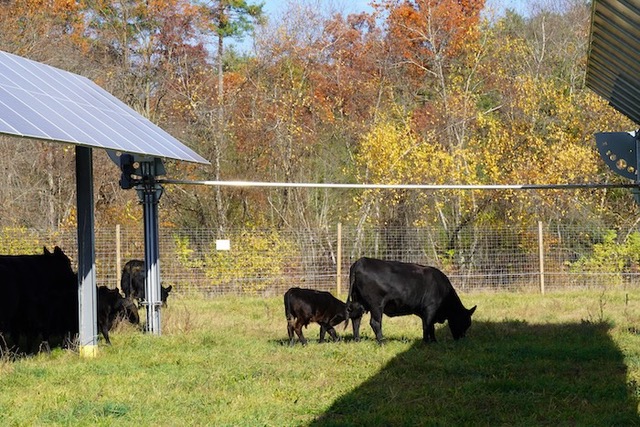
Agrivoltaics, which combines solar generation with active farming or grazing, has shown particular promise. Crops like berries, lettuce, and apples often tolerate partial shading well, sometimes even improving yield or quality. For example, the State of Washington has identified more than 200,000 acres suitable for agrivoltaics, particularly in orchards where solar panels can reduce sunburn risk and improve water efficiency. In addition to protecting crops, agrivoltaics designs allow farmers to maintain their identity as producers, rather than feeling as if their ground has been taken out of production. That distinction can be critical for winning community acceptance.
For developers, agrivoltaics represents more than a design choice. It is a way to demonstrate respect for agricultural heritage while showing communities that energy projects can add value to local economies without displacing farming.
Grazing compatibility: A proven model
Sheep grazing has become one of the clearest and most widely adopted examples of compatibility between energy and agriculture. Developers save on vegetation management, while farmers utilize the land for grazing, which produces additional income. The shade created by panels also reduces heat stress, improving animal welfare. Beyond sheep, projects are experimenting with pollinator-friendly cover crops and adjusted panel heights that allow for cattle grazing.
Protecting the soil for the long run
For farmers, soil is more than a resource. It is the foundation of their livelihood. Any long-term energy project must account for soil health during construction, operation, and eventual decommissioning or repowering.
Careful planning can prevent common risks to farmland such as erosion, compaction, or water runoff. Developers can take steps like siting access roads to minimize disturbance, limiting heavy equipment use outside designated areas and restoring ground cover quickly after construction. Establishing clear restoration commitments in project agreements further reassures landowners that their soil will remain productive long after the project ends.
When soil is protected, renewable energy and agriculture can thrive side by side: farmers retain healthy ground for crops or grazing, while developers gain the trust that leads to smoother project approvals and long-term community support.
Combating misinformation with transparency
Across the country, hundreds of counties have introduced bans or moratoria on renewable energy projects. Many of these restrictions are rooted in misinformation about farmland loss or environmental impacts. Farmers and ranchers are trusted messengers in rural communities, and when they are engaged early with accurate information, they can help dispel myths and build community trust.
Developers who emphasize transparency about land use, soil protection, and agricultural compatibility are better positioned to reduce opposition, secure leases, and maintain a social license to operate. Building relationships with local producers also creates allies who can speak credibly about how energy projects fit into working landscapes. Taking the time to answer questions about crop compatibility, impacts on drainage, or livestock safety may seem small, but it can be decisive in shaping community opinion.
.jpeg)
A shared future for energy and agriculture
The path forward is not about choosing between farming and energy but about designing projects that respect and reinforce both. Developers who embrace agrivoltaics, solar grazing, and soil protection will deliver projects that landowners welcome and communities support.
The most successful projects are those where farmers and ranchers are true partners in long-term stewardship of the land. Their participation helps ensure that projects meet energy goals as well as the economic and cultural needs of rural America. When developers view landowners as collaborators rather than simply site hosts, they build a foundation of trust that carries projects from permitting through decades of operation. That trust is what allows renewable energy to strengthen rural communities while helping meet the nation’s growing energy needs.
Jeff Risley is the Executive Director of the Renewable Energy Farmers of America (REFA), where he leads strategy, policy, and member support to help farmers and ranchers navigate renewable energy opportunities. Raised on his family’s farm in western Kansas, Jeff brings more than 30 years of experience in agriculture, association management, renewable energy development, and communications. Under his leadership, REFA provides trusted guidance, peer support, and advocacy to protect members’ land, livelihoods, and legacy.
Renewable Energy Farmers of America | renewableenergyfarmers.org
Author: Jeff Risley
Volume: 2025 November/December