




Thin-Film Solar Recycling Requires a Different Standard


The US has led the world in thin-film solar deployment, and the market continues to grow – potentially reaching over $8 billion by 2033. Applications for ultra-thin solar cells are expanding too, as this relatively more affordable and lighter solar panel is integrated into equipment categories with rising demand, including lightweight power sources, high-tech consumer electronics, and building-integrated solar uses.
A thin film solar panel, whether Cadmium Telluride (CdTe), amorphous silicon (a-Si) or Copper Indium Gallium Selenide (CIGS), while being the same thickness as a polycrystalline panel at the module level, is actually made up of layers less than a micron thick — thinner than a strand of hair. In particular, CdTe panels have grown in popularity for their high efficiency, despite the limited supply of Tellurium and toxicity of Cadmium.

These same characteristics that enable wider applications for thin film solar panels also make them tricky to recycle without a specialized process. First, their laminates prevent recycled materials from being safely reusable if not done properly. They can also be frameless, i.e. not containing aluminum, making them non-economical to process for recyclers who are not specialized.
In addition, if not processed differently than standard polycrystalline panels, they will generate fine particulate during processing. This contaminates recovered materials and renders them unsuitable for recycling.
Key capabilities to look for in a thin film recycling vendor include having a recycling system specifically designed for all types of solar panels, with thin-film modules front of mind. This should include robust dust control systems, engineered-for-purpose equipment, and a demonstrated expertise in converting all components of the thin-film panels into saleable goods safe for reintroduction into the domestic supply chain.
A key indicator of true recycling for thin-film panels is an affidavit that testifies the company will fully process the panels in-house, as opposed to shipping them to others, stockpiling, or shipping them overseas for disposal or minimal recovery. Many recycling programs rely on downstream specialists for thin-film panels, meaning those processes are already embedded in supply chains customers may already use.
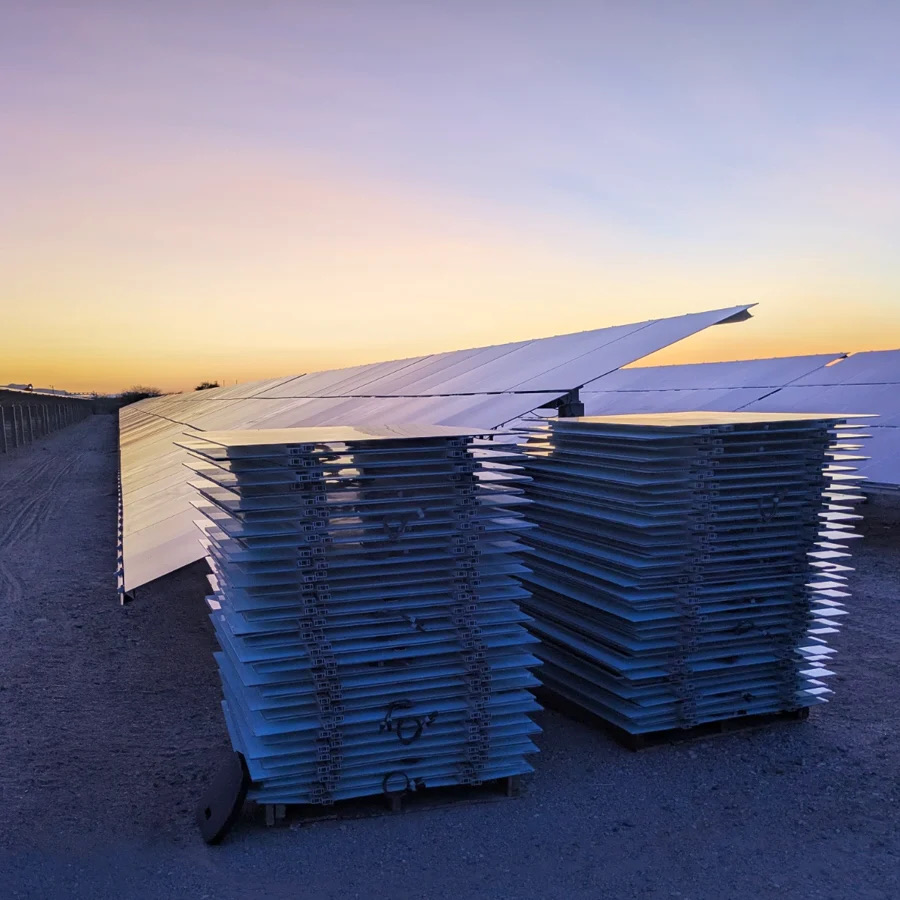
In general, non-specialist recyclers are more likely to export thin-film panels overseas for disposal, send them to landfill, or rely on “developing” chemical treatments that generate waste. Use of developing chemical treatments means that hazardous byproducts may be generated during processing, creating secondary waste streams that require their own disposal, and introducing regulatory and liability exposure for the asset owner.
Some questions are better answered through in-person tours and audits before procurement. Asset owners should be aware that some recyclers have built their business model around collection rather than processing — accumulating modules over the years without the specialized capability to handle thin-film panels. This stockpiling creates long-term liability that ultimately falls back on the asset owner, especially in the event of a recycler shutdown or bankruptcy.
Another leading indicator of a recycler’s compliance risk is their financial backing and history. A company formed one year ago, with unclear funding or backing, is much more likely to go out of business and leave panels stranded. In contrast, for example, a company that has decades trading as a public company with ample cash on-hand is much less likely to pose long-term compliance risks for power generating companies, and owners of thin-film panels.
As thin-film solar adoption accelerates across utility-scale energy, consumer electronics, and emerging lightweight applications, the industry’s approach to recycling must evolve alongside it. These modules cannot be treated like conventional crystalline silicon panels without introducing environmental, regulatory, and operational risks.
For asset owners and developers, selecting the right recycling partner means looking beyond basic disposal claims and evaluating whether a recycler has purpose-built processes, strong compliance practices, domestic engineering expertise, and the financial stability to manage materials responsibly over the long term. The future of thin-film solar depends not only on how these technologies are deployed, but on whether the industry can recover and reuse their materials safely, efficiently, and at scale.
 Cody Oliver is Director of Sales and Strategy at Comstock Metals, where he helps advance scalable solar recycling solutions while contributing to industry groups including SERI, ReMA, RIOS, e-Stewards, SEIA, and the Global Recycling Standards Organization. He is Co-Chair and Division Director of the Recycled Materials Association (ReMA) Electronics Division, and on the Board of Directors of the Global Recycling Standards Organization (RIOS). Previously, he led end-of-life management and circularity initiatives at Verizon and has directed EPR programs and solar decommissioning strategies in the recycling industry.
Comstock Metals | comstockmetals.com
Author: Cody Oliver
Volume: 2026 July/August