




Renewable Heat as Grid Relief: Why thermal energy belongs in the electrification conversation


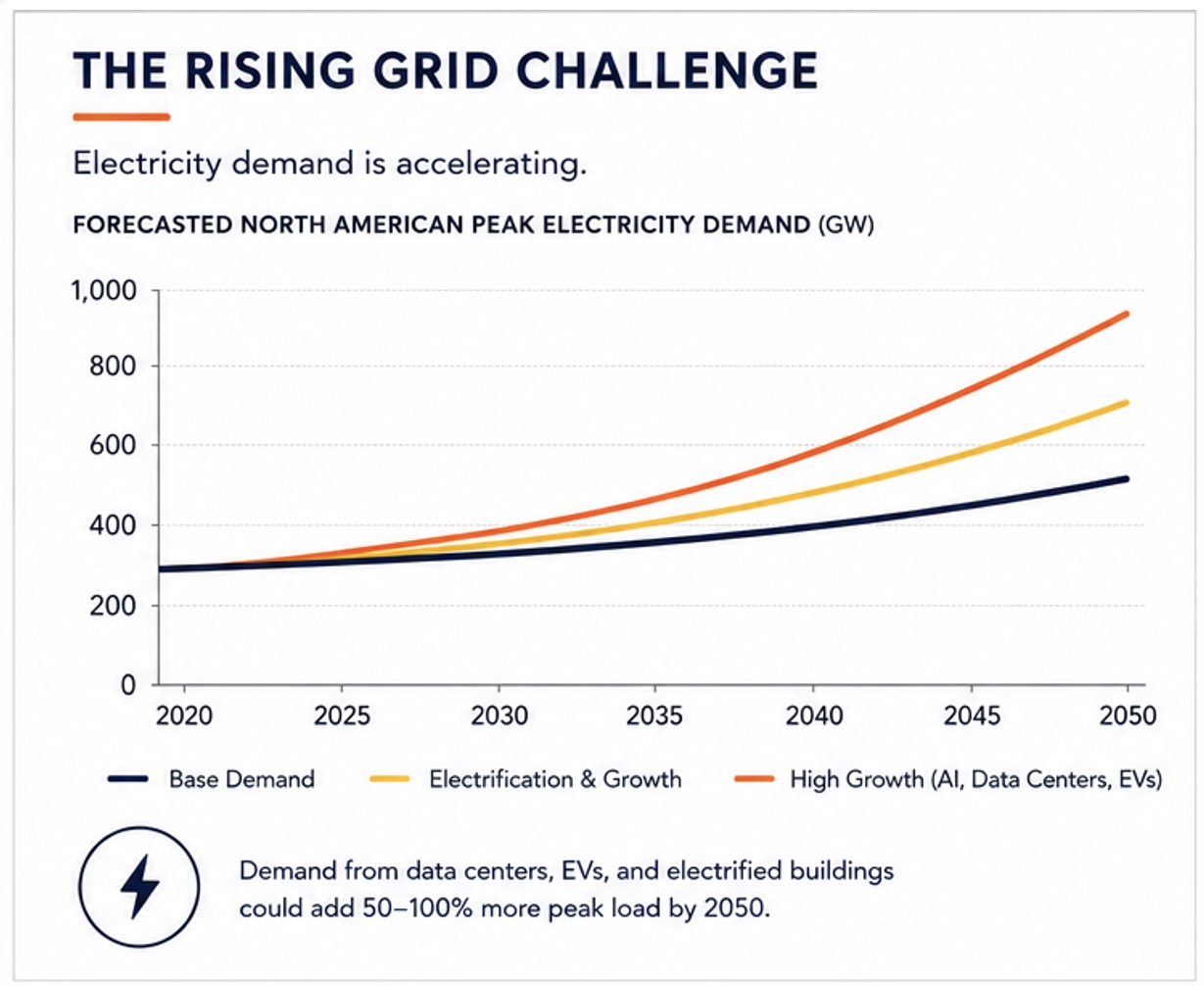
Electric demand growth is outpacing infrastructure readiness. Across North America, utilities are simultaneously facing the rapid expansion of electric vehicle charging, large-scale data center development, electrified HVAC adoption, manufacturing reshoring, and increasing population growth in high-demand regions. At the same time, grid modernization projects continue to face long lead times, transformer shortages, interconnection bottlenecks, and rising infrastructure costs.
The conversation around decarbonization has largely centered around renewable electricity generation. Solar PV, wind generation, and battery storage continue to play a critical role in the future energy mix. Yet, an equally important opportunity often receives far less attention: directly reducing electrical demand through renewable thermal energy.
In many buildings, one of the largest continuous energy loads is not lighting, electronics, or even cooling systems. It is hot water.
Domestic hot water systems in residential, commercial, multifamily, hospitality, healthcare, and industrial applications represent a significant and ongoing energy burden. Unlike intermittent plug loads, hot water demand remains relatively constant and predictable. It occurs every day, often during peak morning and evening utility demand windows.
Reducing thermal loads through renewable heating technologies may represent one of the most overlooked strategies available for improving grid resilience.
The hidden electrical load
The rapid expansion of electrification initiatives has introduced a new layer of complexity for utilities attempting to balance generation capacity with growing demand.
Data centers alone are projected to dramatically increase electrical consumption over the next decade as artificial intelligence, cloud computing, and digital infrastructure continue to expand. Simultaneously, transportation electrification and all-electric building policies are shifting additional loads onto already constrained utility systems.
In this environment, every avoided kilowatt hour matters.
Thermal storage also delivers a large amount of usable energy density in a format that already exists inside buildings. For example, an 80-gallon hot water storage tank with a typical 70°F temperature rise can store approximately 16 kWh of thermal energy. By comparison, that is comparable to or greater than the usable storage capacity of many residential battery systems currently installed across North America.
Water heating frequently represents one of the largest contributors to building energy consumption. In multifamily buildings, hotels, hospitals, athletic facilities, laundries, food processing operations, and car wash applications, hot water demand can become a substantial operational load.
Historically, many decarbonization conversations have approached this challenge through electrification alone, often replacing fossil fuel systems with electric resistance or heat pump technologies. While these systems can improve efficiency under certain operating conditions, they still rely heavily on electrical infrastructure.
Renewable thermal systems approach the challenge differently.
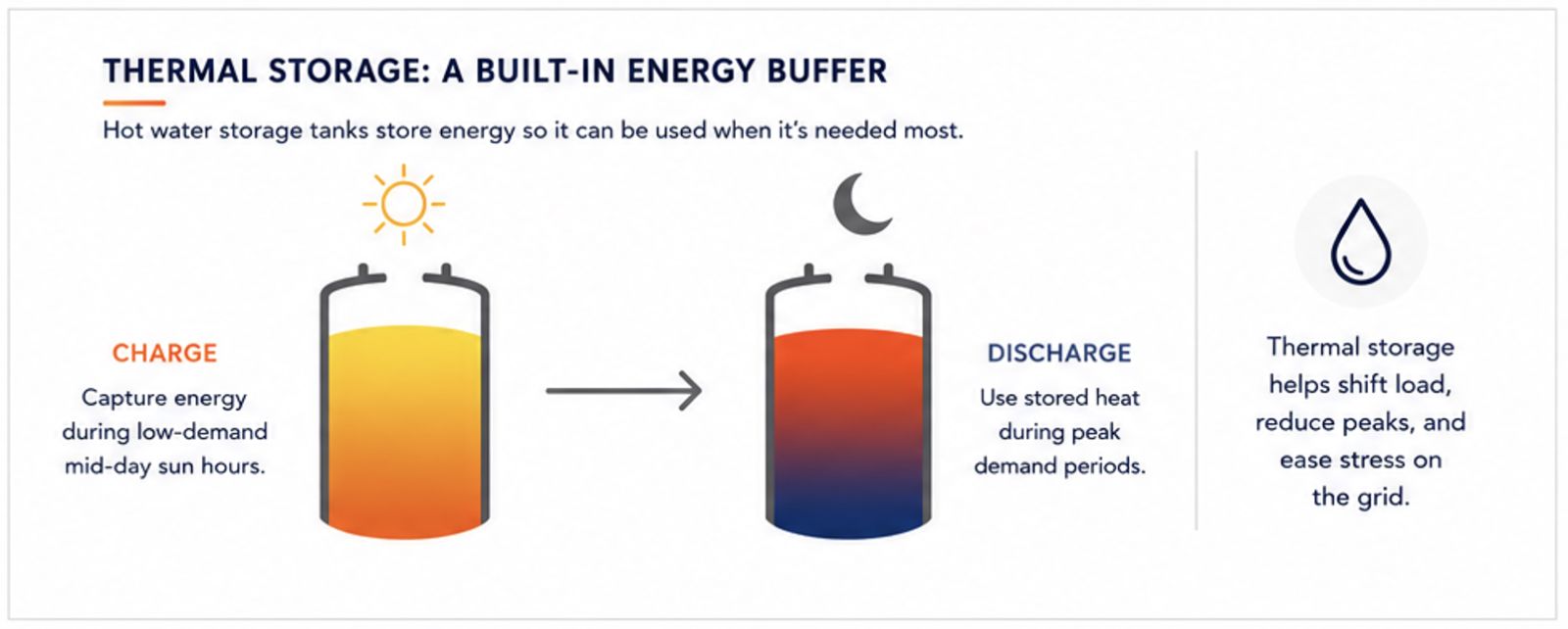
Rather than converting electricity into heat, renewable thermal technologies generate heat directly. This distinction fundamentally changes the relationship between the building and the grid.
Instead of increasing electrical demand to achieve decarbonization goals, renewable heat systems reduce dependency on the electrical grid altogether.
Renewable heat vs. renewable electricity
Renewable electricity generation and renewable thermal generation are often grouped together under broader sustainability conversations, but their operational impact on infrastructure can differ significantly. Renewable electricity systems help offset grid-supplied power generation. Renewable thermal systems, by comparison, directly reduce the need for electricity consumption tied to heating loads.
This distinction becomes increasingly important as utilities confront rising peak demand conditions.
A building that can satisfy a substantial portion of its domestic hot water demand through renewable thermal energy may significantly reduce electrical consumption during critical periods of grid stress. On a larger scale, widespread deployment of renewable heat technologies can help utilities defer expensive infrastructure upgrades while improving overall system stability.
In practical terms, renewable thermal systems function as a form of demand reduction infrastructure.
This is particularly valuable because thermal loads are often highly predictable. Buildings consistently require hot water during recurring operational windows, making renewable thermal systems especially effective for offsetting routine energy demand.
Thermal storage as passive storage
One of the most compelling aspects of renewable thermal infrastructure is its built-in energy storage capability. Modern energy conversations often focus heavily on battery storage technologies, but thermal storage has quietly existed for decades in the form of insulated hot water storage.
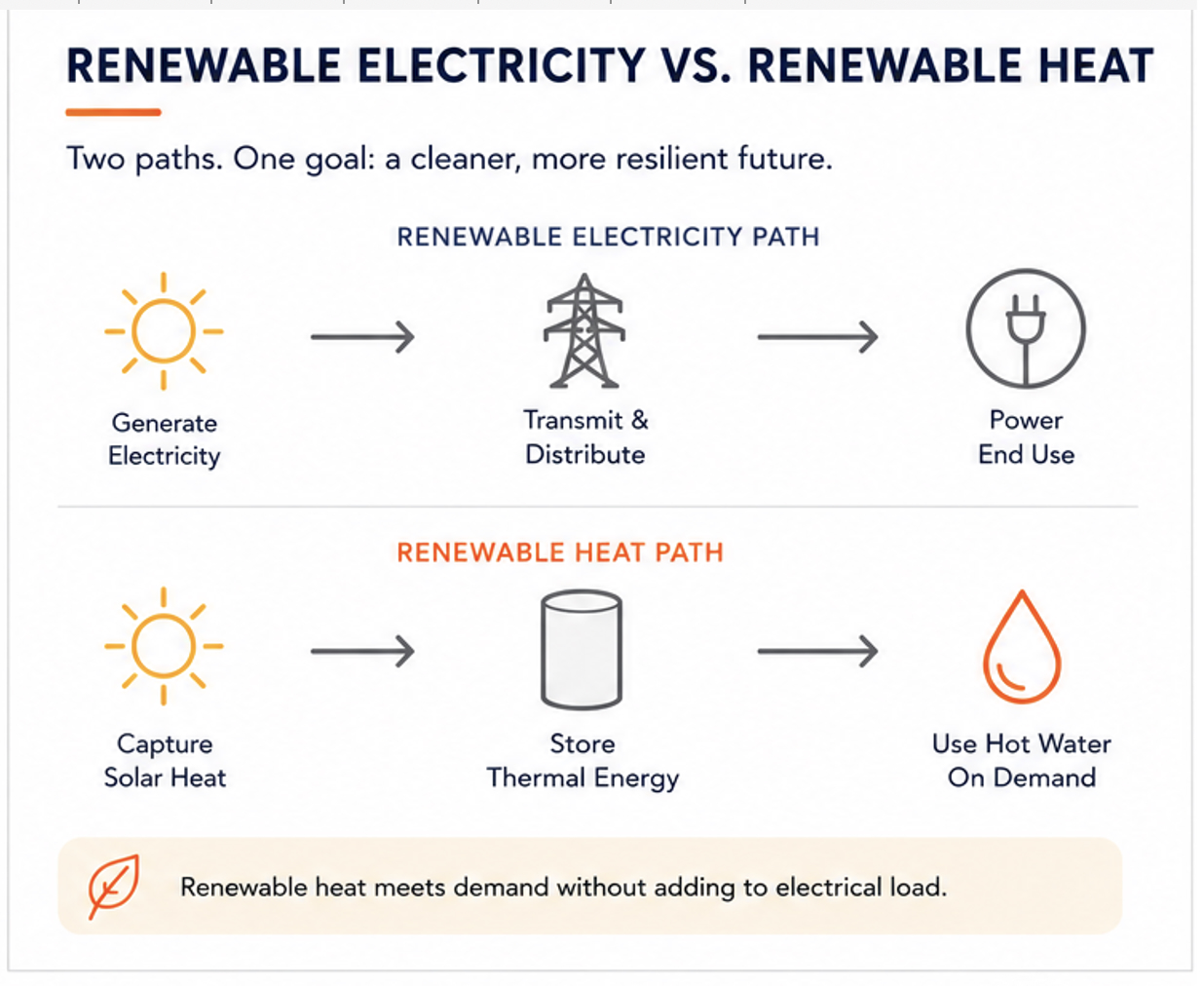
Thermal storage tanks effectively act as passive energy batteries.
To put thermal storage into perspective, water stores approximately 8.34 BTU per gallon per degree Fahrenheit. When multiplied across commercial-scale storage volumes, the energy capacity becomes substantial. A standard 80-gallon tank heated across 70°F differential stores roughly 16 kWh of thermal energy, while larger commercial storage systems can store several hundred kilowatt hours equivalent in thermal form.
Heat generated during periods of solar availability can be stored and utilized later when demand rises. This allows buildings to shift energy usage patterns while reducing peak electrical demand. For utilities and planners, this creates an opportunity to rethink how energy storage is categorized within broader infrastructure planning.
Stored thermal energy may not appear on a traditional battery capacity chart, but its ability to offset electrical demand can still provide meaningful grid support. As grid congestion intensifies in rapidly developing regions, integrating renewable thermal systems into building design may become an increasingly practical strategy for reducing pressure on utility infrastructure.
Commercial and community impact
Commercial applications represent some of the strongest opportunities for renewable thermal integration. Facilities with high and consistent hot water demand often achieve the greatest operational benefit because thermal energy usage aligns closely with predictable occupancy and operational schedules.
Hotels, multifamily housing developments, healthcare campuses, athletic facilities, universities, correctional facilities, industrial processing sites, and car wash operations all represent strong examples of buildings where renewable heat can substantially reduce operational demand.
Community-scale deployment also presents opportunities beyond individual facilities. As municipalities and utilities evaluate long-term infrastructure investments, renewable heat strategies can help diversify how communities’ approach decarbonization.
Rather than relying exclusively on expanded electrical generation and transmission infrastructure, municipalities may benefit from integrating renewable thermal systems into broader energy planning efforts.
This diversified approach can help improve resilience while reducing dependency on any single infrastructure pathway.
Why this mattersnNow
The urgency surrounding grid modernization continues to increase.
Across North America, utilities are already warning about transformer shortages, interconnection delays, rising electricity demand projections, and growing infrastructure costs associated with rapid electrification. At the same time, domestic manufacturing initiatives, supply chain security discussions, and energy independence priorities are reshaping how energy infrastructure decisions are made.
In this environment, technologies that directly reduce electrical demand may become increasingly valuable.
Renewable thermal energy should not be viewed as competing with electrification. Instead, it should be recognized as a complementary strategy that helps support electrification goals while reducing infrastructure strain. The clean energy transition will require multiple technologies working together across different applications and operating conditions.
No single pathway will solve every challenge.
Jessica Chrisman is the Marketing Manager at SunEarth, Inc. The company’s strength lies in the engineering, manufacturing and distribution of world class solar water heating collectors, mounting hardware, ancillary components and integrated systems at competitive prices for each channel customer.
SunEarth, Inc. | sunearthinc.com
Author: Jessica Chrisman
Volume: 2026 July/August