




Post July 4: Volatility is the new normal — Land isn't


July 4, 2026, was a hard deadline. Developers ran toward it, pulling years of pipeline forward, placing equipment deposits, mobilizing construction crews, racing to document the continuous physical work required to safe-harbor their projects under the latest IRS guidance. That sprint required enormous amounts of capital deployed very quickly, often in competition with every other developer doing the same thing.
Now that the deadline has passed, nobody is expecting the pressure to disappear.
The reality is that the market will be defined by ongoing policy volatility, increasing load growth, tightening access to capital, and relentless schedule pressure for the foreseeable future. The July 4 moment was a signal, not a finish line. For solar developers, the work of continuous construction must now be maintained. For storage developers, FEOC compliance thresholds rise every year through 2030, with each escalation requiring earlier supply chain decisions, more rigorous documentation, and capital deployed well before a shovel hits the ground. Both sectors face the same underlying problem: policies remain volatile, and that uncertainty will keep capital constrained.
Now is the time for developers to pay attention to their land strategy — because the truth is that land strategy is capital strategy.
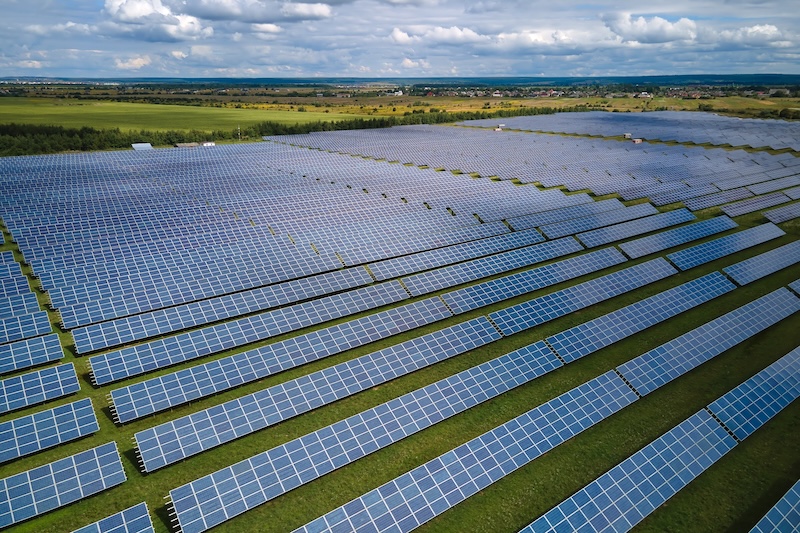
The capital market isn't getting any easier
The data is unambiguous. According to Crux's 2025 Market Intelligence Report, total lending to clean power projects reached $120 billion last year — but growth slowed sharply, from 22 percent year-over-year in 2024, to just 5.8 percent in 2025. Capital is available, but increasingly available only to the largest, most established sponsors.
Pre-construction capital remains expensive. Despite three Federal Reserve rate cuts totaling 75 basis points in 2025, long-term project finance rates were essentially unchanged by year's end. The relief many developers had been underwriting simply didn't arrive.
It isn't only pricing. Banks are prioritizing their largest clients. Human capital (deal staff, credit approval bandwidth, internal capacity) has become as binding a constraint as loan pricing. Small and mid-sized developers are the most exposed and have the most to lose in an environment where timing is everything.
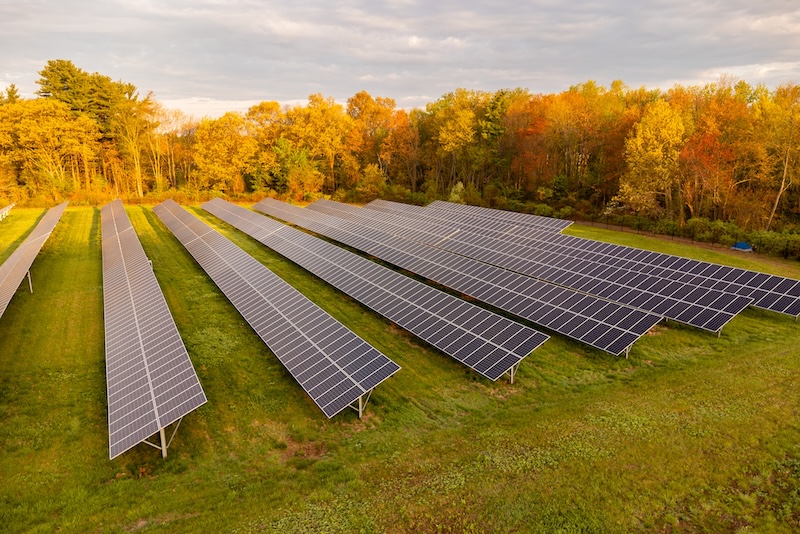
One asset doesn't move with the headlines
In the middle of all this volatility, there is one asset that doesn't reprice with policy shifts, doesn't get caught in bank approval queues, and doesn't lose value when tariff guidance changes: the land under the projects.
Solar and storage sites command real, often underestimated value. For operating solar projects, the land has often appreciated significantly for many early-mover developers who secured sites years ago. For storage projects, urban parcels — chosen precisely for their proximity to substations, load centers, and transmission infrastructure — often carry per-acre values well above what developers initially modeled.
For developers that own the land, that value is sitting untapped on the balance sheet while developers scramble to find capital from the same constrained channels as everyone else.
But it’s important for developers to understand that they don’t need to sell or even own their land to unlock its value. The underestimated opportunity of the real estate is the ability to realize the value of the future lease payments today. That can be done via either a land purchase or a lease purchase.
Quick access to flexible capital
Real estate capital, properly structured, can close in 30 to 45 days. It doesn't dilute equity. It doesn't require competing with every other developer for a bank's attention. And it operates completely outside the bottlenecks of traditional project finance. For a small or mid-sized developer without a top-tier bank relationship, the difference between waiting in line and moving on your own terms is often the difference between meeting a milestone and missing one. Decisions about land are decisions about capital access. The two are inseparable.
We've seen this work in practice. One solar developer used proceeds from land held under operational assets to place transformer deposits and mobilize EPC contractors across a set of near-NTP projects, creating a record of continuous construction before a full construction season was lost. The capital arrived in under 30 days from the start of due diligence. Another developer used the same approach to fund FEOC-related supply chain restructuring well ahead of a compliance deadline, avoiding the cost and delay of scrambling for bridge capital at the last moment.
The lesson for what comes next
Policy volatility isn't going away anytime soon. The FEOC thresholds climb annually. Tax credit guidance will continue to evolve. The capital markets will continue to favor scale. And the calendar will keep running. What doesn't change is the land under every project. It was there before the latest safe-harbor guidance. It will be there through every subsequent evolution of policies and guidelines. And in a market where access to capital is perpetually contested, the most reliable source of liquidity is often the value developers already hold.
Developers who treat their land strategy as a capital strategy will have something their peers lack: the ability to move on their own schedule, rather than waiting for a counterparty's bandwidth to clear. That is what stability looks like in an unstable market.
Jay Carlis is Executive Vice President of Business Development at SolaREIT, a U.S. based real estate company focused on delivering solar and battery energy storage developers and landowners the maximum value for their land and leases.
SolaREIT | www.solareit.com
Author: Jay Carlis
Volume: 2026 July/August