




Overcoming the Digital Bottleneck in Solar Asset Management


The utility-scale and commercial solar sectors are scaling at an unprecedented rate across the United States. Driven by sustained capital inflows, state-level mandates, and evolving federal tax frameworks, total installed capacity continues to hit historic highs. However, a quiet operational crisis is emerging behind these record-setting deployment figures: the historical curve of hardware efficiency gains is leveling off. Photovoltaic module efficiencies are hovering near their practical thermodynamic limits, and tracker mechanics have largely matured. Consequently, asset owners and independent power producers (IPPs) can no longer rely solely on hardware innovations to drive down the Levelized Cost of Energy (LCOE) or boost project returns.
Instead, the primary vector for financial performance optimization has shifted squarely to the operational phase. Here, legacy infrastructure has created a severe digital bottleneck. As portfolios expand through mergers, acquisitions, and regional development, operators frequently find themselves managing highly fragmented fleets. A single asset management team may routinely navigate five or more separate original equipment manufacturer (OEM) monitoring portals daily, each utilizing proprietary data structures and isolated alerting mechanisms.
This fragmentation results in a combination of spreadsheet dependency and severe alert fatigue. Operational and maintenance (O&M) teams are inundated with thousands of raw, unprioritized fault codes weekly, masking critical performance gaps. In an era where new site development faces tightening margins and complex grid interconnection delays, letting capacity slip through operational inefficiency is no longer tenable.
Beyond basic monitoring
To break this digital bottleneck, the industry must transition from legacy monitoring platforms to advanced, diagnostic software. Traditional supervisory control and data acquisition (SCADA) systems and standard data acquisition hardware are fundamentally descriptive. They excel at displaying historical production curves and broadcasting basic fault alerts, essentially telling an operator that an asset is underperforming or offline. However, they lack the contextual intelligence to explain why the underperformance is occurring or whether it warrants immediate human intervention.
The modern paradigm relies on physics-aware asset management software. By embedding engineering fundamentals directly into the data processing layer, advanced software creates a continuous digital twin of the physical asset. Instead of evaluating performance based on rigid, statistical error thresholds—which frequently trigger false positives during transient weather shifts—these intelligent platforms model the actual mechanical and electrical limitations of the machinery in real time.
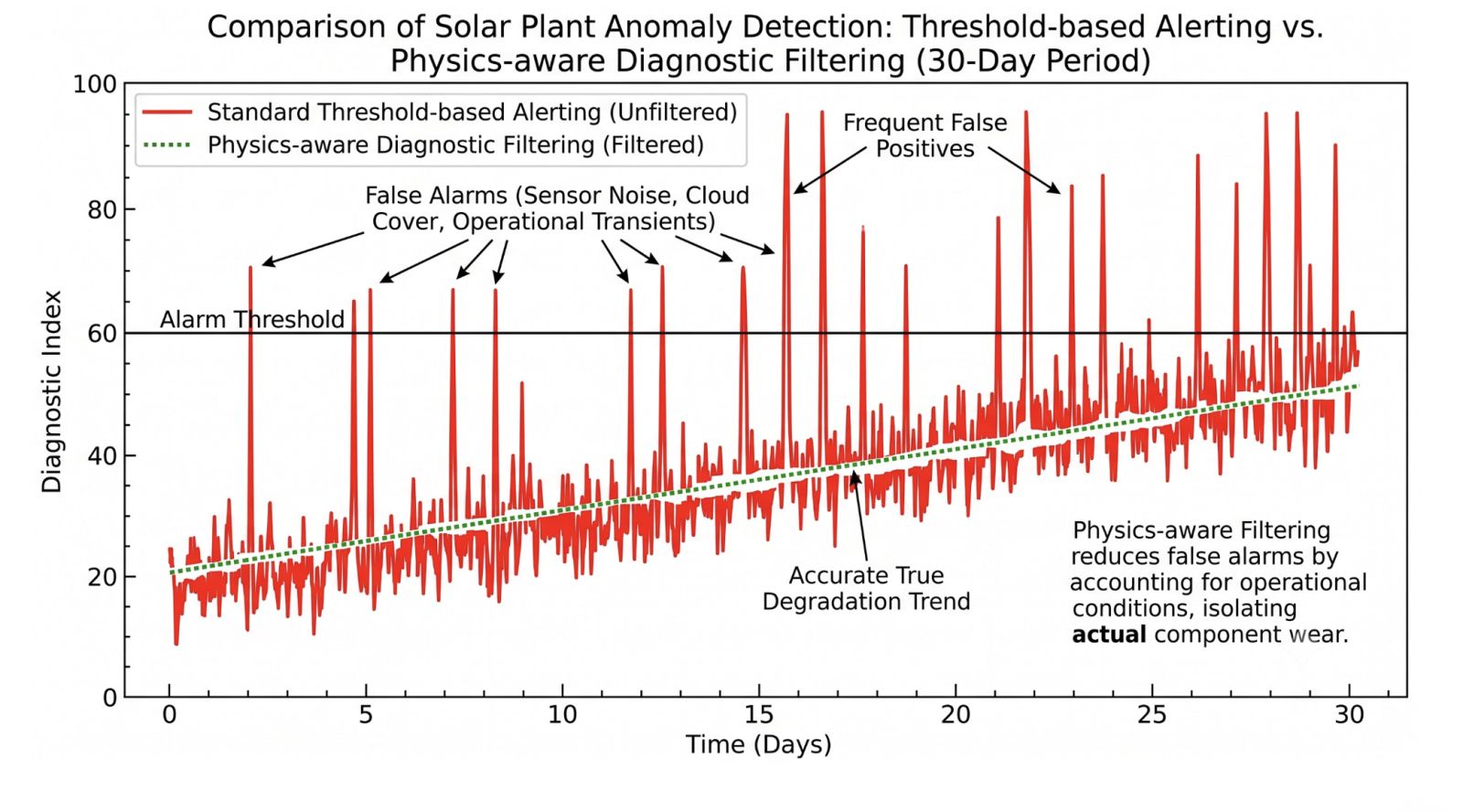
This approach eliminates up to 90 percent of false-positive alarms, directly protecting O&M service margins. When a field technician is dispatched, they are no longer reacting to a vague fault code; they arrive with a device-level root-cause analysis. For instance, rather than flagging a generic "low power" alert on an inverter, physics-based diagnostics can isolate a specific degrading insulated-gate bipolar transistor (IGBT) module causing a 2.5 percent thermal derating under peak irradiance. This shifts the O&M workflow from a reactive triage model to a predictive, high-certainty maintenance schedule.
Data-driven asset management
The financial ramifications of this software evolution are profound for both institutional investors and portfolio asset managers. In mature solar portfolios, undetected sub-hourly underperformance, localized soiling, string degradation, and tracking misalignments silently erode between 2 and 5 percent of annual energy yield. In an era of compressed power purchase agreement (PPA) rates, recovering even a fraction of this lost yield represents a direct injection into the project’s bottom line.
Consider the compounding costs of unnecessary dispatches, particularly in high-overhead markets such as Central or Southern California. A fully loaded truck roll can cost anywhere from $500 to $1,500. When software eliminates false alarms, it prevents thousands of dollars in annual P&L leakage per site.
Furthermore, macroeconomic shifts are elevating the necessity of automated operational compliance. As distributed generation fleets scale and battery energy storage systems (BESS) are increasingly paired with commercial arrays to mitigate regional export rules, regulatory reporting burdens are expanding. Manual compliance reporting is labor-intensive, error-prone, and exposes owners to substantial regulatory audit risks. Advanced software solves this by implementing automated data validation. By overlaying localized weather data onto automated event logging, modern compliance engines can instantly verify whether a drop in production was a valid operational outage or simply an expected low-irradiance event.
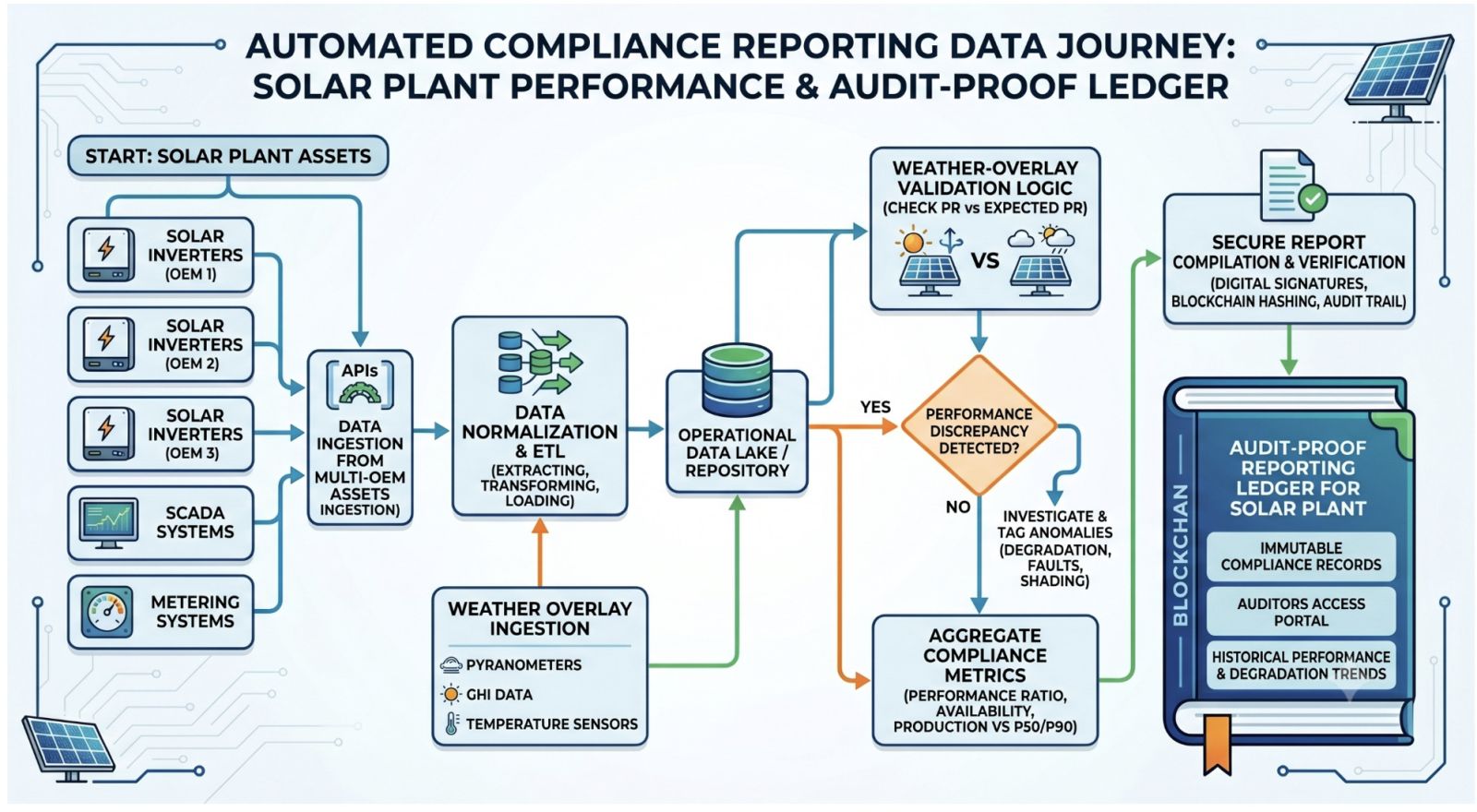
This structural shift creates an audit-proof ledger, safeguarding revenue that has already been generated and shielding the asset owner from catastrophic compliance fines.
The future outlook
Looking ahead, software will serve as the indispensable bridge connecting volatile renewable generation with a dynamic, modern grid infrastructure. The rising integration of co-located battery storage and solar assets creates operational profiles that are far too complex for manual optimization or fragmented oversight.
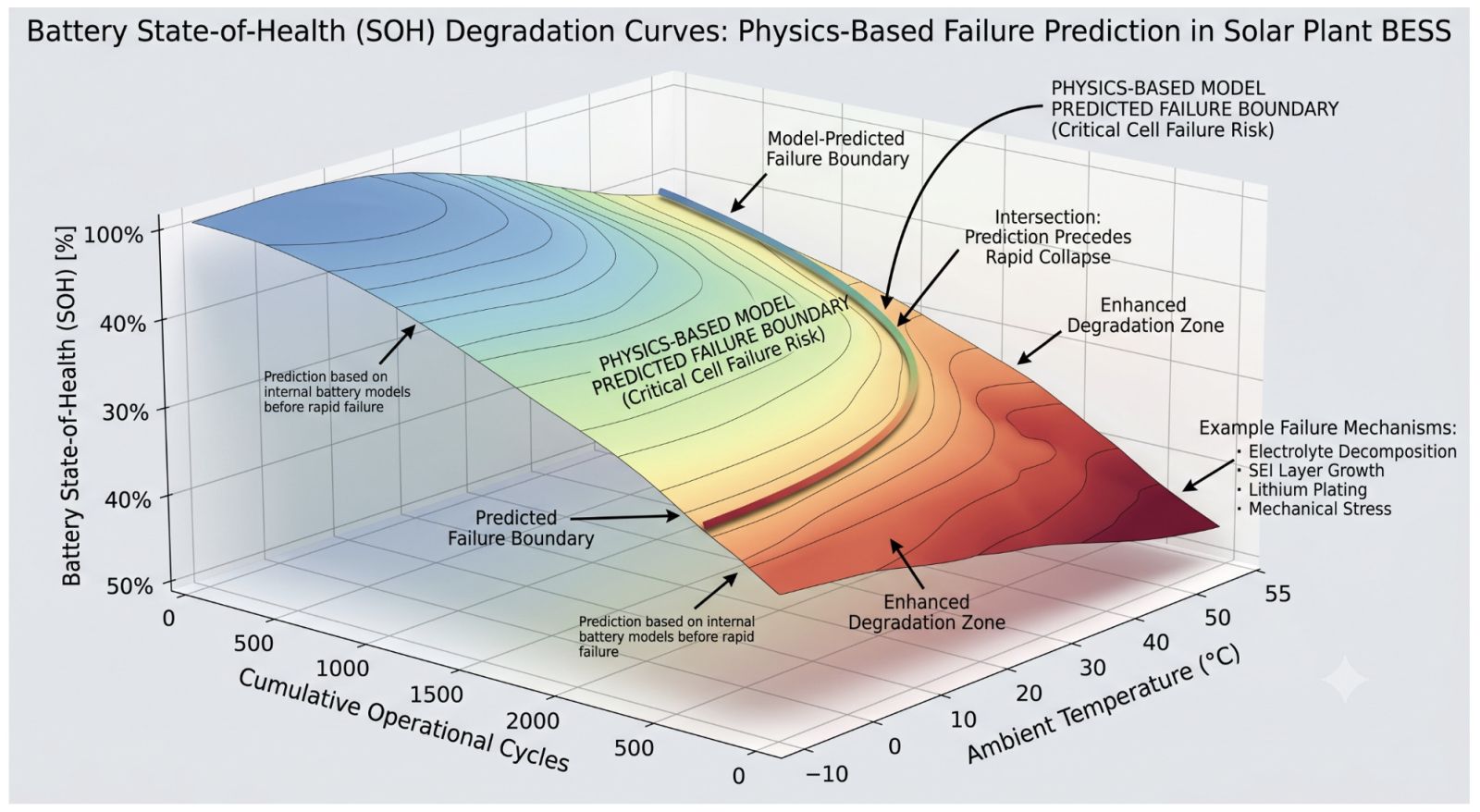
As the industry moves away from the historical strategy of building new capacity to drive revenue growth, asset managers must treat software as a core physical component of the asset itself—just as vital as the inverters or the racking structure. The future belongs to operators who leverage intelligent software to manage their physical assets with absolute causal certainty, successfully insulating their portfolios against technological obsolescence and tightening market margins.
Virat Damania is Founder & CEO at Ellume Technologies. Ellume’s renewable energy monitoring platform is built by operators, for operators to deliver real-time solar performance monitoring, wind farm diagnostics, and BESS analytics.
Ellume Technologies Inc. | ellume.com
Author: Virat Damania
Volume: 2026 July/August