




Navigating Subsurface Uncertainty: The hidden risk in solar construction


Planned with precision, solar projects of all sizes require skilled preparation to ensure that all the pieces fall into place when the time is right. Despite technological advancements in geological reporting, subsurface conditions continue to be an unpredictable variable for ground-mount foundation systems. As solar development continues to expand into more complex areas across the country, encountering less uniform terrain is becoming more pronounced. These terrain challenges lead to installation issues such as pile refusals, project delays, and damaged materials. When real-world conditions contradict the pre-project reporting used as the foundation for extensive site planning, contractors are faced with lost time and changes to the overall scope of the project.
Why subsurface conditions are so difficult to predict
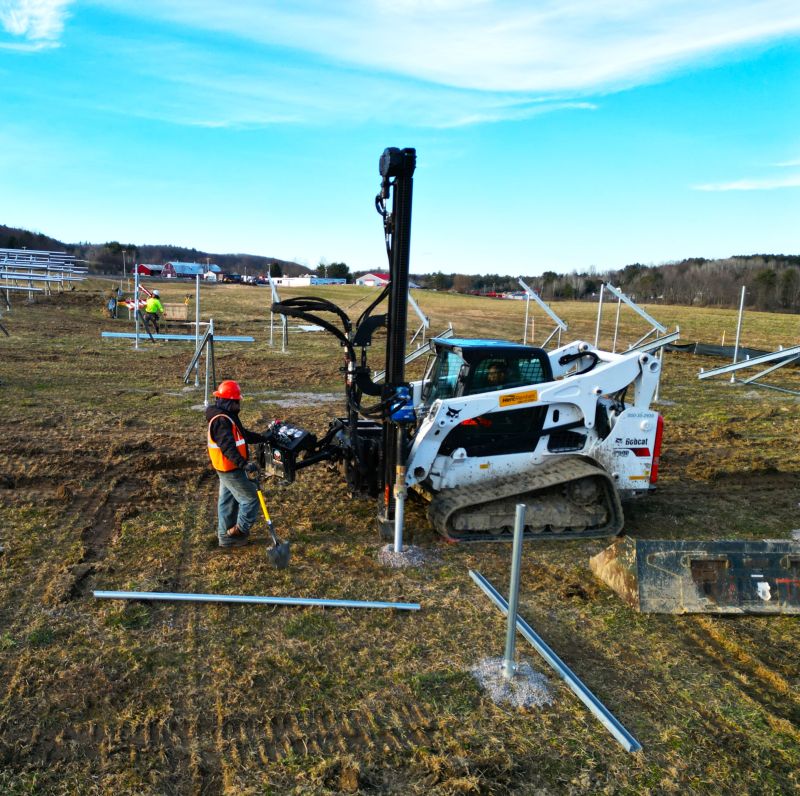
As one of the most common approaches to subsurface data collection, geotechnical sampling represents only a small portion of large sites, and often unable to account for variability between test points. While technology can be used to help fill in the gaps, you won’t truly know what lies beneath the surface until the project begins. Although rock layers may present themselves easily on a report, other forms of compacted materials such as dense soil, clay, or glacial till can create challenges depending on the foundation system being used. In addition, variations in rock type across a site can mean the difference between a smooth installation and pile refusals.
Conditions vs. expectations
Misalignment between expectations and true site conditions not only impacts day-to-day operations, but can have large downstream effects. Materials damaged from refusals, inconsistent pile depths, missed structural tolerances, and increased wear on equipment all create project delays and unplanned costs. Even small subsurface issues can scale into major project risk without the proper mitigation.
Rethinking foundation strategies
The expansion of solar sites on a global scale means that foundation systems are not one-size-fits-all. Traditional reliance on driven piles has proven limitations; although they may have once been considered the most cost-effective foundation solution, alternative foundation systems are showing their strengths. These solutions (i.e., ground screws and helical piles) allow for flexibility in foundation selection that can account for real-time conditions. In addition, these foundation systems have allowed many contractors to invest in rock drilling attachments as installation equipment that not only fulfill installation needs, but can also tackle tough soil conditions when needed. In choosing this approach, contractors are able to fully utilize their equipment and crews to combat subsurface challenges with minimal delays to the overall project.
Pre-drilling and site adaptability
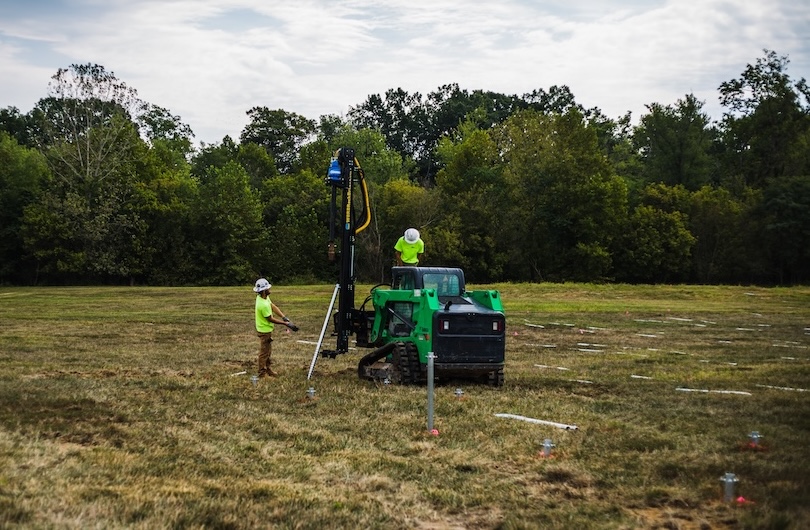
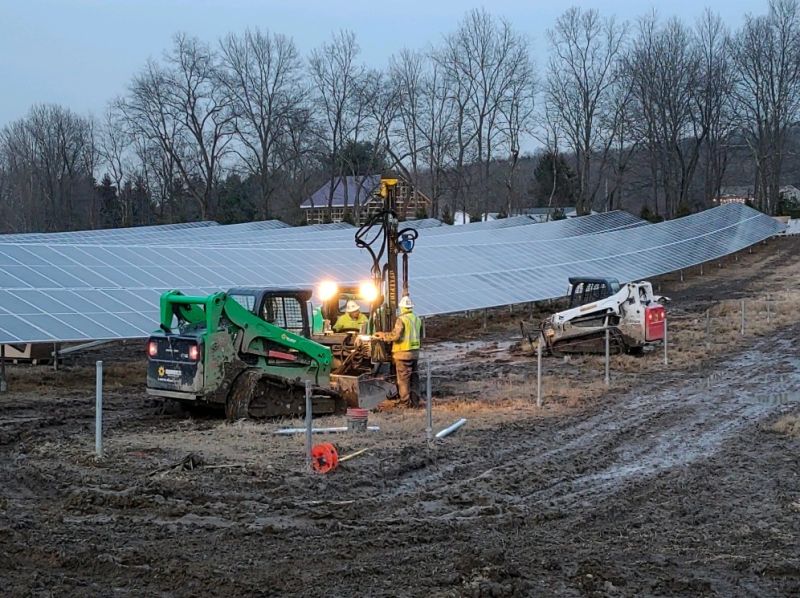
For sites that require a more direct approach, utilizing pre-drilling as a mitigation strategy can reduce overall refusal risk and improve installation accuracy. This approach also helps reduce strain on pile installation equipment, and provides greater consistency in foundation placement across varying soil profiles.
Supporting installation with versatile equipment
As foundation strategies evolve, there is a growing emphasis on equipment that can support multiple functions on the jobsite. The ability to adapt to changing conditions without bringing in additional specialized equipment can improve both efficiency and cost control. Drilling attachments mounted on commonly used carriers readily available on the jobsite, such as skid steers and excavators, achieve this flexibility. By incorporating drilling attachments into existing workflows, contractors can respond more quickly to subsurface challenges. This reduces downtime and allows crews to maintain momentum, even in more difficult areas of a project.
Planning for variability from the start
While field adaptability is important, managing subsurface uncertainty begins during the planning phase. Recognizing that site data has limitations allows project teams to build in flexibility from the onset. This flexibility may include considering multiple foundation options, planning for potential pre-drilling, and ensuring installation crews have access to equipment equipped to handle a range of conditions. Coordination between engineering teams and field crews is also essential to ensure that expectations align with real-world conditions. Taking a proactive approach reduces the impact of unexpected challenges and supports more consistent project execution.
Managing what lies beneath
Subsurface variability is an inherent part of solar construction. It cannot be fully eliminated, but it can be managed through a combination of planning, flexibility, and the right field practices. As projects move into more complex terrain, the ability to adapt to changing ground conditions will play an increasing role in project success.
Through incorporating flexible foundation equipment and practical installation methods, contractors can better navigate subsurface challenges while maintaining efficiency across the jobsite. Investing in the right machine for your fleet can put you one step ahead when inevitable jobsite obstacles strike. In solar construction, success is not only determined by what is built above ground, but by how effectively teams respond to what lies beneath it.
Mikayla Smith is Marketing Manager at WORD Rock Drills, which manufactures and supplies rock drilling attachments for excavators, skid steers, and stand-alone drilling equipment globally.
WORD Rock Drills | www.wordrockdrills.com
Author: Mikayla Smith
Volume: 2026 May/June