




Hidden Hazards of Wire Management


Wire management on solar projects often starts with neatness: clipped conductors, tidy homeruns, nothing dangling under modules. But some of the most expensive and potentially dangerous problems aren’t visible; they’re sealed inside a connector that looks fully seated, or inside a crimp that seems fine — until heat, vibration, and movement expose a weak point.
As PV systems grow in voltage, current, and connector count, connection quality can no longer rely on unwritten expertise and must be managed through a formal process.
 How a small defect becomes a big issue
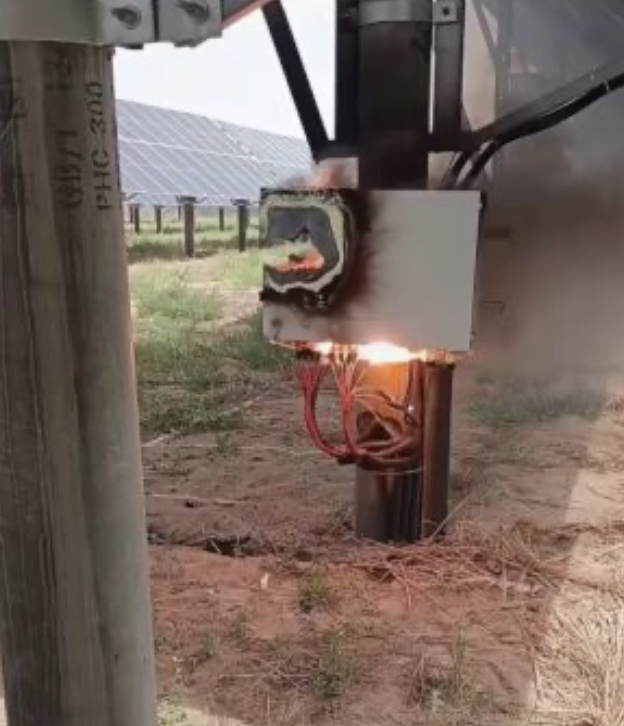
Every place a wire connects to something else is a potential weak spot. If a connection isn’t made correctly, the problem usually snowballs: resistance goes up, heat builds, and that heat makes the connection fail even faster.
PV connectors and terminations are also being asked to do a lot for a long time. They sit in full sun and freezing cold. They’re exposed to wind-driven movement, tracker motion, and constant thermal cycling. A single poor connection can pull down the production of an entire string, or create an intermittent fault that sends operations teams searching for a problem that “comes and goes.”
In the field, connection defects show up as:
- Underperformance that’s hard to diagnose A slightly resistive connection may not fail immediately; it quietly drags down production.
- Downtime and nuisance faults Intermittent contact can contribute to arc-fault or ground-fault events, triggering inverter errors and truck rolls.
- Thermal damage and fire risk Excessive heating can deform housings, compromise seals, and (in worst cases) lead to arcing.
Most improper cable connections aren’t about “bad parts.” They come from repeatable shortcuts:
- Wrong crimp tool, die, or setting PV connectors are made for specific wire sizes, and if the tool doesn’t match, the connection can end up too loose or crush the wire.
- Incomplete conductor insertion If the conductor isn’t fully seated before crimping, the termination can look acceptable while making poor contact internally.
- Damage during stripping Damage during wire stripping can weaken the connection. Cutting or nicking the strands makes the wire weaker and more likely to fail over time.
- “Click equals done” An audible lock doesn’t guarantee correct assembly. Seating, locking, and environmental sealing all matter outdoors.
- Mixing components that weren’t evaluated together Connector bodies, contacts, and seals are engineered as a system; mixing parts or mating dissimilar connector types can compromise contact pressure and moisture protection.
- Wire management that loads the connector When cables aren’t properly supported, their weight and movement pull on the connector. Over time, that stress can cause the connection to loosen or fail.
Standards exist, execution is the challenge
The industry isn’t short on guidance. In North America, the National Electrical Code (NEC) and local amendments set baseline requirements for wiring methods, listed equipment, and “install per instructions” expectations. PV wire and connectors are also evaluated to standards intended to account for outdoor exposure, temperature cycling, and long service life.
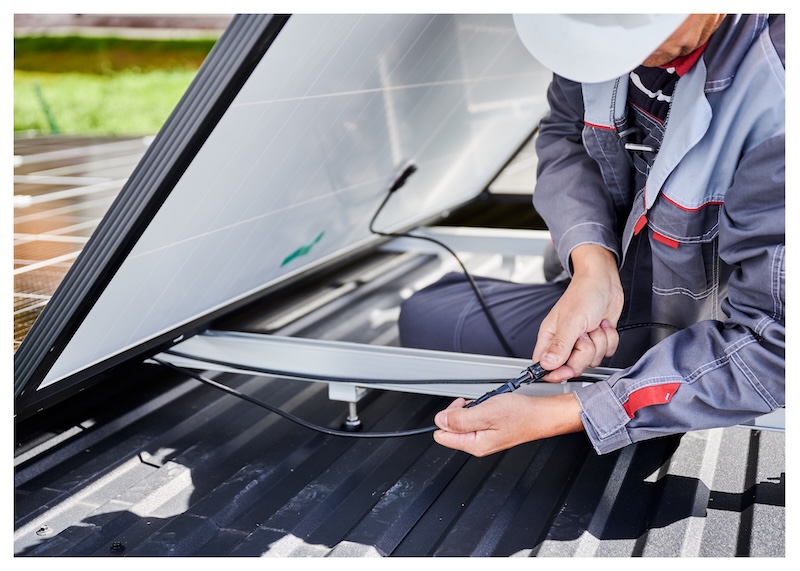
Yet installers may be unaware of the details, assume they already know them, or feel schedule pressure that discourages verification. And inspections can’t see inside a crimp barrel or confirm the correct tool was used.
A practical routine for connection quality
Better connections don’t require exotic equipment. They require a consistent routine:
- Standardize connector families and avoid mixing “look-alike” parts.
- Confirm conductor size/type are compatible with the contact.
- Keep components clean and dry before assembly.
- Use the specified crimp tool and die set for that contact.
- Calibrate tools and replace worn dies.
- Use stripping tools that prevent nicked strands; follow specified strip lengths.
- Where torque is specified, use a torque tool rather than relying on “feel.”
- Check insertion depth, seal placement, locking engagement, and assembly sequence.
- Build sample pull tests or crimp-height checks into QC, especially when crews or conditions change.
- During commissioning, thermal imaging under load can reveal abnormal heating early.
Design wire management to protect terminations
- Support conductors so connectors aren’t carrying cable weight.
- Keep connectors away from sharp edges and areas where water can sit; route with proper bend radius and strain relief.
- For trackers or windy sites, plan for movement so cables flex where intended, and not at the termination.
Solar is a foundational part of the energy mix now. That means every connection made needs to last just as long as the modules and inverters around it. The little details matter, especially the ones done by hand.
Most connection failures are avoidable. Taking the time to follow manufacturer instructions, use the right tools, and stick to solid install habits pays off fast: fewer call backs, fewer mystery faults, better system performance, and safer arrays.
Wire management isn’t only about making an array look clean. It’s about protecting every connection that turns sunlight into dependable power year after year.
Kevin King is the CEO and Founder of Solar Tools USA, a company created to address the industry’s long-standing need for specialized tools and safety-focused solutions for solar installation professionals. He serves on the Board of Directors of Solar Energy International (SEI), a nonprofit organization dedicated to renewable energy education and workforce development and supports the North American Board of Certified Energy Practitioners (NABCEP) as a subject matter expert, including service as a Job Task Analysis (JTA) committee member for NABCEP’s PV Installation Professional (PVIP) certification.
Solar Tools USA | www.solartoolsusa.com
Author: Kevin King
Volume: 2026 May/June