




Designing for Weather: Hardening electrical BOS for the new normal


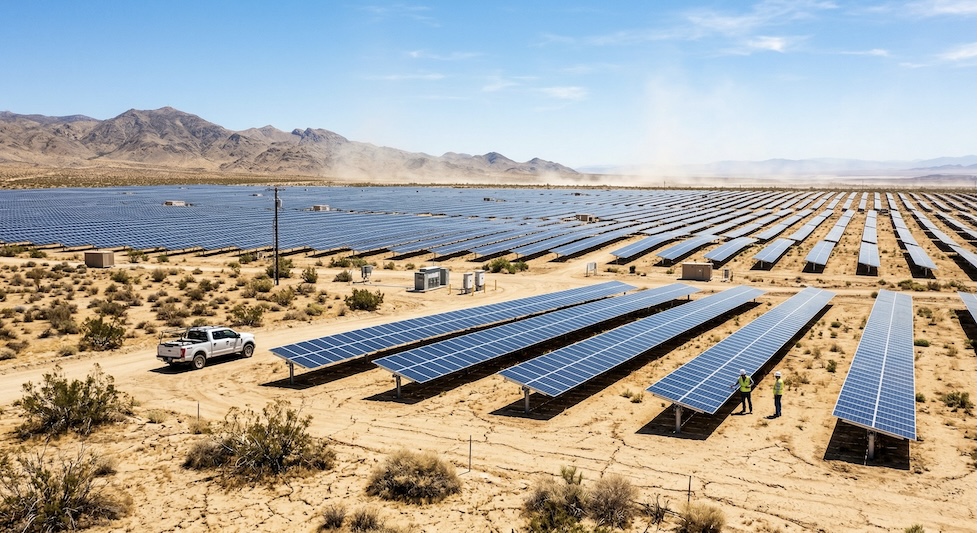
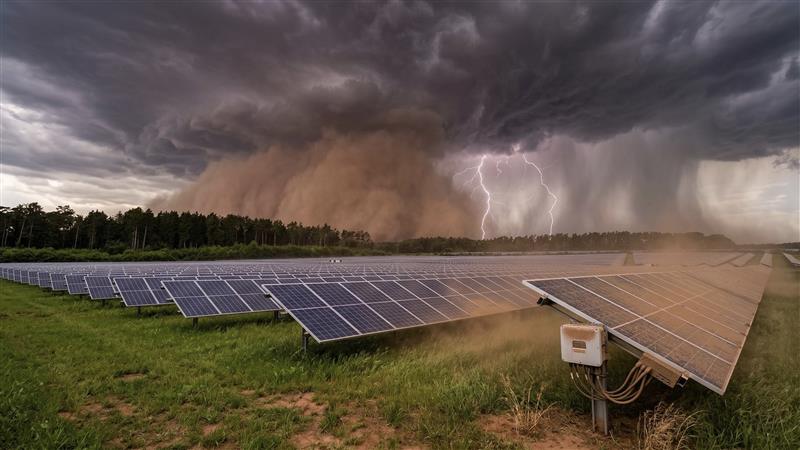
Solar project risk modeling has always had to account for extreme weather. What has changed is the frequency, intensity, and unpredictability of those conditions — and the degree to which they expose weaknesses in electrical balance‑of‑system (BOS) design. Heat waves, polar vortex events, high‑wind storms, flooding, wildfire smoke, and dust intrusion are no longer edge cases; they are routine stressors acting on systems expected to operate reliably for decades.
As a result, “good design” for PV electrical BOS is being redefined. The question is no longer whether systems meet code at commissioning, but whether they remain electrically sound after years of thermal cycling, vibration, moisture exposure, and installation variability. Many of today’s most costly failures are not catastrophic events, but small degradations that compound over time. Loose terminations, jacket wear, corrosion, and water ingress will quietly erode system performance until outages or ground faults force corrective action.
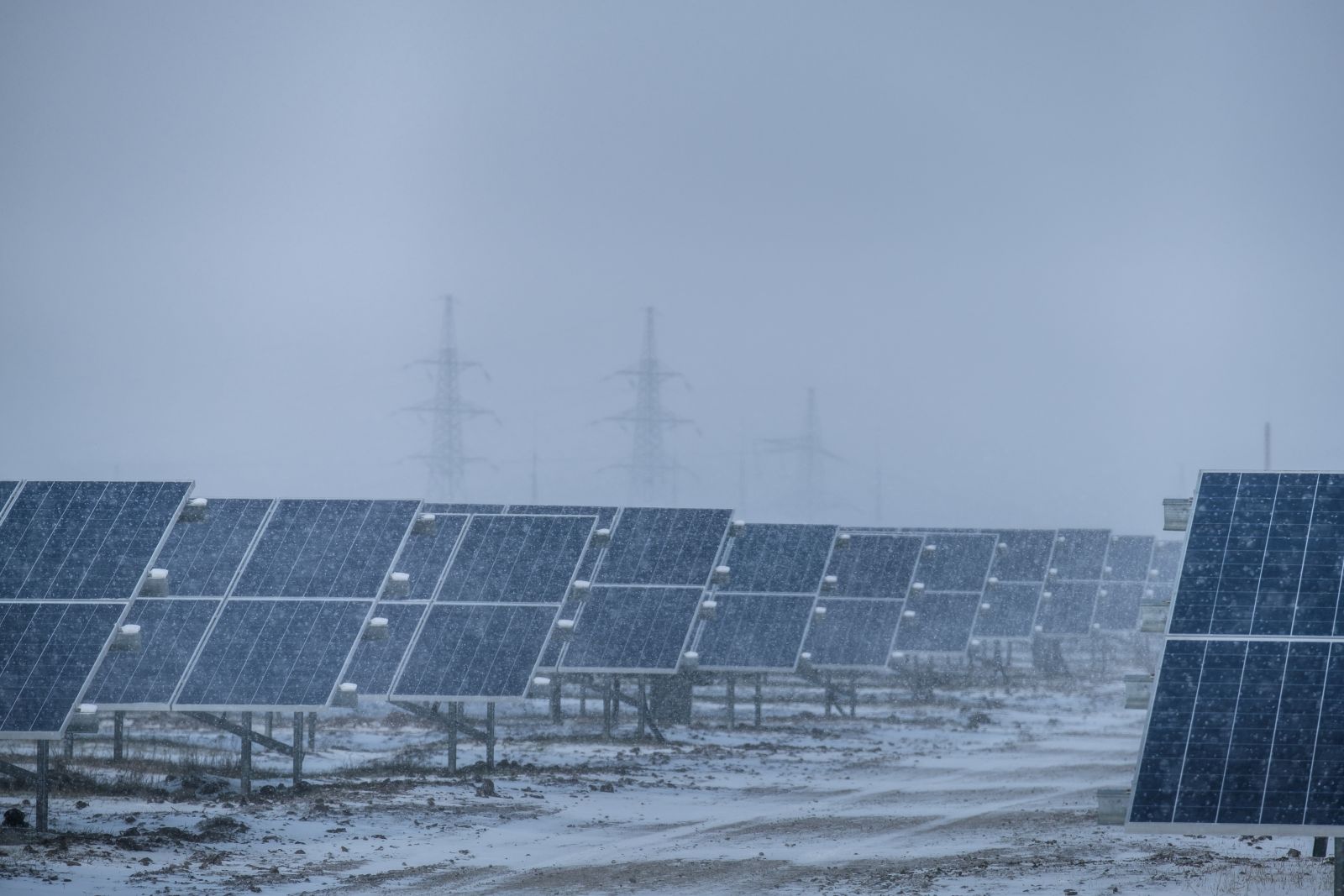
Understanding how weather interacts with electrical BOS requires shifting from a checklist mindset to a failure‑mode mindset.
Failure‑mode map for weather‑driven stress
Extreme weather affects electrical BOS through a handful of recurring physical mechanisms. Mapping those mechanisms to design vulnerabilities helps explain why failures occur and where mitigation is most effective.
- Heat and thermal cycling drive expansion and contraction across conductors, terminations, and supports. Over time, this movement can loosen mechanical connections, reduce contact pressure, and increase resistance at terminations. Elevated temperatures also accelerate material aging, particularly in polymers and insulation systems, shrinking the margin for error.
- Cold and freeze‑thaw cycles introduce a different set of risks. Materials that perform well at moderate temperatures can become brittle in sustained cold. Any moisture that enters enclosures or jackets can freeze and expand, creating pathways for further intrusion once thawed. Components that rely on tight installation tolerances are especially vulnerable.
- Wind and vibration apply continuous micro‑movement rather than single extreme loads. Conductors that are insufficiently supported or poorly routed can experience abrasion at contact points, fatigue at terminations, and long‑term wear that is difficult to detect visually during routine inspections.
- Moisture and flooding transform minor defects into system‑level problems. Small jacket nicks or imperfect seals that would be inconsequential in dry conditions can become initiation points for ground faults once water is present. Capillary action can carry moisture far beyond the original point of entry.
- Particulate exposure, including dust, sand, and smoke residue, adds another layer of stress. Particulates can trap moisture, degrade sealing surfaces, and contaminate terminations, particularly in environments with frequent wind events or wildfire activity.
None of these mechanisms are http://new. What is new is their cumulative impact when projects are exposed to multiple stressors over longer operating lives.
Design levers that reduce hidden risk
Addressing weather‑driven failures does not require over‑engineering or exotic materials. In most cases, risk reduction comes from disciplined application of a few core design and construction principles.
- Routing discipline is one of the most effective — and most overlooked — controls. Clean, intentional routing minimizes unnecessary bends, eliminates contact with abrasive surfaces, and reduces opportunities for movement. Consistent routing also makes future inspections faster and more reliable, allowing changes to be identified quickly.
- Strain relief and support spacing directly affect how systems respond to thermal and mechanical movement. Properly supported conductors can accommodate expansion and contraction without transferring stress to terminations. In high‑wind regions, tighter support spacing and attention to transition points help limit vibration‑induced fatigue.
- Termination strategy deserves special focus under extreme weather conditions. Mechanical connections must maintain adequate contact pressure across temperature swings and vibration. This places a premium on correct preparation, torque control, and verification — not just at installation, but as part of quality assurance before commissioning.
- Material selection should be tied to environmental exposure rather than minimum code compliance. Insulation systems, jackets, and hardware all experience weather differently depending on UV exposure, temperature range, and moisture presence. Matching materials to site conditions reduces long‑term degradation and preserves performance margins.
- Inspection checkpoints act as the last line of defense against weather‑accelerated failures. Targeted inspections at known risk points (terminations, transitions, supports, and penetrations) catch issues that are invisible at a system level. These checkpoints are most effective when embedded into construction workflows rather than treated as after‑the‑fact audits.
- Documentation practices close the loop. Clear records of routing intent, torque values, material choices, and inspection outcomes provide critical context for operations and maintenance teams. When weather events occur years later, this documentation helps distinguish between installation defects and true environmental damage, speeding diagnosis and repair.
Designing for variability (not perfection)
A common thread across weather‑related failures is reliance on perfect installation conditions and static assumptions. In reality, construction occurs across varying skill levels, schedules, and environments. Weather‑hardened design acknowledges this variability and builds in tolerance — not by lowering standards, but by reducing sensitivity to small deviations.
This shift has tangible operational benefits: Systems designed with weather as a primary input experience fewer nuisance faults, require fewer repeat truck rolls, and move through commissioning with fewer delays. Over time, they also maintain higher availability by avoiding the slow accumulation of electrical degradation that is difficult to detect until it becomes disruptive.
As extreme weather becomes the new normal, electrical BOS can no longer be treated as a passive participant in system resilience. It is an active determinant of long‑term performance. By mapping failure modes to environmental stressors and applying proven design levers with discipline, the industry can harden PV systems without adding unnecessary complexity — and ensure that today’s projects remain productive in tomorrow’s conditions.
 Mason Phillips is VP of Paige Renewable Energy & Utilities, which has 65+ years’ experience in wire and cable industry. Paige offers custom manufactured solutions for large commercial and utility-scale solar, wind, and battery storage projects. With the ability to bond small and large projects, and expert engineering and personal design support from our in-house renewable energy experts, Paige has supported more than 11 GW of projects.
Paige Renewable Energy & Utilities | paigerenewableenergy.com
Author: Mason Phillips
Volume: 2026 May/June