




Building a Hail-Resistant Module


The accelerating pace of climate change has reshaped the risk landscape for renewable energy assets. Among the many threats facing utility-scale solar projects, hailstorms have emerged as one of the costliest and most damaging. Unlike gradual performance losses from dust, heat, or humidity, hail produces sudden and catastrophic failures that can compromise entire facilities. This article examines the scale of the problem, the material and structural strategies being employed to mitigate it, and the role of advanced certification in strengthening long-term reliability. The thesis is simple: to ensure solar energy’s resilience in a changing climate, module design must evolve beyond efficiency to prioritize durability in extreme weather scenarios.
 Global context: Hailstorms and solar vulnerability
As climate change accelerates, extreme weather events such as hailstorms have increased in frequency and severity. Photovoltaic (PV) power plants, with large surface areas exposed to the elements, are particularly vulnerable.
- Texas, USA (2019): A 178MW solar plant reported 58.3 percent of its modules damaged, leading to an insurance payout of $80 million.
- Nebraska, USA (2023): A separate facility saw 97.5 percent of its modules destroyed in a single hailstorm.
- Europe & Australia: Northern Italy, southern France, and southeastern Australia also face recurring hail events, posing risks to long-term project returns.
Hail accounted for 54.2 percent of PV asset insurance claims between 2018-2023. The average hail-related claim during this period was $58.4 million, making it one of the most critical risks in solar asset management.
Building a hail-resistant module
To meet the challenges posed by hailstorms and ensure the stable operation of PV systems in extreme weather, PV modules installed in high-risk regions need to be hail resistant. This can be achieved by utilizing stronger materials and an optimized structure compared to standard modules. Hail-resistant modules may incorporate an upgraded module design, stricter raw material selection and evaluation, and extended module reliability testing to ensure long-term reliability.
Upgraded module design
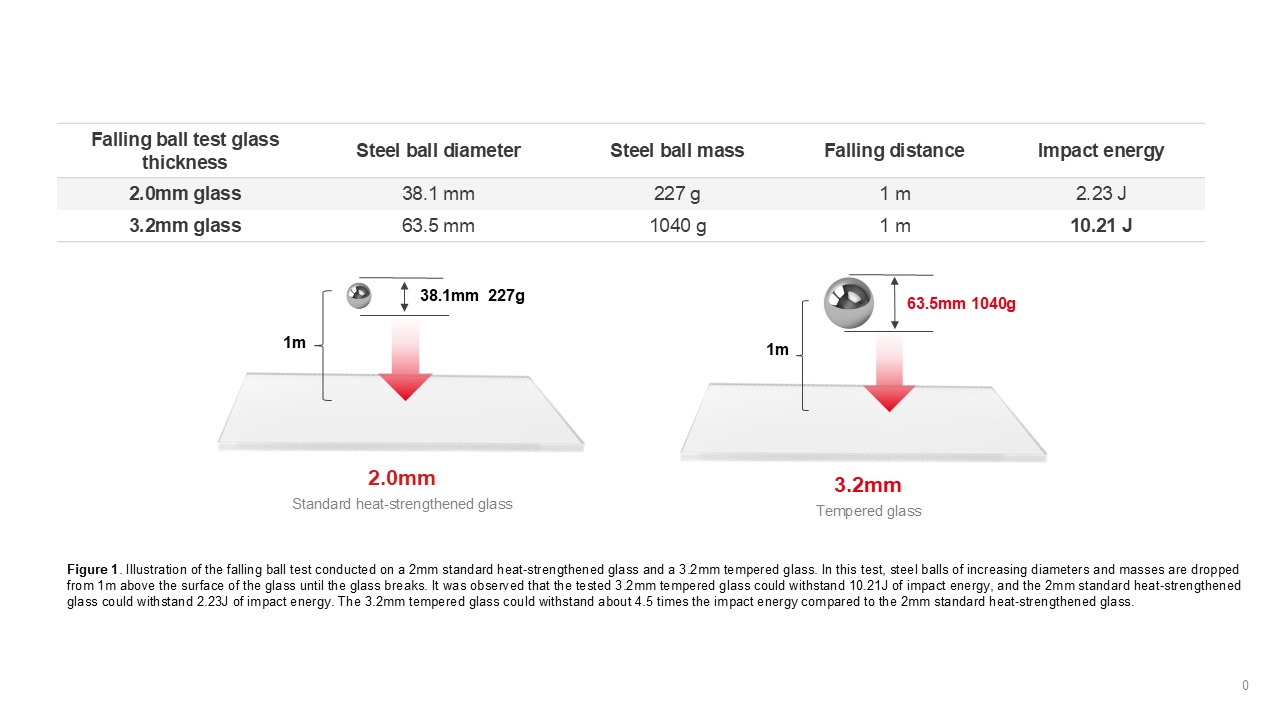
The front glass of a module withstands twice the impact stress compared to the rear glass, making front-glass enhancement critical. Enhanced front-glass thickness and thermal tempering have been shown to significantly increase impact resistance. For example, testing demonstrates that a 3.2mm tempered glass can withstand about 4.5 times the impact of energy compared to a 2mm conventional glass, reducing the likelihood of glass breakage under hail impact. Generally, a well-built hail-resistant module can withstand 10-20 times the hail impact compared to the IEC standard with 25mm diameter hailstones, depending on the module design and structure. A hail-resistant module’s anti-hail performance can be effectively enhanced when paired with tracker hail stow at a high tilt angle.
Furthermore, since hailstorms may be accompanied by strong winds, it is essential for a hail-resistant module to also have high wind resistance. Some modules may incorporate optimized frame design, stronger frame material, and/or advanced welding technologies to enhance wind resistance.
Extended reliability testing
To accurately simulate real-world conditions, module suppliers may implement extended module reliability testing that is two to three times more rigorous than the IEC standard. These tests cover a range of factors such as hail, damp heat, UV exposure, and combined stress scenarios, ensuring the long-term performance and reliability of the hail-resistant module.
Industry trends and market uptake
Scenario-based hail-resistant modules are increasingly adopted in regions prone to extreme weather. Global demand has already surpassed gigawatt-scale deployment, with installations reported in the U.S. Midwest, Australia, and across Europe. This reflects a broader industry movement toward designing PV systems not only for efficiency, but also for climate resilience.
The future of solar power will not be defined by efficiency alone. As the costs of climate-related losses mount, durability is becoming an equally important benchmark for technological adoption. Hail-resistant module designs demonstrate how scenario-based engineering can safeguard assets, reduce insurance burdens, and reinforce investor confidence. By expanding testing protocols, advancing material science, and strengthening structural resilience, the PV industry is laying the groundwork for reliable performance under the realities of a warming and more volatile world. In this way, resilience in design becomes resilience in clean energy delivery.
Alyssa Huang is Product Marketing Manager at LONGi. LONGi has dedicated itself to technology innovation with five five business sectors, covering mono-crystalline silicon wafers, mono-crystalline silicon cells/mono-crystalline silicon modules, distributed photovoltaic solutions, utility plant system solutions, and hydrogen energy equipment solutions.
LONGi | www.longi.com
Author: Alyssa Huang
Volume: 2025 November/December