




A Tribal-Led Breakthrough: Plug-in solar on the Pine Ridge Reservation


In an historic first, the Oglala Lakota Nation on South Dakota’s Pine Ridge Reservation has become the national vanguard of a new solar frontier: high-power, plug-in solar appliances. Led by Chief Henry Red Cloud and John Red Cloud at Red Cloud Renewable, this grassroots organizational effort is demonstrating how tribal sovereignty, innovation, and energy justice can converge to reshape the future of distributed energy in the United States.
Supported by a six-year, $5.5 million Community Innovation Grant from the Bush Foundation, the initiative will place 100 portable 6.4kW solar appliances at tribal homes, providing roughly 640 kW of clean electricity. The program couples these plug-in systems with weatherization and energy-efficiency upgrades to maximize household savings and resilience. For families long excluded from conventional rooftop solar markets, the combined impact of insulation, air sealing, and renewable power is expected to yield more than $1,500 in annual energy savings per residence, enough to meaningfully reduce energy poverty and build resilience in extreme weather.
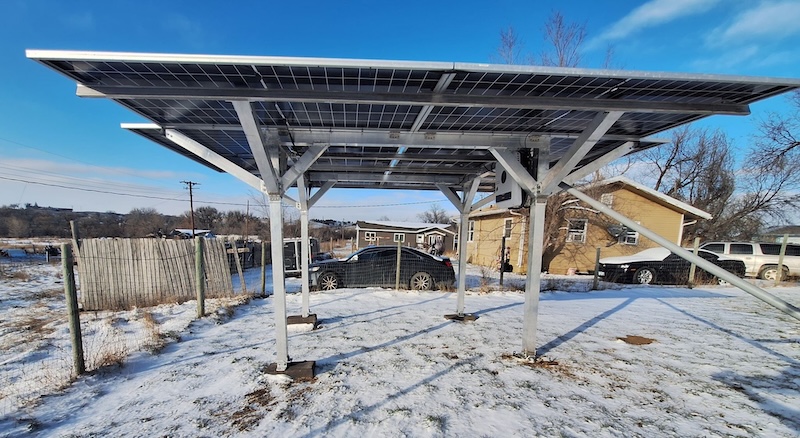
Instead of relying on rooftop panels and permanent ground installations requiring permitting battles, these systems connect through 240V dedicated outlets and are classified not as construction projects, but as plug connected household appliances. That shift in classification, and the first-ever successful interconnection of such a system by a U.S. electric utility, marks a profound turning point in how we think about renewable energy access.
From vision to deployment
Henry and John Red Cloud’s leadership emerges from a generational mission: to create a sustainable, sovereign energy future for their people. “This place-based effort began as a vision among my people, the Oglala Lakota, for a healthy and sustainable future for the next seven generations,” Chief Red Cloud wrote in a letter to federal energy authorities. As both cultural custodian and logistical strategist, Red Cloud Renewable has helped align cutting-edge technology with ancestral responsibility, bringing solar not just to Pine Ridge, but from Pine Ridge to the nation.
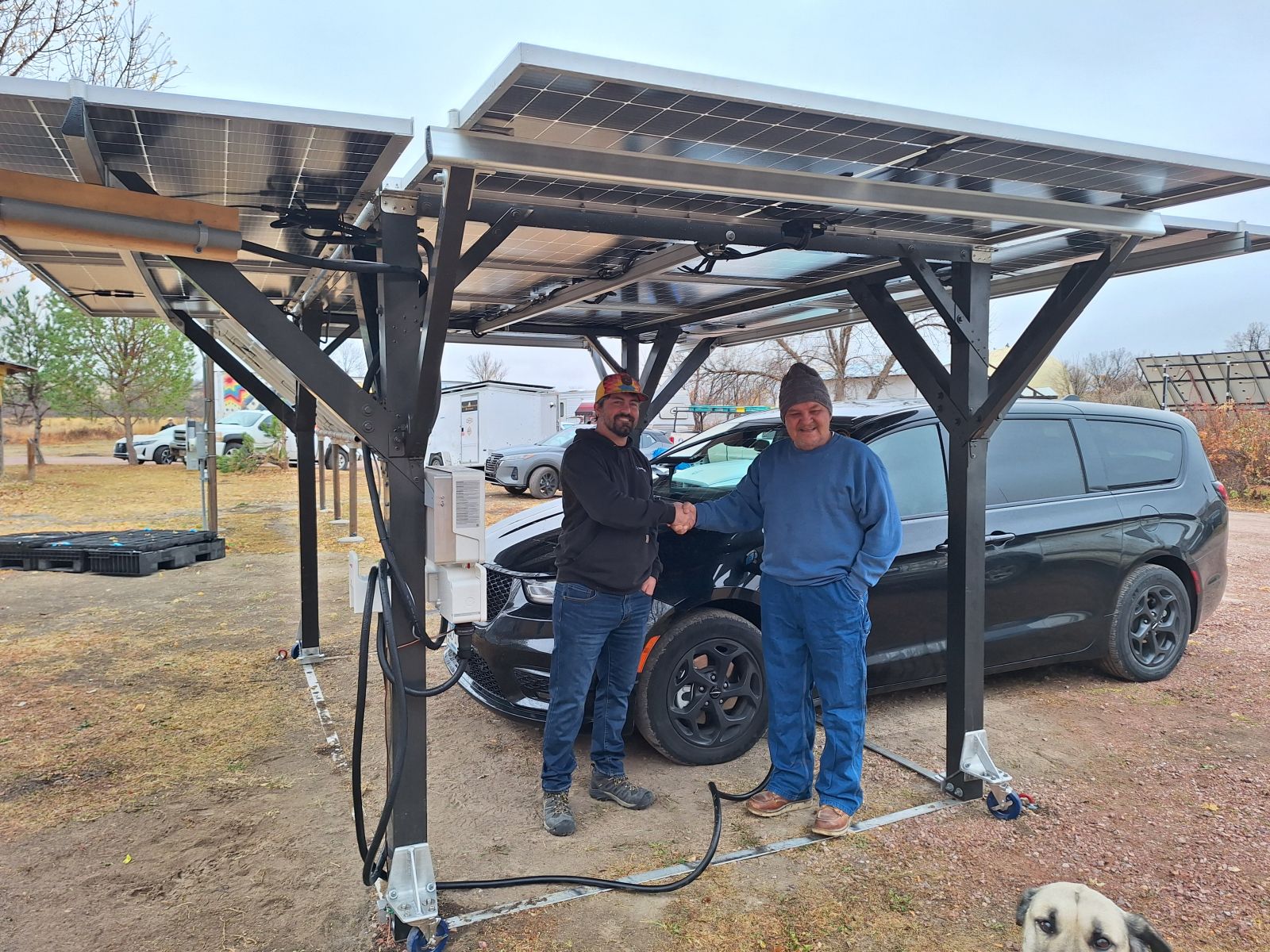
In 2025, their organization achieved a national milestone: deploying the first plug-in solar system to be permitted and legally interconnected by a U.S. electric utility. North American Clean Energy described it as the “first-in-the-nation milestone for legally interconnected appliance-based solar generation” — a regulatory breakthrough made possible by years of groundwork and persistence.
Challenging the regulatory status quo
The project’s breakthrough hinged on more than engineering. For over a decade, plug-in solar systems existed in a regulatory gray area, lacking a product safety standard and facing systemic exclusion from utility interconnection programs. That changed with the development of a new national safety standard known as UL 3700, which will define certification requirements for interactive plug-in photovoltaic systems (PIPV). This foundational work was catalyzed in 2023 by a federal SBIR research grant from the Department of Energy (DOE), and supported through sustained engagement by industry professionals.
This regulatory groundwork mattered. Without it, the Pine Ridge deployment could not have proceeded. And now, with the outline of a certifiable standard in place, Red Cloud’s team can scale their impact, deploying more units each year under a replicable, standards-based model.
A replicable model rooted in place
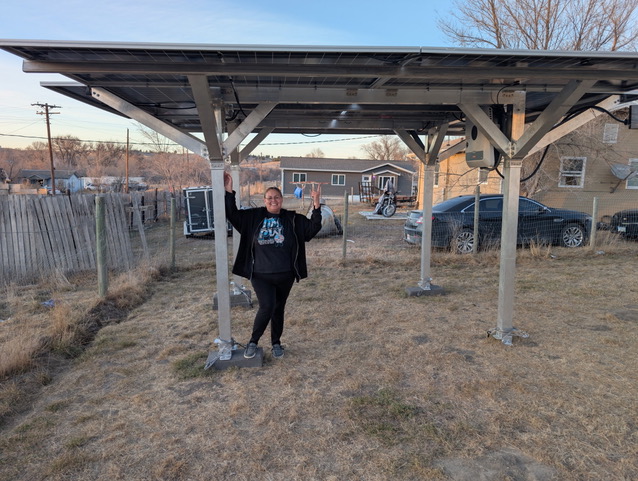
The partnership between Red Cloud’s team and technical collaborators was intentionally structured to honor the principle of tiospaye, a way of working together as extended family. While Red Cloud Renewable leads community coordination, site selection, and workforce training, its partners focus on engineering design, manufacturing, and certification.
This arrangement allows Red Cloud Renewable to focus on its core mission: creating pathways for tribal members to enter the clean energy workforce, and enabling households to take ownership of their energy futures. Job creation, energy equity, and cultural autonomy are not afterthoughts, they are the core outcomes.
Looking ahead
As deployment begins in earnest in 2026, the implications reach far beyond Pine Ridge. Across Indian Country and nationwide, barriers to rooftop solar persist in the forms of unsuitable building stock, permitting bottlenecks, financing hurdles, and utility resistance. Plug-in solar offers a new way through the current permitting maze. It moves electricity generation behind the electric meter, closer to the user, and into the realm of household appliances well suited for renters and small businesses.
Placing utility scale solar projects like this behind the electric meter will help avoid future grid upgrades, and allow individual businesses and families to reduce or even eliminate their rising electric bills.
By anchoring innovation in the community, Red Cloud Renewable is showing what it looks like to lead, not follow, the clean energy transition. It is a model born in the margins, but aimed at the center: scalable, certifiable, and built for the next seven Oglala Lakota generations. It’s a reflection of the ancestral obligation to listen to the community and speak up for those who are unable to do so for themselves.
Erika Ginsberg-Klemmt is VP of Operations at GismoPower LLC, a family-owned company that created a mobile solar carport appliance designed to generate plug-in renewable electricity from residential driveways. She works at the intersection of distributed energy policy, standards development, and market adoption, collaborating with engineers, regulators, and national laboratories to modernize pathways for grid-integrated plug-in photovoltaic systems. Her work focuses on expanding solar access for renters, small businesses, and lower- to moderate-income households historically excluded from traditional rooftop solar.
Gismo Power | gismopower.com
Author: Erika Ginsberg- Klemmt
Volume: 2026 March/April