




Time to Streamline Certification Standards for Repurposed Battery Energy Storage Systems


North America is in the middle of a clean energy transformation. Despite, or perhaps because of the United States elimination of tax incentives, electric vehicles (EVs) are rolling out in record numbers, and with them an equally unprecedented flow of used batteries. These batteries, retired from vehicles after their capacity drops below 70–80 percent, still have years of valuable service left to give in a “second life”. Repurposing them into battery energy storage systems (BESS) offers a powerful opportunity to extend their life, reduce waste, and strengthen our energy infrastructure.
But the promise of second-life batteries is colliding with a formidable barrier: certification standards. Current rules, administered through Underwriters Laboratories (UL), and safety codes defined by the National Fire Protection Association (NFPA) and enforced by local fire marshals and permitting agencies, create costs and redundancies that make many repurposing projects economically impossible. If North America is serious about a resilient, low-carbon energy future while also reducing dependencies on foreign supply chains, these standards must evolve.
Why repurpose EV batteries?
Before tackling the certification roadblocks, it is worth underscoring the value of second-life use. Every EV battery that enters stationary storage displaces the need for a newly manufactured battery. That means fewer greenhouse gas emissions, less mining of lithium, cobalt, and nickel, and less stress on already fragile ecosystems. It also means delaying the recycling process — important, but one that consumes energy and emits pollutants — until the battery is truly at the end of its useful life.
Research shows that repurposing before recycling reduces the overall lifecycle impacts of battery materials. By spreading the embedded emissions of battery production over a longer service life, the climate benefits multiply.
These systems can also deliver critical social benefits. Repurposed batteries offer a lower-cost energy storage option, making clean power more accessible to families and communities that might otherwise be left behind in the energy transition. Paired with rooftop solar or community-scale renewables, second-life storage can help households lower their bills, store daytime solar for nighttime use, and ride out power outages.
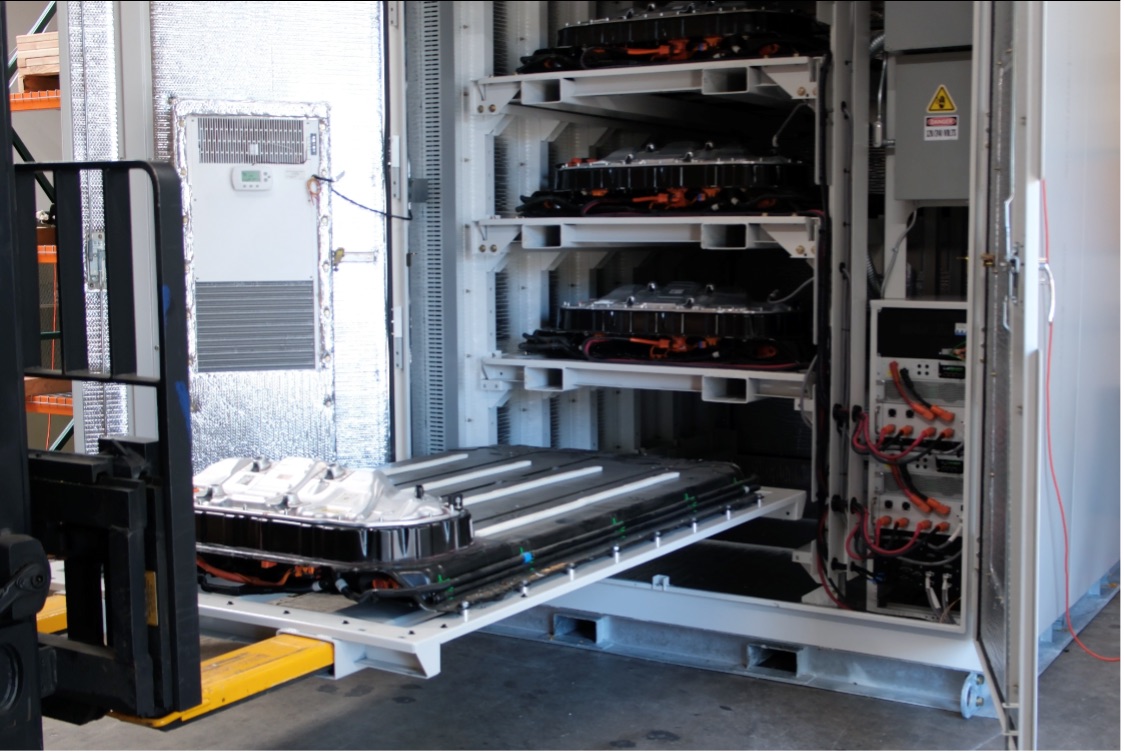
Figure 1 Battery Energy Storage System with repurposed EV batteries
The certification bottleneck
Unfortunately, the rules that govern stationary batteries do not reflect this potential. Local regulators, known as Authorities Having Jurisdiction (AHJs), are responsible for approving BESS installations. To ensure safety, they typically follow fire codes from the National Fire Protection Association (NFPA). Those codes in turn reference UL safety standards for permitting.
For repurposers, this creates an inescapable gauntlet of certification requirements. Even though EV batteries already pass stringent automotive safety testing before ever hitting the road, once they are removed and reconfigured into stationary storage, they must undergo an entirely new round of UL testing.
The four standards that matter most are UL 1973, 1974, 9540, and 9540A. UL 1973 certifies general BESS safety. UL 1974 is specific to repurposing and governs disassembly, testing, and reassembly procedures. UL 9540 and 9540A address fire safety and are generally required by fire codes for a system to get a use permit.
On paper, these standards create a comprehensive framework. In practice, they present redundant and expensive requirements that threaten the viability of the second-life industry.
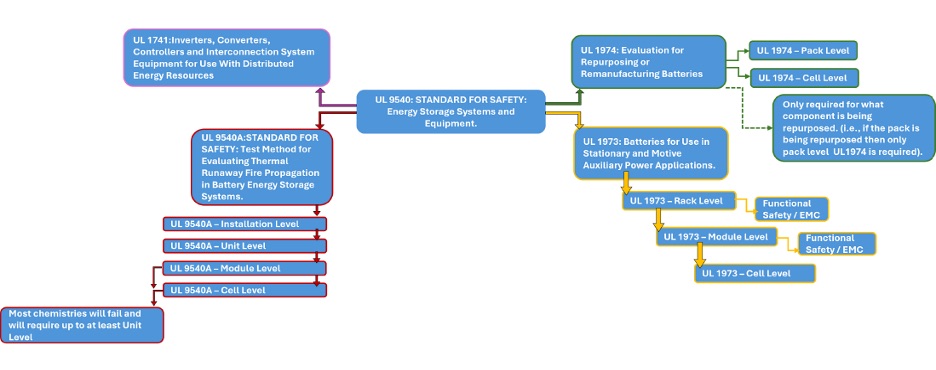
Fig. 2, Underwriter’s Laboratory’s Testing Hierarchy, Stationary ESS and Repurposed Batteries
UL 1974: A gatekeeper standard
UL 1974 is particularly problematic. This standard requires detailed technical data about used EV batteries, data that only original equipment manufacturers (OEMs) can provide. If an OEM declines to share the datasheet, repurposers cannot complete certification, regardless of whether the information is already public. In effect, this turns OEMs into gatekeepers with the power to limit second-life usage.
The standard also forces repurposers to start from scratch with each cell type. Even small changes between model years of the same EV battery trigger a full and costly recertification process. That makes scaling across multiple battery types nearly impossible.
Finally, UL 1974 prescribes testing methods that are often inefficient and redundant, ignoring more streamlined diagnostic approaches developed by repurposers themselves. Enforcement varies from lab to lab, meaning costs and timelines are inconsistent and unpredictable.
Certifying a single battery type across the four relevant UL standards costs roughly $1.2 million. That fee must be paid again and again for every different battery make and model, and for every re-design. Facility-level certification is theoretically possible but requires continuous UL auditing and consistent production volumes.
Confidence versus scalability
No one disputes that safety is paramount. Customers, utilities, and fire officials must be confident that repurposed systems will perform safely. But today’s certification regime is not striking the right balance. It prioritizes a narrow vision of safety over scalability, creating an industry structure where only a handful of players with deep pockets can participate.
This imbalance undermines the broader benefits of repurposed batteries: reducing greenhouse gases, displacing new mining, lowering costs, and providing resilience for vulnerable communities.
Charting a smarter path
To unlock the promise of second-life batteries, reform is essential. Three priorities stand out:
Data transparency: Policymakers should mandate that OEMs share critical battery data in a standardized format to ensure repurposers are not locked out.
Testing flexibility: UL should recognize innovative diagnostic methods developed by repurposers, streamlining redundant procedures.
Harmonization with automotive standards: Since EV batteries already undergo extensive safety testing, BESS certification should build on, not duplicate those results.
Rather than weaken safety, these reforms would modernize it, ensuring that safety remains robust while reducing the costs and obstacles in repurposing second-life batteries.
High stakes
The bigger picture is clear: Repurposing EV batteries delivers lower emissions, less mining, less waste, and affordable energy storage that strengthens communities. It helps families reduce their bills, improves resilience in extreme weather, and reduces reliance on polluting peaker plants.
Every repurposed battery allows us to retain critical minerals in the economy, achieve national energy security, and meet climate goals. But unless certification standards adapt, the United States and Canada risk squandering this opportunity, leaving valuable resources under-utilized and communities underserved.
The clean energy transition is not only about deploying new technologies; it is about making the smartest use of the resources we already have. Repurposing batteries is the smartest use of those batteries with retained energy. Time for our standards to catch up.
Scott Packard is VP, Business Development at Smartville, which accelerates the transition to sustainable transportation through a shared platform that streamlines and scales EV battery assessment, trade, and reuse. Our mission is to unlock gigawatt-hours of battery value, deliver affordable and scalable energy storage, and reduce waste.
Smartville | smartville.io
Author: Scott Packard
Volume: 2025 November/December