




Securing Vehicle‑to‑Grid Tech


Electric vehicle (EV) charging and vehicle‑to‑grid (V2G) technology are turning millions of vehicles and chargers into a virtual power plant. This rapidly growing machine‑to‑machine (M2M) network is now becoming critical grid infrastructure that needs a new kind of cyber resilience to withstand both physical and digital extremes. In this environment, the primary risk is no longer data theft, but the manipulation of real-time control systems at machine speed, where milliseconds can impact grid stability.
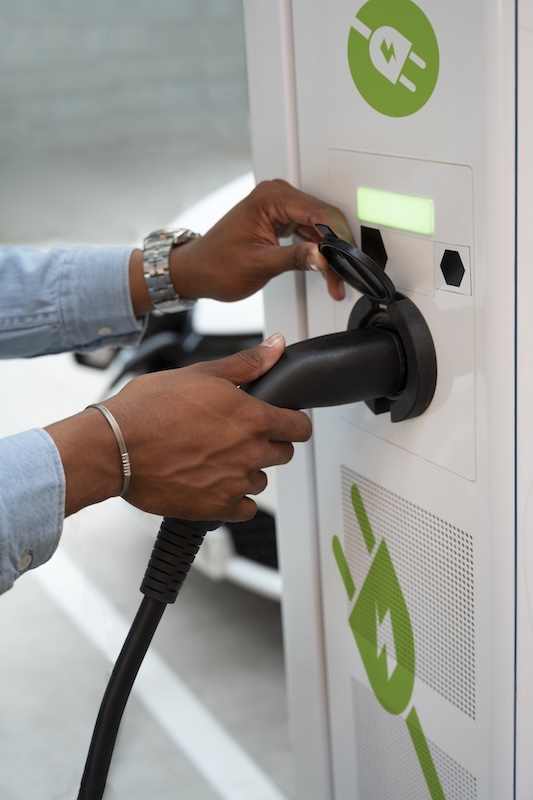 EVs are no longer just loads
North American EV adoption and public charging deployments are climbing fast, with millions of home, workplace, and public ports already in service. Utilities, aggregators, and charge-point operators are deploying smart charging and piloting V2G so vehicles can soak up excess wind and solar and give power back when the grid is under stress.
Connected EVs and chargers thus become a virtual power plant, with distributed batteries on driveways, depots, and highways. When coordinated correctly, this fleet has the potential to help absorb midday solar peaks and support the grid during evening ramps, cold snaps, or emergency events. That makes the underlying digital control layer – the systems that decide when and how vehicles charge or discharge – critical.
An enormous M2M energy network is rising
At its core, the EV ecosystem is a real-time machine control network operating at grid scale.
Many companies operate directly on this machine control plane. Their systems coordinate when thousands of vehicles start charging, throttle back to avoid local overloads, and push power back into the grid as part of a V2G program. Those decisions depend on continuous, trustworthy communication between chargers, vehicles, and grid platforms. If that control plane is disrupted or manipulated, especially under grid stress, it can impact grid stability and reliability when it's most needed.
Extreme conditions are exposing fragile assumptions
During heatwaves, polar vortices, or other events that drive unusual patterns of demand and generation, grid operators may lean on flexible loads and distributed resources, including EV fleets and V2G, to shave peaks, avoid local overloads, and provide fast response when conventional assets are constrained.
Yet recent reporting shows a sharp rise in attacks on EV charging networks, with most “successful” incidents resulting in service interruptions or negative operator impacts. Incident data shows exploitation of vulnerabilities in edge access devices like VPNs, firewalls, and remote access gateways has grown significantly as an initial access path into critical environments. High‑profile campaigns have also targeted security and networking products themselves.
A VPN appliance vulnerability, misconfigured API, or compromised credentials store can directly affect whether large fleets can charge, pause, or discharge when the grid needs them most.
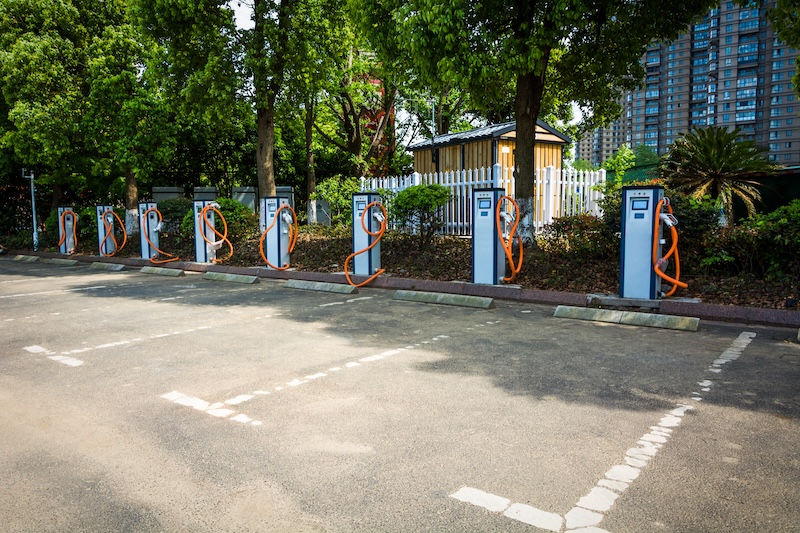
Today’s connectivity model doesn’t scale safely
Many ecosystems still rely on persistent VPNs into charger networks, open management ports, or flat segments where operators, OEMs, and integrators share broad network access. If an attacker gains a foothold anywhere along those paths, they can move laterally, discover devices, and manipulate systems.
On the cloud side, back‑end platforms and integrations often depend on long‑lived API keys, passwords, or tokens between charge point operators, aggregators, utilities, and third‑party services. The latest breach investigations show how frequently such secrets leak through public repositories, infostealers, or compromised third‑party platforms, and how those leaked credentials become shortcuts into core systems. Add in the fact that security infrastructure like VPNs and firewalls are increasingly targeted with zero‑day attacks, and there exists a fragile web of trust at the heart of a fast‑growing, high‑value energy network.
Secure the machine control plane, not just the perimeter
To make V2G resilient under extreme conditions, stop thinking only about securing the edges of the network. Start securing the machine control plane itself – at the level of the systems that decide when vehicles and chargers draw or return power, and how those decisions propagate across fleets.
Rather than exposing chargers or controllers to inbound connections, use secure channel technology to create outbound‑only, process‑to‑process interactions at the application layer. Chargers, controllers, and back‑end services can then initiate connections and talk only to specific, authenticated processes. There are no open inbound ports on field devices or core control servers, and no public IP addresses for attackers to discover and probe.
Access is also scoped very tightly. Each channel is ephemeral and bound to a single verified process for a single session. So even if a laptop, edge gateway, or contractor machine is compromised, the attacker cannot pivot freely across the EV or V2G environment. You replace broad, persistent network paths with short‑lived, highly specific interactions that match the way the M2M control plane actually operates.
Also use credential‑less authentication technology to remove long‑lived secrets. Instead of storing passwords or API keys between components, establish identity and trust cryptographically at connection time.
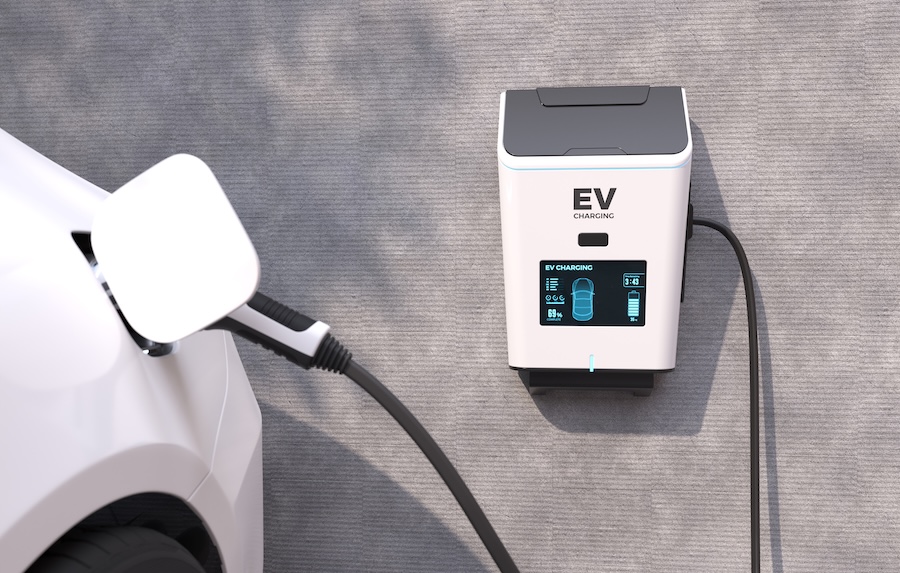
Design V2G‑ready security for the next decade
As adversaries begin to harvest encrypted traffic for future decryption, control signals for V2G and smart charging become tempting targets. Employ layered, quantum‑resistant cryptography aligned to emerging CNSA 2.0 guidance. Triple‑layer approaches pairing AES‑256 with lattice‑based key encapsulation and signatures help protect control traffic against “harvest now, decrypt later” attacks.
For operators, OEMs, and utilities, the practical implications are straightforward: Treat EV charging and V2G platforms as critical grid infrastructure. Replace persistent VPNs, open management ports, and static credentials with outbound‑only, process‑level tunnels and credential‑less authentication between chargers, control platforms, and grid systems. Require vendors to demonstrate that they can secure large‑scale M2M networks without making field devices and control platforms addressable from the internet.
From promise to durable resilience
EV charging and V2G offer the promise of helping the grid ride through extreme weather and volatile demand. To make that promise real at scale, the M2M fabric connecting chargers, vehicles, and the grid has to be designed to prevent the failure of devices, networks, and traditional security layers.
The future of grid resilience depends on architectures where critical systems are reachable, but not discoverable; where control flows are precise, ephemeral, and bound to verified processes, not exposed networks. In a world of increasingly autonomous energy systems, resilience will not come from stronger perimeters, but from eliminating exposure by design, making EV and V2G technology cleaner, smarter, and able to withstand extreme attacks whether natural or digital.
 Steve Visconti, a Senior Executive and serial Business Strategist, has devoted nearly 20+ years to advancing operational efficiencies, system indomitability, and overall organizational success, driven by a strong focus on people and integrity-led progression. Currently serving as the President and CEO of Xiid Corp, Steve brings a wealth of experience to the table, encompassing agile risk mitigation, security architecture, cross-functional technical leadership, regulatory compliance, Cloud integrations, and the art of fostering high-performing team environments that are both positive and productive.
Steve is a serial entrepreneur with over 30 years in Silicon Valley high-tech companies. Mr. Visconti has developed expertise in sales and marketing to executive leadership in both startups and public companies, including Cisco Systems, Airespace, Proxim, Ascend, Chipcom, and Banyan Systems. Steve’s entrepreneurial spirit led him to work with 7 startups, leading to 4 acquisitions and 2 IPOs.
Academically, Steve pursued studies in International Economics at California State and Marketing and Business at Utah State. He is recognized as a forward-thinking visionary dedicated to positioning organizations for low-risk/high-reward success. He remains vigilant about emerging threats and technologies, understanding that positive trajectories in cybersecurity and networking require innovative impacts today, anchored in the formation of strong, shared-value teams.
Beyond his professional endeavors, Steve is an avid sports enthusiast. His athletic history includes being a former competitive cyclist and a collegiate-level skier. Steve's commitment to excellence extends beyond the boardroom, reflecting his holistic approach to leadership and life.
Xiid Corp | www.xiid.com
Author: Steve Visconti