





The Hidden Workhorse: Why BESS projects need different transformers


When industry professionals discuss BESS equipment, conversations naturally gravitate toward battery chemistry, inverter technology, and software controls. But one of the most critical components determining long-term BESS project performance, efficiency, and economics receives much less attention: the transformer.
It’s true that transformers are well-known as the “beating heart” of an energy project, the essential interface between storage systems and the grid. However, their role in energy storage applications differs fundamentally from traditional utility applications.
Beyond simple voltage translation — BESS transformer reversals
In conventional distribution applications, transformers perform a relatively straightforward task. They step voltage up or down to deliver power from generation sources to end users, using:
- Unidirectional power flow
- Predictable load curves
- Established thermal cycling patterns, refined over 100+ years of utility operations
None of the above applies to energy storage transformers. They operate in an entirely different world.
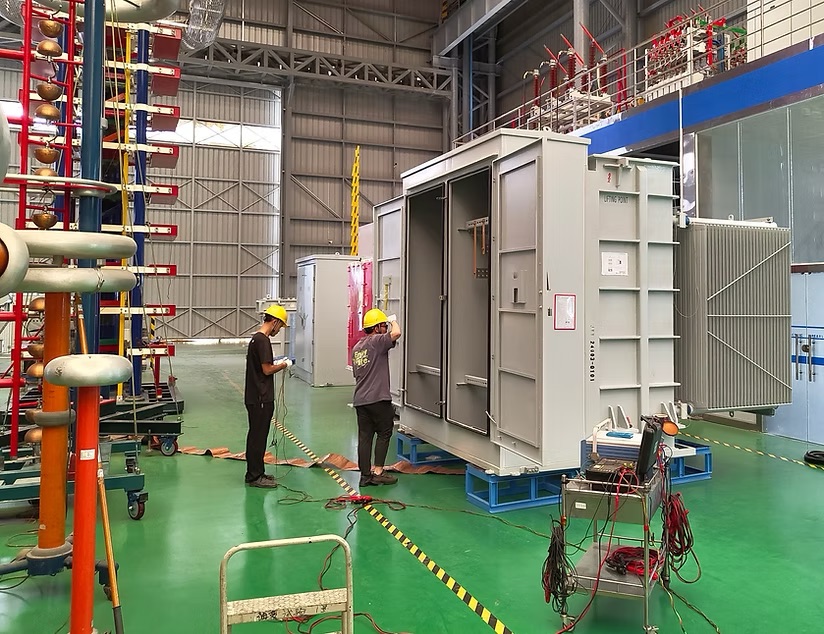
These units must handle bidirectional power flow while systems alternate between charging and discharging, often multiple times daily. During charging periods, they step down grid voltage to feed the battery system, only to step up voltage mere hours later as stored energy flows back to the grid.
This ongoing reversal cycle creates thermal stresses and loading patterns that traditional distribution transformers were never designed to accommodate.
Why BESS transformers undergo (much) more stress
The operational profile of energy storage transformers becomes even more demanding for some common applications.
Fast-response services
Frequency regulation requires storage assets to respond within seconds, rapidly shifting output up or down. These swings can cycle a transformer from zero to full load and back repeatedly, multiple times per hour.
The resulting thermal expansion and contraction, combined with electromagnetic forces during these transitions, subject internal components to extraordinary mechanical stress.
Peak shaving and commercial demand management
Peak shaving applications present an equally challenging scenario for transformers. Unlike traditional transformers that might experience brief peak loading on a few hot summer afternoons, BESS supporting commercial and industrial peak shaving regularly operate at or near rated capacity for hours on end.
This consistent full load, combined with the subsequent charging cycle that follows, pushes cooling systems and insulation materials to their operational limits. Storage transformers supporting these applications must withstand sustained heavy loading followed by repeat cycling — often daily.
If not designed for this heavy use, BESS transformers risk early failure, expensive replacement, and project downtime.
Sometimes, bigger is better: Why every percentage point matters
In traditional utility applications, energy flows through the transformer just once: on its journey from generator to consumer.
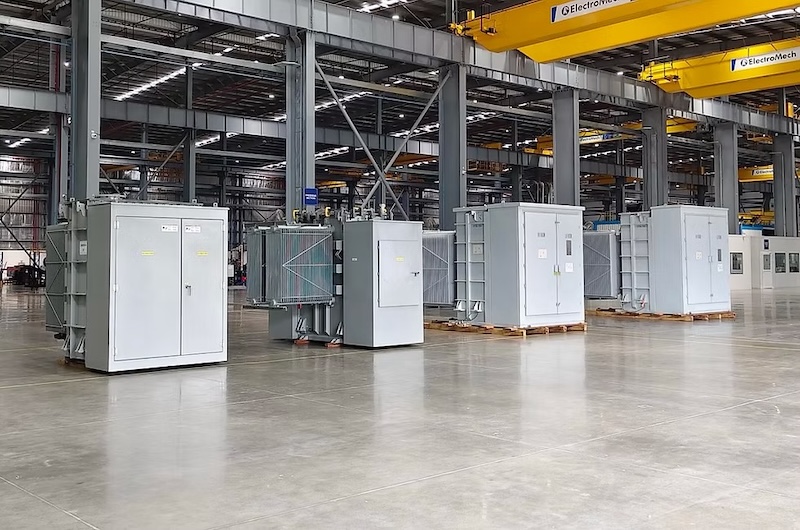
Energy storage applications double this impact. Every kilowatt-hour must pass through the transformer twice: once during charging and again during discharge. As a result, energy losses occur twice as well.
For instance, a transformer with 98 percent efficiency — excellent for distribution applications — yields just 96 percent round-trip efficiency in a storage application for peak-load shaving. Over thousands of cycles, these losses directly impact revenue potential and project economics.
This is why transformer sizing for BESS often departs from minimum-cost approaches. Specifying a larger unit than minimum requirements might seem unnecessary, but operating that transformer at 70-80 percent rated capacity rather than maximum loading can significantly reduce losses, manage thermal conditions more effectively, and extend its operational life. The upfront cost premium for larger transformers often proves justified when considering lifecycle efficiency gains.
What to look for in energy storage transformers
As North American energy storage projects scale from megawatts to gigawatts, lightly modified distribution transformers can’t keep up. Even for earlier, smaller BESS installations, distribution transformers struggled (and sometimes failed) due to stress from thermal cycling and loading profiles.
Modern storage-specific transformers integrate:
- Enhanced cooling systems designed for predictable, repetitive cycling
- Upgraded insulation materials capable of managing frequent thermal transitions
- Reinforced mechanical structures to withstand electromagnetic forces during rapid ramping
- Core steels selected for low losses, recognizing multi-cycle daily operation
Even if some of these features, such as low-loss core steel, increase the initial transformer cost, they more than pay for themselves. The efficiency gains add up over the unit’s full 20- to 40-year lifespan — a lifespan you’re much more likely to get from a storage-specific transformer.
Compared to traditional transformers, cooling strategies are particularly important. They can be optimized around the predictable charge-discharge cycles common to many energy storage applications. For applications requiring rapid response, such as frequency regulation, cooling systems should be able to manage sudden thermal spikes without compromising reliability.
Rather than relying on transformer standards developed for distribution service, savvy EPCs and developers will evaluate:
- Expected daily and seasonal cycling patterns
- Duty cycles tied to market participation
- Loss behavior across the full operating envelope
- Cooling performance under repeated heavy load
- Long-term insulation aging under bidirectional duty
By aligning specifications with actual operating profiles, they can reduce lifetime costs and minimize the risk of costly mid-life transformer replacement.

What energy storage needs from transformers
As energy storage deployment accelerates across North America, the transformer's role as the critical grid interface deserves greater recognition. These units determine system efficiency, influence project economics, and ultimately enable (or constrain) the operational flexibility that makes storage valuable to both grid operators and asset owners.
The physics of electromagnetic induction are unchanged, but the demands of the modern grid — rapid cycling, bidirectional flows, and high-frequency dispatch signals — place energy storage transformers in a category of their own. Successful storage projects will use transformers that account for actual operational profiles rather than traditional distribution standards. Developers and EPCs who choose well-engineered BESS transformers will see gradual, growing payback over their projects’ lifespan.
Claude Colp is Chief Commercial Officer at GameChange BOS, bringing over 18 years of electrical engineering experience in renewable energy to the energy storage sector.
GameChange BOS | www.gamechangebos.com
Author: Claude Colp
Volume: 2026 January/February