




Data Overload: America’s infrastructure problem


Americans are watching their electricity bills climb, and many are pointing the finger at the massive data centers sprouting up across the country. It's an understandable reaction. The U.S. Department of Energy U.S. says that data center energy demand is on track to nearly double by the end of the decade, and regions with heavy concentrations of these facilities have seen electricity prices surge.
The conversation around data centers and rising utility bills is missing a critical layer. Beyond being a power generation problem, energy cost is an infrastructure problem. The organizations that recognize that distinction are the ones finding real solutions.
Generation and transmission costs remain the largest components of most electricity bills, and the buildout of new generation capacity to meet data center demand is a challenge that no amount of facility-level optimization can eliminate. Within the share of cost that operators can directly influence, the infrastructure layer (how power is distributed, stored, and managed inside and at the boundary of the facility) represents one of the most underleveraged opportunities.
The infrastructure layer operators can control
When most people think about data center energy, they picture massive power plants feeding insatiable server farms. The reality is more nuanced.
A significant portion of energy cost at a data center has everything to do with how electricity is stored, distributed, and managed once it arrives at the facility. The average U.S. data center operates at a Power Usage Effectiveness ratio of 1.5 or higher, meaning facilities consume 50 cents or more in overhead energy for every dollar delivered to the IT load.
Poorly designed electrical systems waste that energy before it ever reaches the IT load. Inefficient power distribution architectures, inadequate monitoring, and reactive rather than predictive energy management are driving up operating costs across the industry. These issues represent one of the most actionable cost drivers in the sector.
The gap between what a data center consumes and what its IT load requires is where significant savings hide.
Battery storage as a cost management strategy
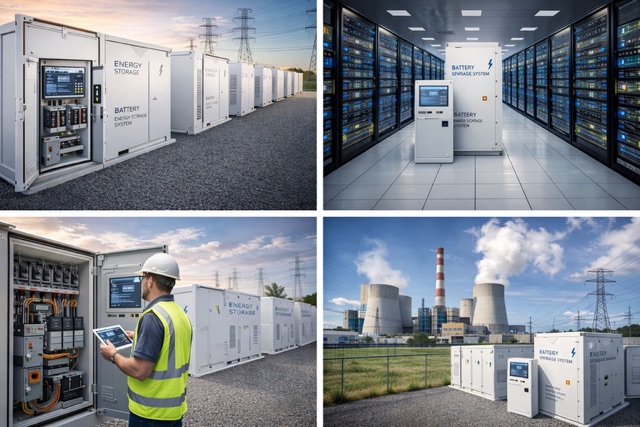
Beyond distribution efficiency, one of the most powerful tools emerging to combat the power crisis is battery energy storage systems, or BESS. The technology has matured rapidly, and its applications for data centers go well beyond backup power.
BESS allows data center operators to store electricity during lower-cost periods and deploy it during peak demand windows, when utility pricing is at its most volatile and expensive. Known as peak shaving, this approach can meaningfully reduce demand charges, often one of the biggest line items on a commercial electricity bill.
Demand charges can represent 40 to 50 percent of a commercial facility's total electricity bill. In regions with significant demand charges and time-of-use rate differentials, the ROI case for peak shaving is well established. In those markets, project payback periods have typically ranged from three to five years, depending on facility size, rate structure, and system design. In markets with flat rate structures or where operators procure power through fixed-price agreements, the value proposition is structured differently. As grid congestion intensifies and more utilities adopt dynamic pricing models, the addressable market for storage-driven cost management is expanding across rate structures.
But the benefits extend further. Energy storage gives operators the ability to flatten power spikes, reduce their exposure to grid instability, and maintain uptime during periods when the broader electrical system is under stress. In a market where interconnection queues stretch years and grid capacity is tightening, on-site storage is an increasingly essential component of long-term operational planning. Data center developers are adopting "bring your own capacity" models, deploying batteries to accelerate grid connections and reduce reliance on costly utility-scale upgrades — costs frequently passed on to residential ratepayers.
Whether on-site storage benefits the broader grid depends on several factors, including local utility rate design, the extent to which individual load reductions defer capital investments, and how fixed costs are allocated across customer classes. In jurisdictions where large facility peak demand directly drives infrastructure investment, on-site storage that reduces those peaks can ease cost pressure for all ratepayers. In markets where fixed-cost allocation mechanisms dominate, the savings may remain largely with the operator. The outcome is shaped less by the technology itself than by the regulatory and rate design context in which it operates.
Integration is the strategy
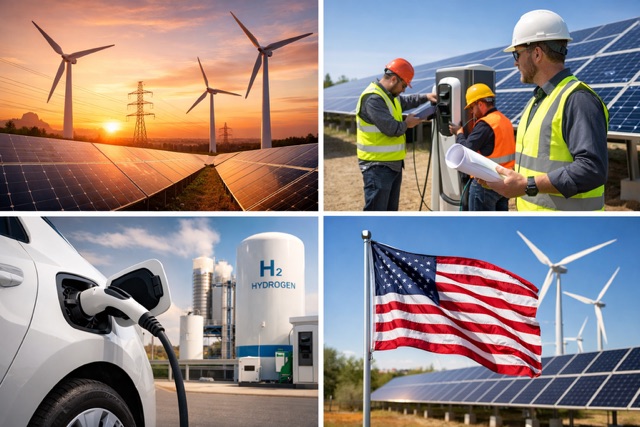
The most resilient data centers aren't built around any single technology. They're built around integrated infrastructure ecosystems combining intelligent power distribution, energy storage, real-time monitoring, and sustainability programs into a unified strategy optimized for cost, uptime, and environmental impact.
This is where integration becomes critical. Technology alone does not deliver results. The path from a BESS installation to actual cost savings runs through system design, commissioning, analytics configuration, and long-term operational optimization. Real-time energy monitoring data is what enables intelligent BESS dispatch — storage systems perform at their highest value when they are informed by continuous load visibility, not scheduled on fixed assumptions. Realizing that value requires coordinating across electrical, mechanical, and digital disciplines to ensure that storage, distribution, and monitoring work as a system rather than a collection of parts.
The real question
Data centers consume enormous resources. They are also essential infrastructure. The challenge was never whether data centers would grow; it’s whether we build and power them intelligently enough so that growth strengthens rather than strains the grid.
That's not to suggest the growth comes without legitimate tradeoffs: Communities hosting these facilities bear real impacts on water resources, grid capacity, land use, and local infrastructure, and the public conversation about where and how data centers are built is both necessary and ongoing. But for the operators and developers who are building, the question of how to do so responsibly is urgent and immediate.
Organizations that treat energy as a strategic infrastructure asset (instead of just a utility line item) will be the ones that control costs while building facilities capable of supporting the next generation of demand. That work starts with a clear-eyed assessment of where energy is being lost, where storage can shift cost exposure, and where integrated design can close the gap between consumption and efficiency.
The complexity of that work — spanning power distribution architecture, storage system design, real-time monitoring, and long-term operational optimization — is the reason integrated design capability matters as much as the technologies themselves. The data center energy problem is solvable for organizations willing to look beyond the meter.
Derrick Carter is VP, Marketing at Turtle, a fourth-generation, family-owned electrical and industrial distribution company with over 100 years of experience delivering proven solutions across complex challenges. As one of the nation's largest independent distributors and a Certified Women's Business Enterprise, the company provides comprehensive solutions spanning electrical distribution, automation, data centers, EV charging, renewables, and technology infrastructure, supported by end-to-end project services. Derrick can be reached at [email protected]
Turtle | www.turtle.com
Author: Derrick Carter
Volume: 2026 May/June