




Beyond Tariffs: Policy uncertainty is reshaping energy storage


The U.S. clean energy sector has spent the past several years navigating a shifting mix of policy incentives, trade restrictions, and supply chain constraints. The industry now faces a broader issue navigating uncertainties that have created an extraordinary obstacle to the predictable deployment of energy storage in the United States.
That unpredictability is already reflected in how projects are planned and financed. For developers, financiers, and utilities, shifting tariff policies have made it more difficult to model costs, secure contracts, and move projects forward with confidence. Unlike other industries, the long deployment cycles of energy storage projects imply that our industry remains highly sensitive to policy conditions that can change quickly and with limited notice.

Tariffs, costs, and the planning challenge
More broadly, tariffs have exposed the deeper issue of policy uncertainty within the energy transition. Frequent changes in trade rules, sourcing requirements, and compliance standards have created a planning environment defined by ambiguity. Companies operating on multi-year timelines must make decisions without clear visibility into future cost structures.
In this context, unpredictability becomes the primary constraint. Even when companies can absorb higher costs, shifting rules can delay procurement, alter project economics, or discourage investment altogether. This challenge is amplified by the structure of battery supply chains. They are inherently global and highly interconnected, with materials, components, and finished systems often crossing multiple borders. Trade measures introduced at any point can have cascading effects across the value chain, increasing costs or creating bottlenecks elsewhere.
Efforts to localize manufacturing are ongoing, but global trade will remain a central part of battery production. As a result, supply chain design, particularly geographic diversification, is becoming a key factor in managing risk.
Building flexibility into supply chains and technology
The current environment is prompting a reassessment of how batteries are manufactured and deployed. Historically, scaling battery technologies has relied on building dedicated manufacturing facilities. While this approach offers control, it also requires significant capital investment and long development timelines. Industry experience has shown that translating new battery technologies into mass production can be difficult under this model, even for well-funded companies.
In response, alternative approaches are gaining attention. Leveraging existing manufacturing infrastructure through contract production or foundry-style partnerships can reduce up-front capital requirements and accelerate time to market. These models also introduce greater flexibility, allowing production to be distributed across regions rather than concentrated in a single location.
In a changing trade environment, that flexibility can help companies adapt more quickly and reduce exposure to policy shifts. At the same time, the materials that underpin battery technologies are also part of the supply chain discussion. Lithium-ion batteries remain the dominant solution, but their supply chains are subject to material supply volatility and geographic concentration. Performance requirements also vary widely across applications.
This has led to growing interest in complementary technologies, such as sodium-ion, which use more widely available materials and may offer advantages in specific use cases. Expanding the range of viable battery chemistries can help reduce dependence on any single supply chain while better aligning technology with application needs.
Rather than replacing lithium-ion, these alternatives contribute to a more balanced and adaptable energy storage ecosystem.
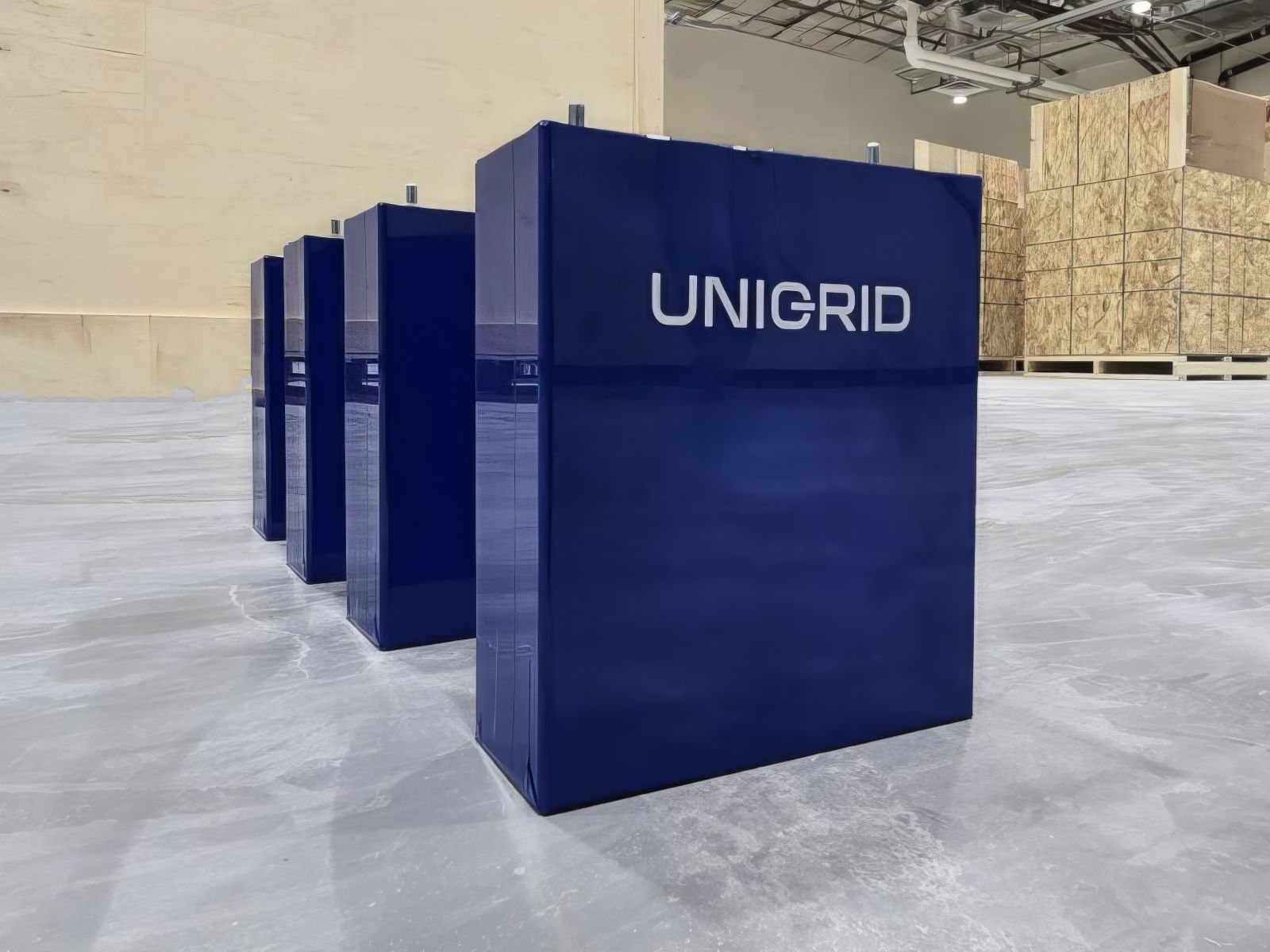
Key takeaways for navigating evolving tariffs
Several consistent themes are emerging for companies operating in energy storage:
- Policy uncertainty is the primary challenge. The difficulty lies not only in cost, but also in the lack of predictability. Frequent policy changes make long-term planning more complex.
- Concentrated supply chains increase exposure. Dependence on a limited number of regions heightens vulnerability to trade disruptions, making diversification an important strategy.
- Manufacturing flexibility is increasingly valuable. Approaches that allow production to shift across locations can help companies respond more effectively to changing trade conditions.
- A single technology will not meet all needs. A broader mix of battery chemistries can help address supply constraints and improve system resilience.
- Resilience must be built into system design. Flexibility in sourcing, manufacturing, and technology choices will be critical as policy environments continue to evolve.
As energy storage becomes more central to grid reliability and electrification, the ability to plan and invest with confidence is increasingly important. Alongside cost and performance, adaptability is becoming a defining requirement for the next phase of energy storage deployment. Companies should remember that tariffs may shape today’s headlines, but uncertainty will define the industry’s trajectory in both the near and long term.
Darren H. S. Tan is the CEO and co-founder of UNIGRID Battery, a University of California, San Diego spin-off company founded in 2021. He leads the UNIGRID team in commercializing ultra safe sodium-ion batteries to power emerging energy storage and motive applications.
UNIGRID Battery | unigridbattery.com
Author: Darren H. S. Tan
Volume: 2026 May/June