




Under Strain: Will rising pressure on the grid drive a new wave of innovation?


When a complex, entrenched system faces immense strain, it can either generate the capacity for transformational change or distort in unproductive ways. The North American power grid is experiencing exactly this tension. After years of relative stasis, electricity demand is surging, colliding head-on with the massive inertia of the grid, shaped by costly infrastructure, technical complexity and a regulatory burden designed to ensure fair operation and prevent failure of a critical economic backbone.
An understanding and framing of what drives the resistance to change illuminates the technology and policy innovations needed to meet that transformative demand.
Resistance to change
Three obstacles make it especially difficult to adapt the grid to current demands: the cost of infrastructure, technological complexity, and regulatory burdens.
Cost of Infrastructure
The grid is a massive beast. North America alone has tens of millions of circuit-kilometres of power lines, receiving tens of billions in annual investment. Ramping up infrastructure construction, much of it highly specialised, to meet surging demand takes considerable time. Climate hazards have compounded the challenge, driving up the cost of maintaining existing capacity through measures like undergrounding lines to prevent wildfires and building larger safety margins to absorb supply and demand disruptions.
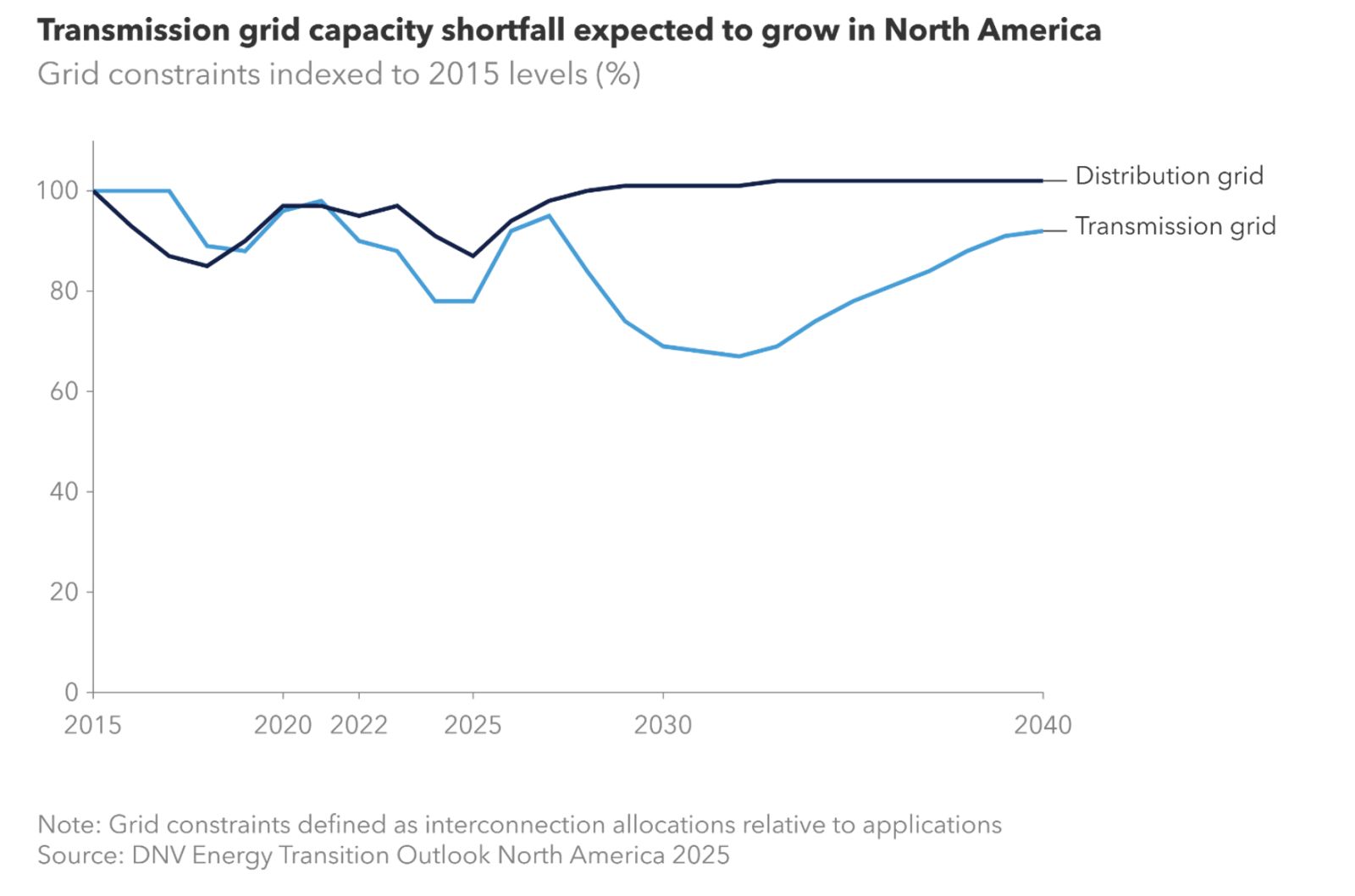
Supply chain strain is visible in the lead times for critical grid equipment, which have nearly doubled over the past four years. Looking ahead, the transmission grid is likely to experience a five year period in which it cannot accommodate a significant portion of desired new load, followed by 15–20 years of constrained supply capacity. Solar and onshore wind face the longest delays, while thermal power, though constrained by construction timelines, has an easier path through interconnection queues. Put simply, the grid is a bottleneck and will remain one for at least the next decade.
Technological complexity
The grid was built on the assumption that growth in thermal generation could always outstrip demand. That baseload model has been stressed by pressure to lower both direct costs such as electricity prices and indirect ones, namely the environmental externality of emissions. Variable renewable power, flexible transmission and demand management are effective alternatives, but increasing reliance on them has exposed the complexity of running the grid efficiently.
The potential value locked up in better regional and international transmission is enormous, yet much of it remains unrealised. Maintaining ancillary services, the likes of frequency regulation and voltage control operating reserves, makes restructuring harder still. And as the systems managing the grid become more interconnected and interoperable, cyberattacks on both data infrastructure and physical operational technology represent a growing risk.
Regulatory burden
Permitting and interconnection processes, designed for an era of slow demand growth and conservative risk management, are struggling to keep pace. Average interconnection wait times of four to eight years account for a significant share of the capacity constraint. Planning studies become outdated almost as soon as they are completed, forcing repeated re-runs in a costly cycle. The traditional "first-come, first-studied" queue management approach may be equitable, but it is poorly suited to a rapidly evolving environment.
Regulatory frameworks are also grappling with a new phenomenon: gargantuan load applications, particularly from data centres, that are expected to grow over time and require bespoke treatment. Ongoing disputes over the division of regulatory authority between state and federal government risk perpetuating a fragmented landscape that resists top-down coordination.
Responding, fast and slow
The grid is too complex for a silver bullet solution, so a portfolio of short- and long-term responses are needed to address the three categories of obstacles.
Infrastructure
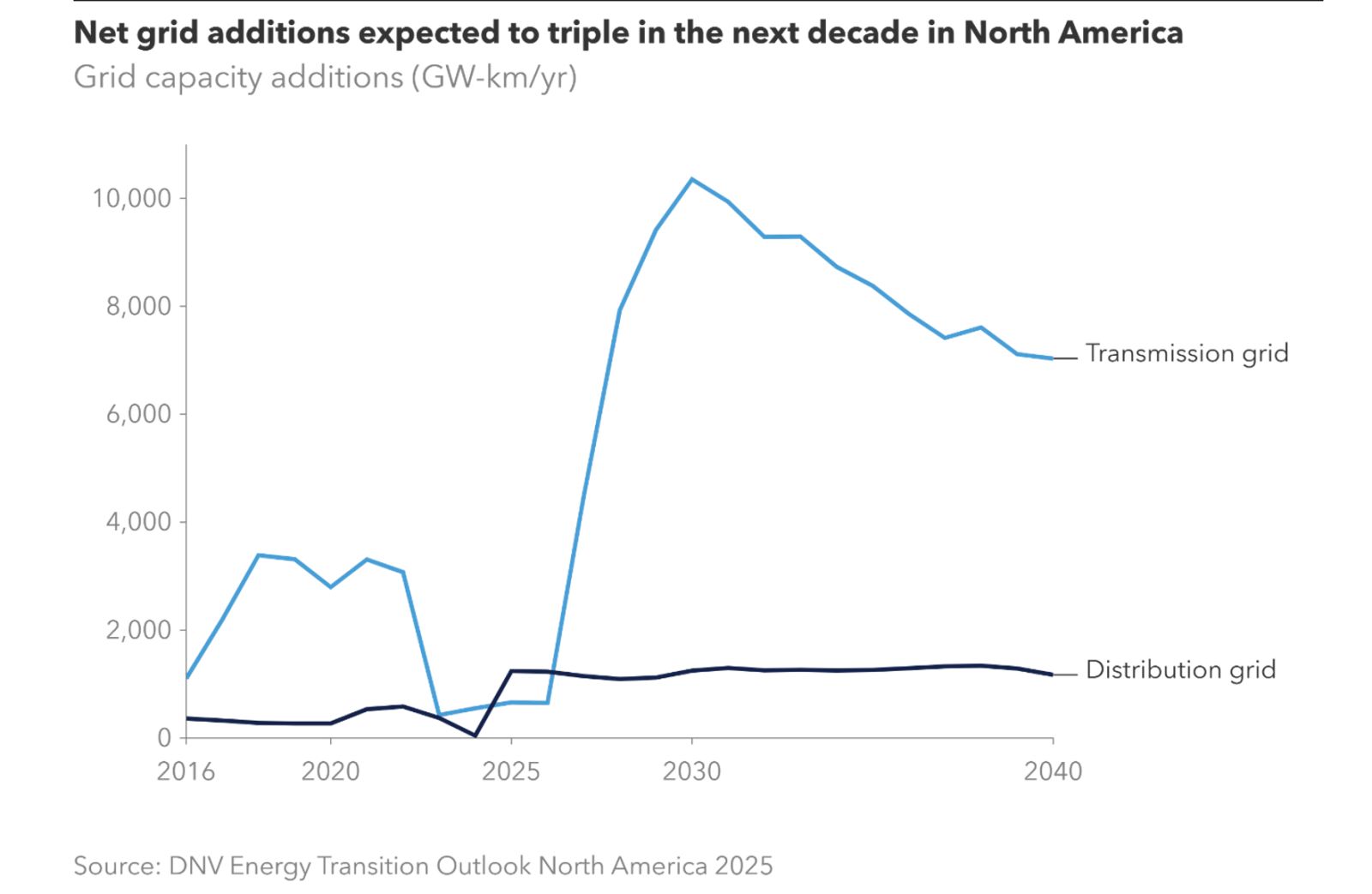
The market has been slow to scale up production, though an inflection point appears to be approaching. The pace of net new grid capacity additions is expected to roughly triple over the next decade compared to the last, highlighting both a greater willingness to pay and gradually easing supply chain pressure.
Governments can accelerate this by reducing project risk and removing trade friction. Inter-regional, high-voltage transmission lines are the superhighways of the energy transition, capable of moving cheap renewable power from rural generation hubs to dense urban demand centres, but they have become politically contentious. An alternative approach combines battery storage with life extension of existing thermal assets to provide near-term stability. However this is relatively expensive and ultimately defers rather than solves the need for new generation.
Technology
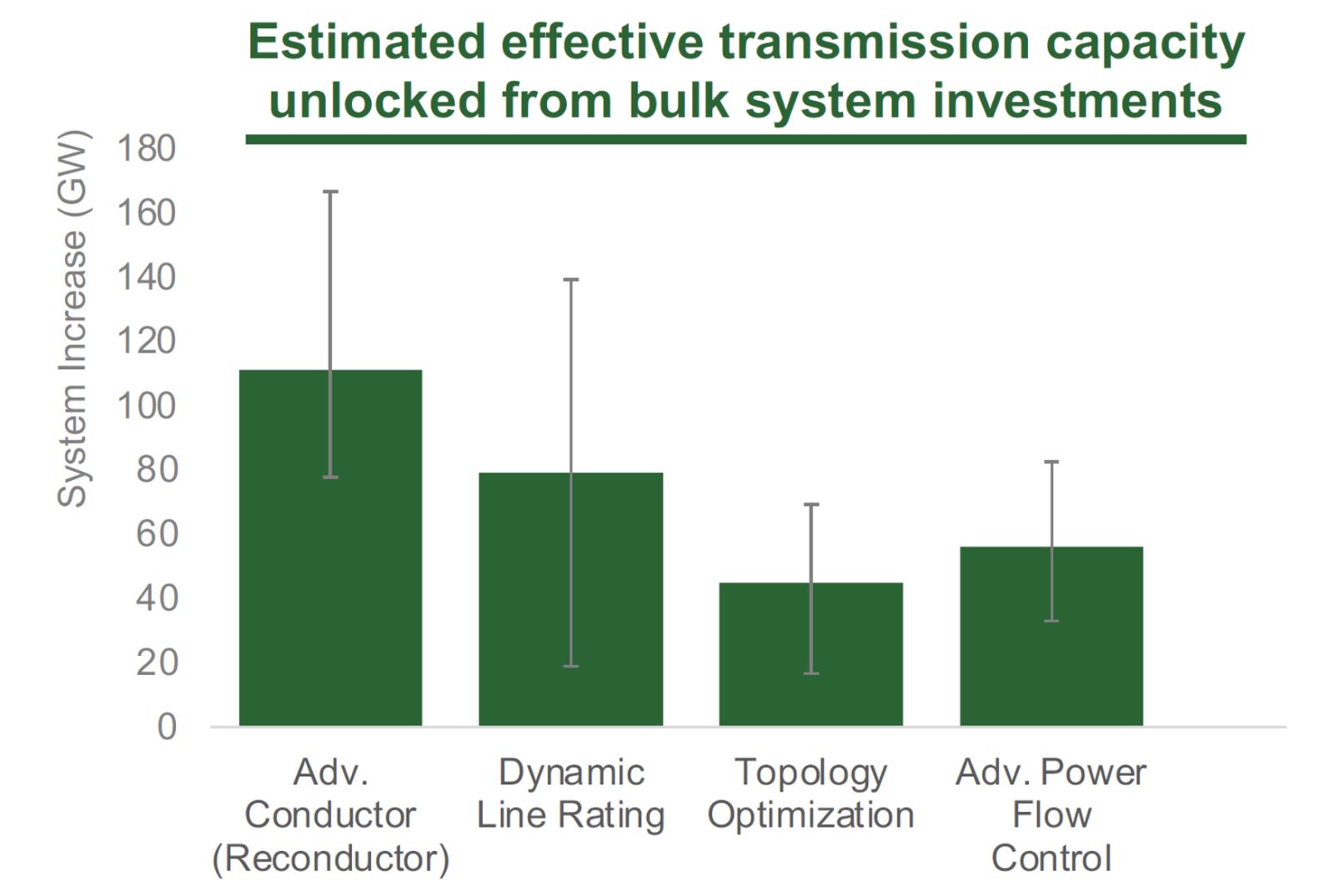
The fastest opportunities to address capacity shortfalls lie in technologies that maximise the effectiveness of existing infrastructure. Advanced grid technologies, including tools for increasing the physical capacity of existing lines and smarter operational management, remain significantly under-deployed relative to their potential. Each of the leading technology categories could, in principle, add capacity on the order of the forecast growth in peak winter demand over the next decade.
Credit: The Department of Energy
Regulation
Regulatory reform tends to be slow, but incremental improvements are possible. Some grid operators have already demonstrated that faster interconnection queues are achievable by allowing capacity planning to follow projected energy flows rather than requiring infrastructure to be fully in place in advance. There is also growing momentum around giving large flexible loads, such as data centres willing to operate without guaranteed supply, a faster path to interconnection in exchange for providing demand flexibility that benefits the wider system. Virtual power plants are emerging as a more sophisticated market mechanism for aggregating that flexibility at scale. Meanwhile, private-sector tools are being developed to automate regulatory compliance and improve the accuracy of interconnection assessments, reducing rejection rates and cutting study timelines.
Conclusion
Investment in grid infrastructure and advanced technology enjoys broad, if not universal, political support. The legacy grid's relative simplicity means there are genuine low-hanging opportunities available through the transition to innovative technologies. The current disruption, driven by the rise of variable renewables and a sharp demand jolt from data centres and electrification, is the catalyst for a long-overdue transformation.
The pace of change will likely feel frustratingly slow for some time, but the path forward is clear: better technologies and pragmatic, politically viable policies that together can accelerate the grid's evolution faster than inertia alone would allow.
 Leo Sommaripa, PE, is a Principal Consultant at DNV, where he manages a portfolio of innovation investments, including power grid technology. He brings 30+ years of experience leveraging technology and infrastructure to achieve policy, financial, and economic objectives.
DNV | https://www.dnv.com/
Author: Leo Sommaripa