




NERC Cat 2 Compliance: Learn from History or Repeat it


By May 15, 2026, all Generator Owners (GO) and Generator Operators (GOP) with inverter-based resource (IBR) power plants rated at 20 MVA or greater and connected at 60 kV or higher must register with NERC Category 2 (Cat 2). With the timeline fast approaching, some veteran compliance experts that witnessed the chaotic rollout of Category 1 (IBR plants with100kV or higher and 75 MVA or greater) say it feels like déjà vu. The same industry ambiguity, the same mistaken belief that compliance is just paperwork, and the same potential for costly consequences are all resurfacing.
2007 NERC Cat 1 rollout: A cautionary tale
When NERC first implemented mandatory reliability standards for Cat 1 facilities in 2007, the industry response was marked by widespread complacency. Many operators misunderstood the nature of compliance, treating registration as a bureaucratic formality rather than the beginning of a rigorous, ongoing regulatory obligation. Some facilities even failed to recognize they fell within NERC's jurisdiction.
Those who "buried their heads in the sand" faced significant financial penalties. There was a disconnect between expectation and reality. Operators thought they were filing paperwork, but NERC expected comprehensive programs backed by policies, procedures, and auditable evidence.
The root cause of this chaos was ambiguity in the standards themselves. For example, Standard PRC-005, the protection system maintenance standard, stated that entities must maintain their protection systems, but it didn't specify what components fell under that umbrella. It wasn't until WECC, the Western Electricity Coordinating Council, stepped in to define the scope, which included batteries, current transformers, potential transformers, voltage sensing devices, and DC circuitry, that operators had clear guidance 9and later, battery chargers were added). This lack of specificity left operators guessing about compliance requirements, creating an atmosphere of uncertainty and risk that lead to frequent audits.
Current Cat 2 rollout: Same challenges, different operators
The new wave of Cat 2 operators appears to be facing identical challenges: ambiguous standards, evolving audit practices, and an underestimation of compliance complexity. Consider Standard PRC-028, one of the critical Standards for Cat 2 entities. Like PRC-005 before it, the regulation provides high-level requirements without implementation details. Operators know they must comply, but they don't know what evidence auditors will demand or what level of detail will satisfy an audit.
The situation is further complicated by the evolution of audit practices. While the underlying standards remain relatively stable, the way auditors evaluate compliance changes constantly. The analogy to IRS audits is apt: the tax code might stay the same, but one year the auditor accepts a W-2 form, while the next year they demand every receipt and odometer photo. The rules haven't changed, but the proof required can shift.
What makes this situation particularly challenging for Cat 2 operators is their lack of NERC experience. Unlike Cat 1 facilities that have almost a decade of regulatory compliance, many of these renewable energy operators are entering NERC jurisdiction for the first time. They lack the institutional knowledge, compliance infrastructure, and industry relationships that help Cat 1 entities navigate regulatory ambiguity.
Compliance reality: More than paperwork
NERC compliance is about demonstrating reliability through documentation, procedures, and consistent execution. When entities approach an audit, they're not just showing that they've registered or that they understand the standards. They're proving, through hundreds of pieces of evidence, that they operate their facilities according to strict protocols designed to protect grid reliability.
A typical NERC audit requires more than 500 electronic documents. These aren't generic policies copied from templates; they're site-specific evidence that demonstrates ongoing compliance. Monthly battery test records, inverter settings verified and documented, physical security logs maintained consistently, protective relay maintenance schedules followed meticulously. Every Standard requires its own paper trail.
The work begins before a facility is even operational. During construction, compliance professionals need to coordinate with engineering, procurement, and construction teams to ensure that equipment is specified, installed, and configured correctly. For inverter-based resources, this means verifying that control narratives are properly applied in the factory, that settings meet NERC requirements, and that the physical plant can support required maintenance and testing protocols.
Once operational, compliance becomes an ongoing requirement. Operations and maintenance providers may need to be trained on NERC requirements and held accountable for following specific procedures. Physical security protocols must be implemented and documented. Testing and maintenance need to occur on defined schedules, with results recorded and retained. Every deviation from expected performance has to be documented, evaluated, and remediated according to NERC timelines.
Expert advantage: Navigating ambiguity through experience
The 2007 rollout taught the industry an important lesson: entities cannot navigate NERC compliance in isolation. The combination of ambiguous standards and evolving audit practices makes it virtually impossible for individual operators to stay ahead of compliance expectations unless they have an in-house experienced team. This reality has driven many operators to seek specialized compliance support.
Expert compliance firms also offer something individual operators cannot replicate frontline knowledge gathered from managing compliance across dozens or even hundreds of facilities. Firms that manage close to 100 Category 2 sites receive rapid feedback from auditors across multiple regions and jurisdictions. When an auditor in one region changes their interpretation of a standard or requests new types of evidence, that knowledge can be immediately applied across all client sites.
This distributed learning model provides an advantage, instead of each operator learning from their own audit experiences, they benefit from collective industry experience. Best practices emerge not from theoretical interpretation of standards, but from actual audit outcomes across multiple facilities and audit teams.
The compliance management model addresses every phase of a facility's lifecycle. During development, compliance experts work with construction teams to ensure facilities are built compliant from day one. This includes everything from specifying equipment that can meet NERC requirements to ensuring that inverter control systems are properly configured before installation. During operations, they coordinate with maintenance providers to implement required testing protocols, verify that procedures are followed correctly, and maintain the comprehensive documentation needed for audits.
Understanding the audit process
NERC audits are inevitable; every registered entity will face them. The frequency depends on a risk-based assessment that considers factors like the facility's size, its role in grid reliability, and its compliance history. High-risk entities may face yearly audits, while lower-risk facilities may have five to seven years between formal audits.
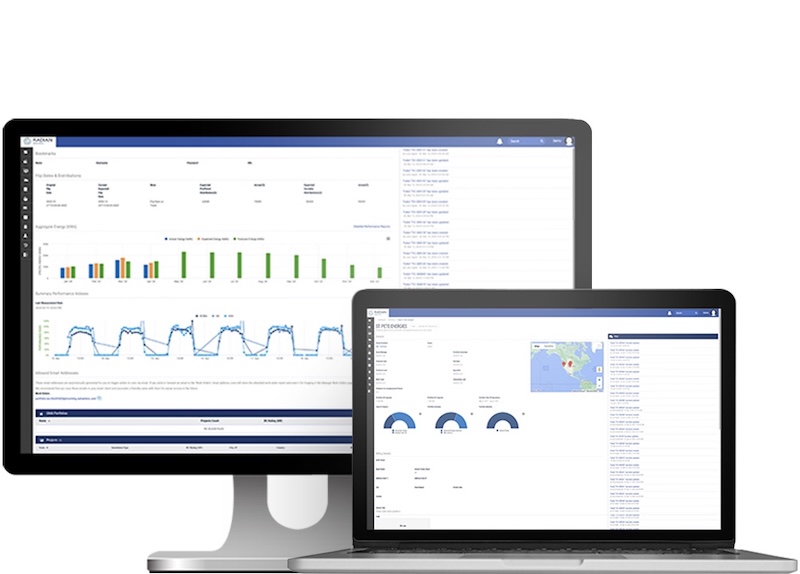
However, formal audits represent just one of many monitoring processes NERC employs. Annual self-certifications function as mini-audits, requiring entities to evaluate and report their own compliance status. Complaint investigations, self-reports of violations, and spot checks supplement the formal audit cycle, creating a continuous compliance monitoring environment.
Facilities need to maintain compliant operations continuously, because NERC's monitoring processes can engage at any time.
Learn from history or repeat it
Grid reliability standards exist for good reason - to prevent cascading failures that can affect millions of customers. As inverter-based resources become an increasingly significant portion of generation capacity, their reliable operation becomes more critical to grid stability.
The industry's response to this transition will shape not just individual operators' success, but the broader perception of renewable energy's reliability. The difference between the entities that thrived in 2007 and those that struggled came down to their recognition that NERC compliance requires dedicated expertise, comprehensive programs, and ongoing vigilance. Those who treat compliance as a core operational requirement rather than an administrative burden will position themselves for long-term success. History doesn't have to repeat itself.
 Kellie Macpherson is Executive Vice President Compliance & Risk Management at Radian Generation, where she oversees NERC compliance and managed security services. For over 15 years, she has been a noteworthy leader in the renewable asset space and has implemented 200+ compliance programs and completed 40+ NERC audits in all six NERC regions.
Radian Generation | radiangen.com
Author: Kellie Macpherson