




ISFH CalTeC Expands Calibration Capabilities to Large-Area Perovskite-Silicon Tandem Solar Cells


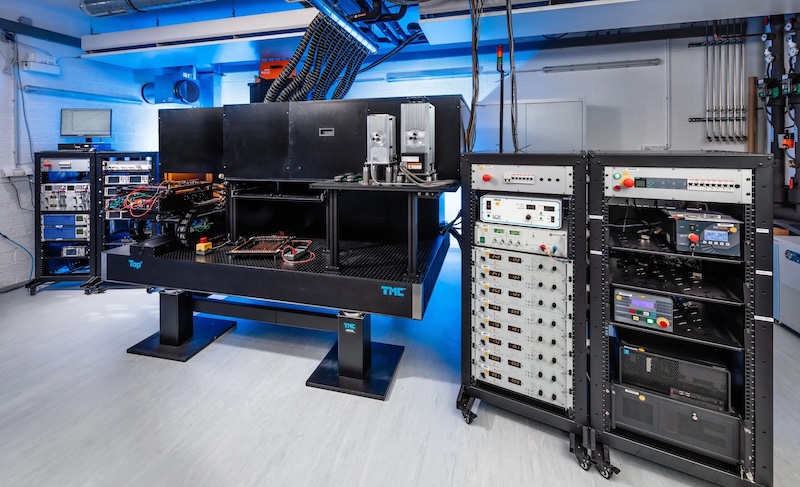
The Institute for Solar Energy Research Hamelin (ISFH) has expanded the capabilities of its Calibration and Test Center (CalTeC) to include the calibration of large-area perovskite-silicon tandem solar cells. The expansion addresses the growing demand for reliable efficiency measurements as tandem photovoltaic technologies move from laboratory research toward industrial application.
ISFH CalTeC has been accredited for the calibration of wafer-based silicon solar cells since 2016. During this time, the laboratory has provided calibration services to more than 70 customers from 20 countries and has established itself as an internationally recognized reference laboratory. Since 2018, CalTeC has also been authorized to independently verify photovoltaic conversion efficiencies and has verified 27 world-record silicon solar cell efficiencies.
As wafer-based silicon solar cells have surpassed conversion efficiencies of 28%, research and industrial development is shifting towards tandem photovoltaic concepts, particularly perovskite-on-silicon tandem solar cells. This technology is regarded as one of the most promising pathways for exceeding the efficiency limits of single junction silicon devices and enabling the next-generation photovoltaic products.
A key challenge is the transition from laboratory-scale tandem devices of approximately 1 cm², where efficiencies exceeding 34% have already been demonstrated, to wafer-scale devices with active areas of up to G12 (210 mm edge length). Achieving this transition requires not only advances in device fabrication but also calibration methodologies that address the specific metrological requirements of tandem photovoltaics.
Expanded measurement capabilities for tandem photovoltaics
At the tandemPV Workshop, held in Berlin from June 17–19, 2026, ISFH CalTeC presented its new calibration capabilities for large-area perovskite-silicon tandem solar cells. The laboratory now supports the calibration of tandem devices up to the G12 wafer format, providing calibration services aligned with the needs of both research institutions and industrial R&D.
“Tandem solar cells are much more complex than conventional silicon cells. Specialized calibration is needed to ensure that reported efficiencies are accurate, comparable, and trusted by researchers, manufacturers, and investors,” said Dr. Karsten Bothe, Head of the ISFH CalTeC solar cell calibration laboratory. “We provide the measurement confidence needed to move tandem photovoltaics from laboratory breakthroughs to commercial products.”
The expanded measurement infrastructure addresses several critical aspects of tandem cell characterization, including:
- Subcell-specific spectral adjustment and accurate spectral mismatch correction
- Compensation for shading effects caused by contacting bars
- Correction for irradiance non-uniformity across large-area devices
- Homogeneous temperature control
- Measurement protocols designed to account for device metastability
Supporting the commercialization of tandem photovoltaics
By combining internationally recognized calibration expertise with dedicated tandem photovoltaic metrology, ISFH CalTeC provides reliable and traceable efficiency measurements that support technology development, performance benchmarking, and the commercialization of high-efficiency tandem solar cells worldwide.
As tandem photovoltaics continue their transition from laboratory research to industrial manufacturing, robust and standardized calibration procedures will play an increasingly important role. They provide the basis for comparable measurement results, confidence in reported performance data, and support the commercialization of high efficiency tandem solar cells worldwide.
Institute for Solar Energy Research Hamelin | https://isfh.de/en