




The 50 States of Electric Vehicles: States and Utilities Pull Back on EV Programs in Q2 2026


The NC Clean Energy Technology Center (NCCETC) released its Q2 2026 edition of The 50 States of Electric Vehicles. The quarterly series provides insights on state regulatory and legislative discussions and actions on electric vehicles and charging infrastructure.
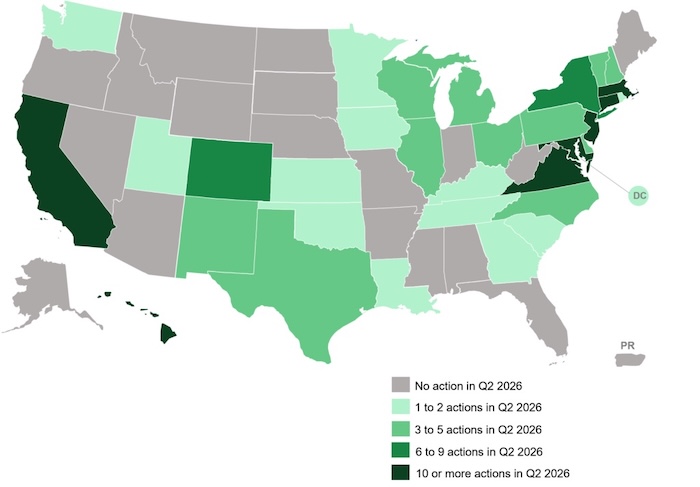
The report finds that 32 states, plus DC, took actions related to electric vehicles and charging infrastructure during Q2 2026 (see figure below), with the greatest number of actions relating to rebate programs, residential managed charging programs, charging infrastructure planning activities, rate design and managed charging programs for commercial customers, grant programs, and vehicle registration fees.
A total of 195 electric vehicle actions were taken during Q2 2026, in addition to over 350 introduced bills that have not yet passed a legislative chamber. The most active states this quarter were Maryland, California, New Jersey, and Hawaii, followed Virginia, Connecticut, and Massachusetts.
Q2 2026 State and Utility Action on Electric Vehicles
The report discusses three trends in electric vehicle actions taken in Q2 2026: (1) utilities targeting hard-to-reach customers with rebate programs, (2) utilities and policymakers pulling back on electric vehicle programs, and (3) state lawmakers considering electric vehicle ready parking requirements.
“Reflecting the federal shift away from EV support, we're seeing a similar pattern at the state and utility level," said Justin Lindemann, Project Manager at NCCETC. “A number of states and utilities made major changes to existing EV incentives and initiatives this quarter, including removing carve-outs for disadvantaged communities, closing new enrollments for EV charger incentives, and eliminating EV incentives altogether.”
While a number of states and utilities took steps to pull back on their transportation electrification initiatives, some took actions to advance their efforts. The report notes five of these top policy developments of the quarter:
- Hawaii lawmakers creating a new clean fuel standard;
- Public Service Company of New Mexico expanding incentives for non-residential customers;
- Consumers Energy and DTE Electring expanding charging incentives in their Michigan transportation electrification plans;
- Vermont legislators adopting mileage-based electric vehicle fees; and
- Black Hills Energy filing its latest transportation electrification plan in Colorado.
"This quarter, several lawmakers focused on requirements surrounding EV charging infrastructure by progressing new EV parking requirements, EV-ready requirements, EV parking space calculation methodologies, and local requirements for EV-capable parking. Elsewhere, lawmakers relaxed such requirements for certain types of construction,” noted Caitlin Flanagan, Policy Analyst at NCCETC.
*View the 50 States of Electric Vehicles Q2 2026 Quarterly Report Executive Summary*
View and Purchase the 50 States of Electric Vehicles Q2 2026 Quarterly Report
NC Clean Energy Technology Center | http://www.nccleantech.ncsu.edu