



The Hydrogen & Fuel Cell Sector: More than a "flavor of the month"


 A decade ago, the chatter about hydrogen and fuel cell technology verged on the sensational. Touted as an around-the-corner energy and environmental solution, it was believed that we’d soon all drive hydrogen-powered fuel cell cars, live in homes where fuel cells provided heat and electricity, and have conversations on our fuel cell powered mobile phones.
Fuel cells are electrochemical devices that produce electricity with only heat and water as by-products. Using a fuel, such as hydrogen, fuel cells can power a variety of devices—from cell phones to entire neighborhoods, in an efficient and environmentally friendly manner. Politicians, investors, and the media were drawn to the technology’s promise and, together with hydrogen and fuel cell technology developers, created an environment of hype and sky-high expectations. Interest was particularly focused on one particularly attractive, consumer-friendly application: automobiles.
Then, the inevitable happened. Hydrogen and fuel cells didn’t—in the blink of an eye—propel our cars and change the world. And, just as quickly as the initial excitement was built, a torrent of naysayers swept in to denounce the feasibility of hydrogen and fuel cells.
The truth is, we figured out that a transitional period over many years would be necessary to properly develop hydrogen-fuelling infrastructure and roll out fuel cell powered vehicles. Sadly, the technology didn’t get the chance. The technology became victim of “flavor of the month” thinking, an underachiever in an instant gratification world.
Consumers were being conditioned by the substantial year-on-year advances (faster, better, cheaper!) being made in the computer and Internet technology industries to expect the same from alternative energy technologies. But history has shown that incremental changes in the automotive and energy landscape can take time to play out.
Fast-forward several years. Now, ethanol, carbon sequestration, and battery technologies are regarded—like hydrogen and fuel cells before them—as potential silver-bullet solutions to the energy and environmental challenges. Once again, we’re looking for a quick-turnaround answer. And, if the payoff isn’t immediate, next year it’ll be some other technology.
So, maybe it’s time to reconsider the hydrogen and fuel cell sector.
In Canada, the hydrogen and fuel cell sector has undergone a remarkable transformation since the early 2000’s. It has grown to become a solid contributor to Canada’s R&D capacity, investing more than $150 million per year in technology and product development. The sector is also home to world-class researchers, entrepreneurs, workers—some 2,000 strong clean energy jobs from coast to coast. Most notably, real progress is being made in commercial and industrial applications. Although, perhaps, not as exciting as fuel cell powered cars, success in early commercial applications has led to more widespread, consumer use of the technology.
In particular, Canadians are paving the way in hydrogen storage and smart-grid applications, enabling renewable energy developers to store and then reuse excess wind and solar power, for when the sun isn’t shining or the wind isn’t blowing. The potential of this application shouldn’t be underestimated. For example, Germany essentially wasted 30 million Euros worth of wind power because it didn’t have a suitable storage solution. Ontario companies are now exporting these products to countries, such as Germany, where renewable energy systems are being deployed at a significant pace.
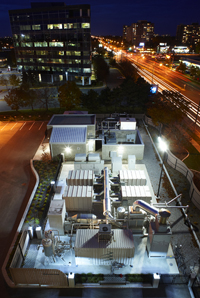
Corporations from Walmart to Whole Foods to Coca Cola are using hydrogen fuel cell powered forklifts by the hundreds to solve their material handling challenges, and benefitting from decreased greenhouse gases, better reliability, and less costs. In developing countries, such as India and Indonesia, Canadian-produced fuel cell backup power units are keeping cell phones working in emergency situations and grid outages. Large stationary fuel cell power plants are providing clean electricity utilizing a variety of fuels such as hydrogen and natural gas, from California to South Africa to Ontario. Plus, the world’s largest fleet of hydrogen powered, zero-emission buses are operating in Canada today, and they have the same or better availability and reliability as the regular buses, in cold winters and dusty hot summers.
When Mercedes-Benz recently reviewed ideal locations to place its $50 million next generation fuel cell manufacturing facility, it eventually chose British Columbia due to recognition of the region’s expertise. Fuel cell powered vehicles are more of a tangible reality than ever before, especially in countries such as Germany where governments, automakers, and infrastructure companies plan to roll out consumer fleets of automobiles by 2015.
There’s no ”big bang” coming, but the Canadian hydrogen and fuel cell sector continues to make incremental, tangible progress. It’s certainly no flavour of the month, but a permanent long-term player in the ever-evolving clean energy landscape.
Of course, Canada is not alone in the pursuit of hydrogen and fuel cell technology. For example, the United States has approximately 3,600 direct jobs in the industry and the US Department of Energy is funding research at a total of about $300 million per year. Seems the time is right to help improve the sector’s impact on a larger, global stage. Let’s move away from looking for the “next big thing,” and revisit the solid solution that’s been waiting in the wings all this time.
Eric Denhoff is president and CEO of the Canadian Hydrogen and Fuel Cell Association.
Canadian Hydrogen and Fuel Cell Association
www.h2fcc.ca
Author: Eric Denhoff
Volume: January/February 2012